By [Author Name]
Published by Search Engine Land
Main Facts: The Illusion of Control in Modern PPC
Navigating the Google Ads ecosystem requires more than just a passing familiarity with digital marketing; it demands an ironclad defense against the platform’s subtle, native psychological nudges. While seasoned paid search professionals know precisely where to unearth the data essential for deep optimization and meaningful insight, many novices—and even some mid-tier practitioners—remain blissfully unaware of the critical data layers they are missing.
Worse still, in the current digital advertising landscape, hidden or obfuscated information is frequently replaced by platform-friendly narratives. This dynamic leads many unsuspecting advertisers to unwittingly accept strategic advice that primarily benefits Google’s bottom line rather than their own financial health.
If you are a competent marketer managing a healthy account, you might wonder why this systemic issue matters to you. The answer lies in second-order economic effects. When competitors (let’s call them Advertisers B through F) run neglected, poorly optimized accounts guided by automated platform suggestions, they create widespread auction anomalies. These erratic behaviors inflate costs, distort Impression Shares, and rattle the cage of even the most disciplined market players.
Understanding how Google Ads leverages cognitive biases—particularly the availability heuristic—is the first step toward reclaiming financial control over your ad spend.

Chronology: The Evolution of Platform-Centric Advertising
To understand how we arrived at an era where default dashboard settings dictate corporate strategy, we must examine the chronological shift in digital advertising management:
- The Early Era (Manual Control): Search engine marketing began with granular, manual control. Advertisers picked exact match types, wrote distinct text ads, adjusted manual CPC bids, and pored over massive query reports. Data transparency was high because simplicity forced visibility.
- The Transition to Automation: As algorithms grew more sophisticated, Google introduced automated bidding strategies and generalized campaign types. Features like "Enhanced CPC" and early iterations of automated rules laid the groundwork for algorithmic delegation.
- The Rise of the "Black Box": Over the past several years, the interface shifted decisively toward aggregated, platform-managed environments. Campaigns like Performance Max, Demand Gen, and AI Max for Search centralized control under Google’s machine learning models.
- The Modern Interface of Nudges: Today, the Google Ads dashboard is intentionally curated to surface platform-friendly recommendations ("Optimization Score," "Display Expansion") while burying granular friction points—such as conflicting ad-group-level targets and obscure search query matches—beneath layers of pagination and default metrics.
Supporting Data: The 7 Hidden Traps in Google Ads
Google utilizes the availability heuristic—a mental shortcut that relies on immediate examples that come to a given person’s mind—to push platform narratives directly into your workflow. When feature names like Smart Bidding or AI Max continually reinforce the idea that machines know best, budget allocation decisions tilt heavily in Google’s favor.
Here are seven specific ways the Google Ads interface obscures reality and how advertisers can combat them:
1. Dashboard Views and Default KPIs
At the account or campaign level, many advertisers accept the default key performance indicators (KPIs) presented on their main dashboard, including comparative data against the previous period.
- The Flaw: For most businesses, comparing this month to last month is useless due to seasonal fluctuations. Year-over-year (YoY) comparisons are far more salient. Furthermore, aggregate impressions and clicks mean very little compared to bottom-line metrics like net revenue and Return on Ad Spend (ROAS).
2. The Noise-to-Signal Ratio in Columns
The default columns packed into Google Ads reports frequently favor noise over signal.

- The Fix: Advertisers should immediately strip out unnecessary metrics and tailor their view via Columns > Modify. Essential metrics generally include Clicks, Click-Through Rate (CTR), Conversion Value, Conversion Value/Cost, and Cost Per Click (CPC). Beware of anxiety-inducing metrics like Search Lost Top IS (Rank), which often trigger restless, reactive adjustments rather than calm, analytical decision-making.
3. Pagination and the Friction of Rows
Account maintenance requires looking at comprehensive data. However, the interface frequently defaults back to displaying a mere 10 rows per page.
- The Flaw: Pagination introduces friction. Advertisers working through massive accounts may only look at a couple of pages before moving on, leaving unoptimized sections to fester. Consolidating unwieldy account structures almost always yields immediate financial improvements.
4. Optimization Scores and the Lightbulb Trap
Google’s persistent "Optimization Score" and its associated recommendations—often heralded by a friendly lightbulb icon—are designed to drive platform utilization.
- The Flaw: Suggestions to remove "redundant keywords" or enable "Display Expansion" rarely help the advertiser. In fact, enabling Display Expansion on a search campaign will almost certainly destroy performance by injecting low-intent traffic, serving primarily to help advertisers burn through bloated budgets under tight corporate deadlines.
5. Multi-Tiered Target Conflicts
Surface-level account management creates hidden contradictions. An advertiser might inherit a campaign-level ROAS target set at 350% and continuously push it higher to tighten spend. When performance fails to budge, they panic and cut daily budgets or blame macroeconomic headwinds.
- The Reality Check: Ad-group-level targets buried deeper in the account may have been set independently between 210% and 260%, quietly overriding the campaign-level settings. Without drilling down past the surface, these internal conflicts remain entirely invisible.
6. Search Query Reporting and Match Types
Novice advertisers often fail to distinguish between the keywords they explicitly bid on and the messy, uncurated user queries that actually trigger their ads. Because search query reporting is no longer as prominent as it once was, many accounts accumulate massive waste.
- The Solution: Regular audits of the search terms report are non-negotiable. Ill-mapped queries must be systematically captured and added as negative search terms at the ad group, campaign, or account level to prevent budget leakage.
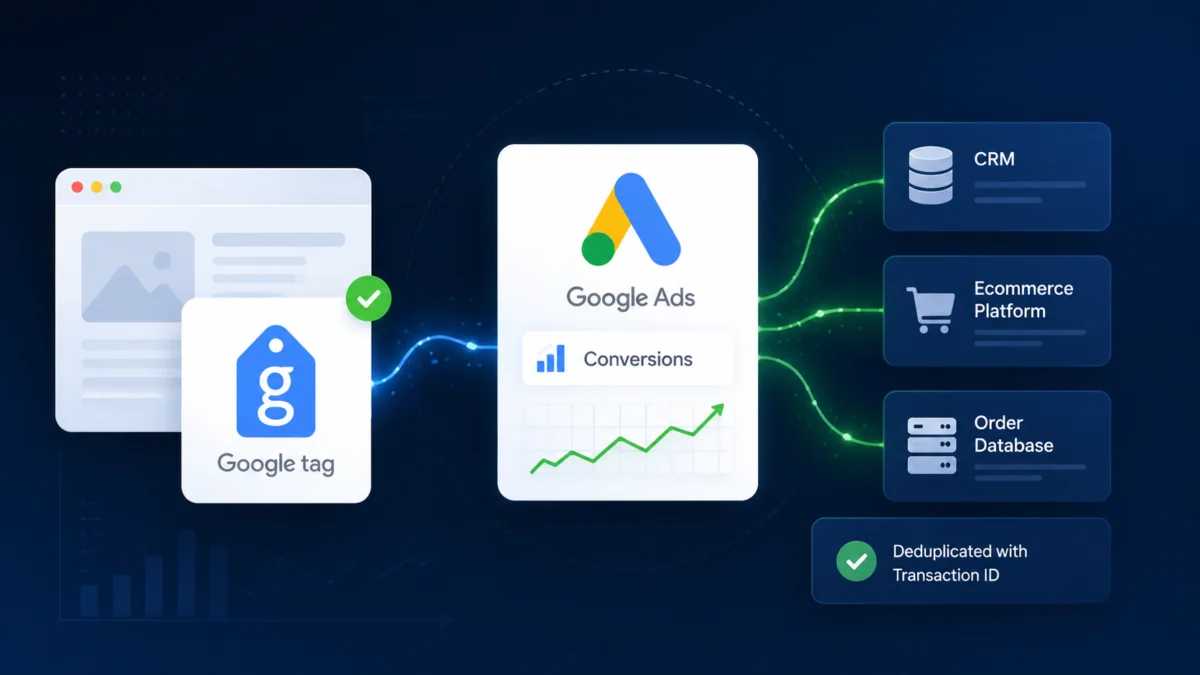
7. Byzantine Conversion Counts
If you inherit a mature account, the conversion tracking logic is often completely fragmented. Multiple past managers and stakeholders may have piled up overlapping goals.

- The Audit: Ensure that virtually identical KPIs haven’t both been set as "primary." Next, clean up auxiliary conversion events. Directional KPIs—such as store visits or click-to-call actions—can assist with optimization if they occur infrequently and offer genuine qualitative insights. However, if they occur too frequently, they skew real revenue feedback and must be adjusted or removed.
Official Responses and Platform Perspective
Platform representatives and defenders of automated ecosystems consistently maintain that machine learning models deliver superior efficiency at scale. According to Google’s official documentation, features like Smart Bidding and Performance Max analyze billions of signals in real-time—including user location, browser history, intent signals, and device type—to capture conversions that manual bidding could never uncover.
From Google’s perspective, recommendations and optimization scores are designed to democratize advanced marketing tactics, allowing smaller businesses with limited resources to leverage enterprise-grade algorithmic power. Platform advocates argue that manual micromanagement of keywords and bids is an outdated relic of early PPC management, and that modern advertisers should focus their energies on creative assets, first-party data integration, and strategic business goals rather than granular tactical adjustments.
Implications: How to Outsmart the System
The modern Google Ads marketplace operates much like a high-stakes shell game. The house curates what you see, framing choices through proprietary terminology and automated recommendations designed to maximize platform consumption.
However, the game is not entirely closed. Your ultimate superpower as an astute marketer is simple: the platform still lets you lift the shells.
By rejecting lazy defaults, scrutinizing dashboard metrics, auditing multi-tiered target settings, and digging deep into search query and conversion data, you can step out of the shadow of platform-friendly narratives. In doing so, you protect your own financial health, neutralize the erratic anomalies caused by negligent competitors, and secure a genuine competitive edge in the paid search auction.