Main Facts
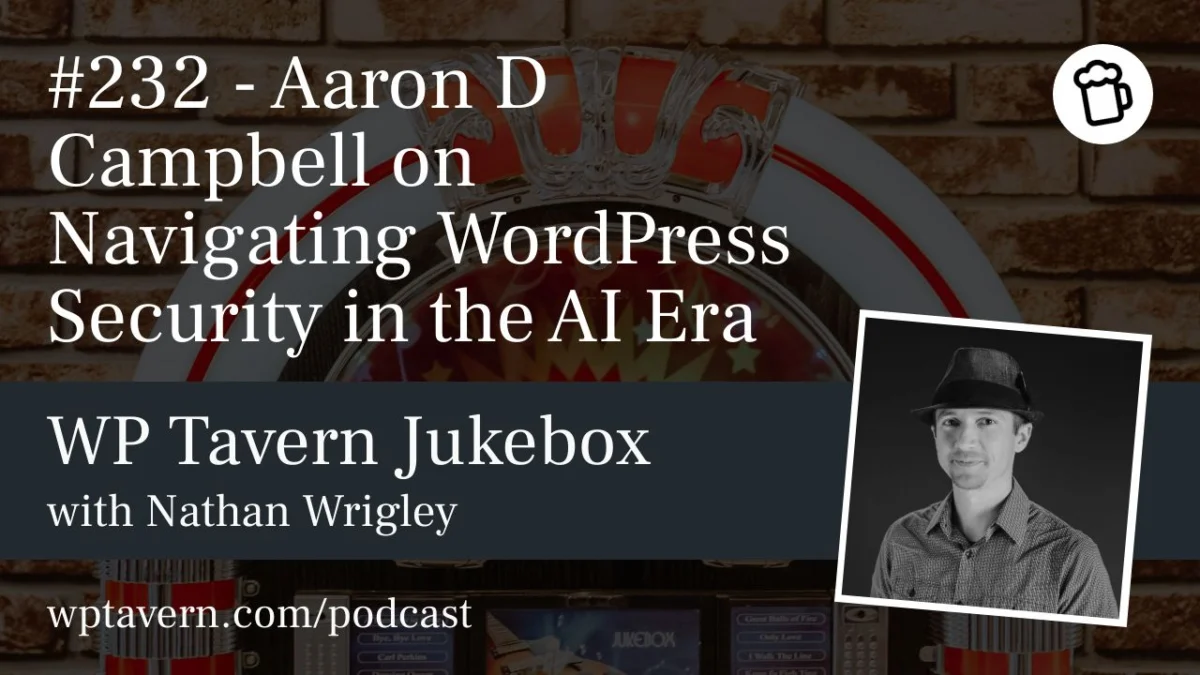
The landscape of web security has shifted dramatically, with artificial intelligence fundamentally rewriting the rules of engagement between cyber adversaries and defenders. In a recent episode of the Jukebox Podcast from WP Tavern, host Nathan Wrigley sat down with Aaron D. Campbell—a seasoned internet and WordPress veteran with over 25 years of industry experience, former leader of the WordPress Security Team, and current Chief Security/Technology voice at malware detection and remediation firm Monarx.
Recorded live from the corridors of WordCamp US, the conversation exposes an unsettling reality: the advent of AI agents has transformed cybersecurity from a traditional battle of human wits into a high-speed, highly automated war of compute power. Attackers are no longer lone wolves painstakingly probing a website; instead, they are deploying automated AI agents that can rapidly orchestrate complex, multi-layered attacks—chaining vulnerabilities that human minds would struggle to conceive.
Despite this ominous escalation, Campbell offers a balanced perspective. While the volume and complexity of security threats have surged, the defensive side of the ecosystem is also heavily weaponizing AI, adopting proactive cross-platform monitoring, and reshaping how the global open-source community collaborates to protect millions of websites.
Chronology of an Evolving Threat Landscape
To understand how precarious modern web security has become, one must examine how the timeline of exploitation has compressed over the past few years.
The Pre-AI Era: A Human-Sized Pace
Historically, website security operated on a more manageable, human-scale timeline. A decade ago, adversaries typically worked in isolated groups or individual units. They required substantial time to investigate code repositories, discover flaws, and manually craft exploits. When a vulnerability was disclosed, software maintainers, hosting providers, and security teams generally had weeks—or at least days—to issue patches and remediate affected systems before widespread exploitation occurred.
The Turning Point: The Rise of AI Agents
Over the last two to three years, the integration of generative AI and autonomous agents has completely disrupted this paradigm. Tasks that once required human ingenuity, persistence, and sleep are now executed 24/7 by algorithms capable of testing millions of permutations simultaneously.
During the podcast, Campbell highlighted a striking example from a recent WordPress Core vulnerability report. A human analyst had to print out an 11-page document detailing the algorithmic steps an AI agent took to chain disparate vulnerabilities together. Such a complex, deeply buried vector would have been deemed virtually uncrackable by human standards four years ago. Today, AI can map out these flaws in hours, writing scripts to automate the exploit immediately.
The Shrinking Window of Vulnerability
Consequently, the window between vulnerability disclosure and active exploitation has evaporated. According to recent data from Monarx and Patchstack looking back at the previous year, major vulnerabilities are now actively exploited within a mere five hours of disclosure.
Campbell pointed to the recent "wp2shell" WordPress exploit as a stark example: once a patch was publicly released, spikes in Monarx’s global monitoring telemetry recorded aggressive exploitation attempts within a breathtaking 30 minutes.
Supporting Data and Ecosystem Dynamics
The mechanics of modern cyberattacks rely heavily on scale, volume, and the expansive footprint of the world’s most popular Content Management System (CMS).
- The Scale of WordPress: Powering tens of millions of websites globally, WordPress naturally bears a massive target on its back. The larger the ecosystem, the greater the potential monetary payoff for a successful breach.
- The Five-Hour Exploitation Window: Data aggregated by security firms indicates that serious vulnerabilities are targeted in the wild within five hours of surfacing.
- The 30-Minute Reaction Spike: In acute cases like the wp2shell incident, automated scanning and exploitation spikes registered in under half an hour post-disclosure.
- Monarx’s Cross-Platform Visibility: Operating as a white-label security layer across multiple major hosting infrastructures (such as GoDaddy, Newfold Digital, and others), Monarx analyzes threat telemetry globally. This allows the platform to spot novel malware or pocket attacks at "Host A" and instantly block them across "Hosts B, X, and Y" before they spread.
Official Responses and Strategic Shifts
Faced with an adversary that never sleeps and moves at lightning speed, the WordPress ecosystem and the broader security industry are fundamentally altering their strategic posture.
1. Shifting from Reactive to Proactive Defense
In the past, security was largely reactive: a flaw was found, a patch was written, and users were urged to update. Today, that lag is fatal. Campbell explains that defenders are now forced to get ahead of the curve by deploying AI against AI. Security professionals are utilizing custom AI-driven testing rigs and assessment models to automatically vet code repositories, simulate attack chains, and verify vulnerabilities before malicious agents can capitalize on them.
2. Radical Information Sharing
Just as virtual rooms allow cyber adversaries to collaborate and share exploit data globally, the defense community has institutionalized rapid information sharing.
- The WordPress Security Team Protocol: When the WordPress Security Team discovers and verifies a core vulnerability, they immediately leverage private communication channels with major hosting providers, infrastructure companies (like Cloudflare), and security vendors.
- Pre-Patch Protection: This closed-loop collaboration allows infrastructure giants to deploy firewall rules and virtual patches, protecting millions of users before a formal public release is even deployed.
3. The "Protect the Shire" Innovation
In an effort to curb the rise of automated supply chain attacks—where plugins are hijacked or sold to malicious actors—the WordPress community introduced "Protect the Shire." This initiative implements a time-bound delay (roughly six hours) on certain plugin updates to ensure they have not been compromised at the supply chain level. While this introduces a momentary delay, Campbell supports the move as a necessary friction to verify software integrity, noting that exceptions are swiftly made via the Security Team when emergency zero-day patches are required.
Implications for Everyday Users and the Future
What does this AI-driven security arms race mean for everyday WordPress site owners, agency owners, and business operators who lack technical security expertise?
The Reality of Financial Motivation
Campbell emphasizes that while high-profile attacks sometimes grab political or ideological headlines, the vast majority of WordPress exploits ultimately trace back to a simple motive: money.
- Pay-Per-Click Spam: Hackers inject malicious JavaScript to display pharmaceutical or illicit ads on unsuspecting blogs, skimming micro-profits across massive volumes of compromised sites.
- Compute Theft: Attackers hijack low-value sites to pool their resources into distributed botnets, using stolen IP addresses to launch complex assaults elsewhere.
Actionable Security Advice for Non-Experts
Because average users cannot possibly match the technical expertise required to untangle AI-driven threat vectors, Campbell advises positioning oneself to rely safely on trusted experts:
- Enable Auto-Updates: Keep WordPress Core, plugins, and themes updating automatically. This ensures you immediately inherit the protections crafted by the global security community.
- Choose Security-Minded Hosts: Vet your hosting provider. Ask them explicitly how they implement layered security (e.g., Web Application Firewalls, runtime monitoring, malware remediation) so you can lean on their infrastructure expertise.
- Monitor Credential Compromise: Utilize dark web monitoring tools or services like Have I Been Pwned. AI is exceptionally skilled at scraping decades of historical breach data to reverse-engineer passwords and cross-reference them against modern social media, banking, and CMS accounts. Never reuse old credentials.
Looking Ahead
While the future of web security looks complex, blurry, and relentlessly demanding, Campbell remains optimistic. Decades of historical experience taught the tech industry how to invent better hashing algorithms when old ones were cracked.
Now, the industry is learning to build a resilient, AI-bolstered framework designed to last well into the future. As Campbell eloquently notes, if the web security community ever successfully works itself out of a job, it will be the ultimate professional victory—a day when the digital world is finally secure enough for the "firemen" to rest.