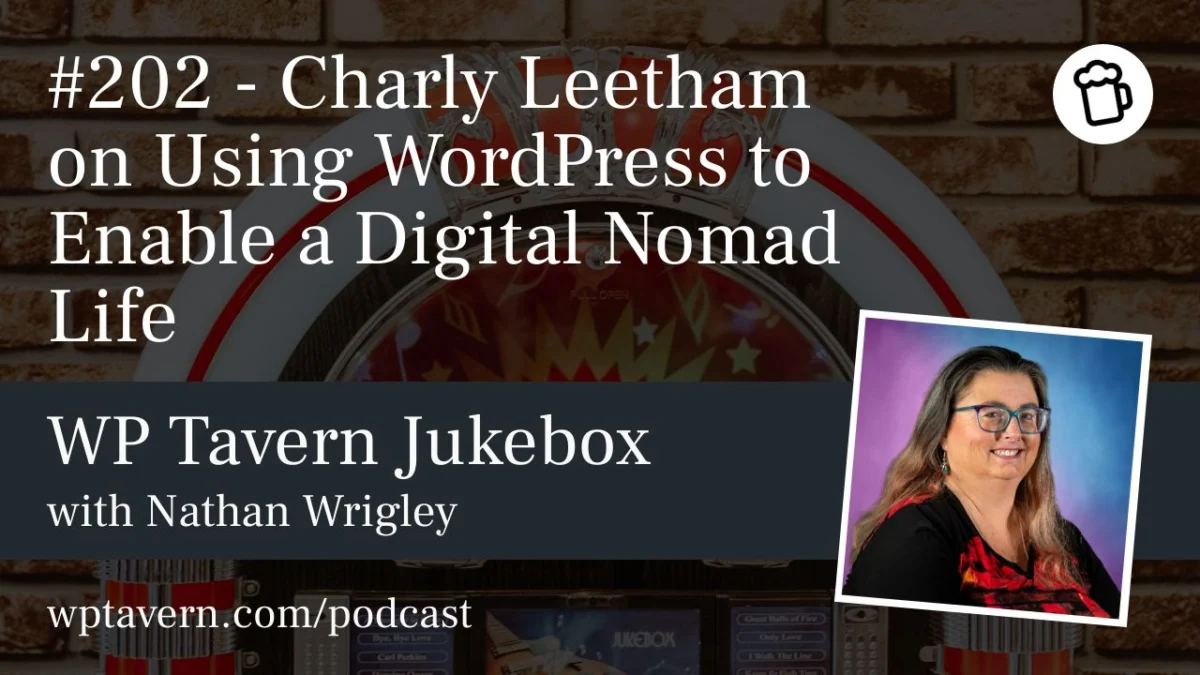
In an era where remote work has become the standard, most professionals have traded a daily commute for a home office. However, for Charly Leetham, the concept of a "home office" is fluid, constantly shifting across the Australian landscape. Leetham, a veteran of the tech industry with four decades of experience, has taken the "digital nomad" lifestyle to its logical, high-tech extreme. Living and working from a self-fitted camper van equipped with Starlink satellite connectivity, she provides high-level WordPress support and small business tech consulting to clients worldwide, proving that geography is no longer a barrier to technical excellence.
The Evolution of a Tech Veteran: From Radio Waves to WordPress
Charly Leetham’s journey into the digital space began long before the internet became a household utility. Her foundation was built on hardware and engineering—tinkering with amateur radio as a teenager in Australia. By age 16, she had earned an associate diploma in electronic engineering and was already working as a laboratory technician at a university.
Her professional life has been a diverse tapestry of field service, electronic engineering, sales, and contract management. However, the pivot to her current role as a "digital translator" for small business owners occurred in 2007. At that time, WordPress was still in its relative infancy.
"Someone said, ‘I’ve got a WordPress website, it’s not working. Can you look at it?’" Leetham recalls. "I knew C++, I knew Pascal, I knew Basic. Oh, this is PHP. What’s that? I learned PHP, I learned themes, I learned plugins… and here we are nearly 20 years later."
Leetham’s career trajectory is a testament to the power of continuous learning. She moved from a traditional retail business owner—a venture she describes as having "failed spectacularly"—to a service-based model that allowed her to regain control over her financial and personal life. Today, she functions as a bridge between complex technology and business owners who find themselves overwhelmed by digital jargon.
The Mechanics of Nomadism: Infrastructure on the Move
For most, the idea of living in a van while running a technical consultancy sounds like a recipe for disaster. For Leetham, it is a deliberate choice optimized by modern technology. The transition to the road was motivated by both personal desire and the changing socio-economic climate, including the current housing crisis.
"Rather than stressing on the fact that I can’t find a house… I fitted out a vehicle," she explains. Her setup is a masterclass in minimalism and efficiency. She works within a workspace of approximately one square meter, a space that requires strict organization. When the workday ends, Leetham must pack away her monitors and gear to convert her office back into a living area.
The Starlink Advantage
The backbone of Leetham’s nomadic consultancy is satellite internet. In Australia, where mobile coverage can be notoriously sparse outside of major regional centers, Leetham relies on Starlink to maintain her connection to her global client base.
"It’s fantastic," Leetham says. "You’ve got to have power because the routers take power… for as long as you’ve got power, you’ve got uninterruptable internet."
She notes that the Starlink hardware, particularly the newer Version 3 models, is lightweight and easy to deploy. Unlike traditional home setups, her mobile unit can be deployed in minutes, providing speeds that she claims often outperform landline connections in regional areas. This allows her to provide live support, remote computer access, and video conferencing from the most remote corners of the continent.
The Philosophy of the "Async" Business Model
Leetham’s ability to maintain a successful consultancy while traveling is not just a triumph of hardware; it is a triumph of business design. She has intentionally cultivated an "asynchronous" relationship with her clients. By training her clients to book time and manage expectations, she avoids the trap of being "on-call" 24/7.
"They know that the best way to get me is to book a time," Leetham notes. "I rarely spend time on the phone, or on video conferences with them."
This boundary-setting is critical. It allows her to move between locations without the anxiety of missing a critical support request. If a client has an emergency, Leetham manages it when she is stationary and has a stable power supply. This trust-based relationship, built on clear communication and technical reliability, is the "killer app" of her business model.
Implications for the WordPress Ecosystem
Leetham’s story raises significant questions about the future of work within the WordPress community. As more developers and support professionals seek a better work-life balance, her model provides a blueprint for what is possible.
The Trade-offs of Freedom
The nomadic life is not without its challenges. Leetham is candid about the downsides:
- Space Limitations: "You don’t have all of your stuff," she says, emphasizing that one must ruthlessly prioritize necessities over conveniences.
- Bulk Inefficiency: She can no longer shop in bulk, meaning she must constantly find local suppliers—a process she actually enjoys, as it keeps her connected to local communities.
- The "Pack-Up" Tax: Working from a van means that physical work is tied to physical labor; setting up and tearing down the office is a daily routine that requires discipline.
Cultivating Professional Roots
Despite the constant movement, Leetham emphasizes that she does not just "drive through" life. She often settles in a location for weeks at a time, using it as a hub to explore the surrounding 100 kilometers. This approach allows her to form connections, meet locals, and experience the community, rather than remaining a transient outsider.
Building a Value-Aligned Business
Perhaps the most professional insight offered by Leetham is her approach to client management. She has reached a point in her career where she is willing to fire clients who do not align with her values or her operational style.
"I have actually suggested to some clients that they would be better off with another provider," she says. "As a service provider, that’s something that we have to be utterly comfortable with."
This, she argues, is not cutthroat, but rather a necessary component of business health. By pruning clients who require excessive emotional or technical energy for little return, she creates space for clients who truly value her expertise and respect the boundaries of her nomadic lifestyle.
Conclusion: A New Standard for Technical Professionals
Charly Leetham’s journey is more than just an interesting travelogue; it is a critique of the traditional 9-to-5 office paradigm. She has proven that with the right combination of technical expertise, satellite connectivity, and strict business boundaries, a professional can deliver top-tier results from anywhere on the planet.
For the WordPress community, her story serves as a reminder that the technology we build—PHP, themes, and plugins—is ultimately a tool to enable a life, not the sole focus of it. As connectivity improves globally, more professionals may look to the road, finding that the freedom to choose one’s view is the ultimate incentive for a job well done.
For those interested in exploring this lifestyle or seeking technical guidance from a consultant who practices what she preaches, Leetham can be reached through her website, askcharlyleetham.com, where she continues to demystify technology for business owners, one remote session at a time.