Decoding the Paranormal and the Profitable: Inside the Evolution of Stuff They Don’t Want You To Know
In an era saturated by algorithmic content, hyper-niche streaming channels, and the looming existential shadow of artificial intelligence, a single question continues to captivate millions of listeners worldwide: What are they hiding from us?
For over 2,000 episodes, Stuff They Don’t Want You To Know has been the audio sanctuary for the perennially suspicious. Hosted by Ben Bowlin, Noel Brown, and Matt Frederick, the hit iHeartPodcasts program has built an empire out of exploring the fringes of human curiosity. From deep dives into the Illuminati and AI psychosis to industry-shaking operations like the Ticketmaster conspiracy—and whimsical detours pondering whether fermented cabbage might save humanity from microplastics—the show has carved out a permanent, highly lucrative niche in the audio landscape.
Say what you will about the esoteric subject matter, but the hosts’ strategy works. In a crowded global marketplace offering more than 4.7 million active podcasts, Stuff They Don’t Want You To Know consistently commands a spot in the country’s top 100 podcasts.
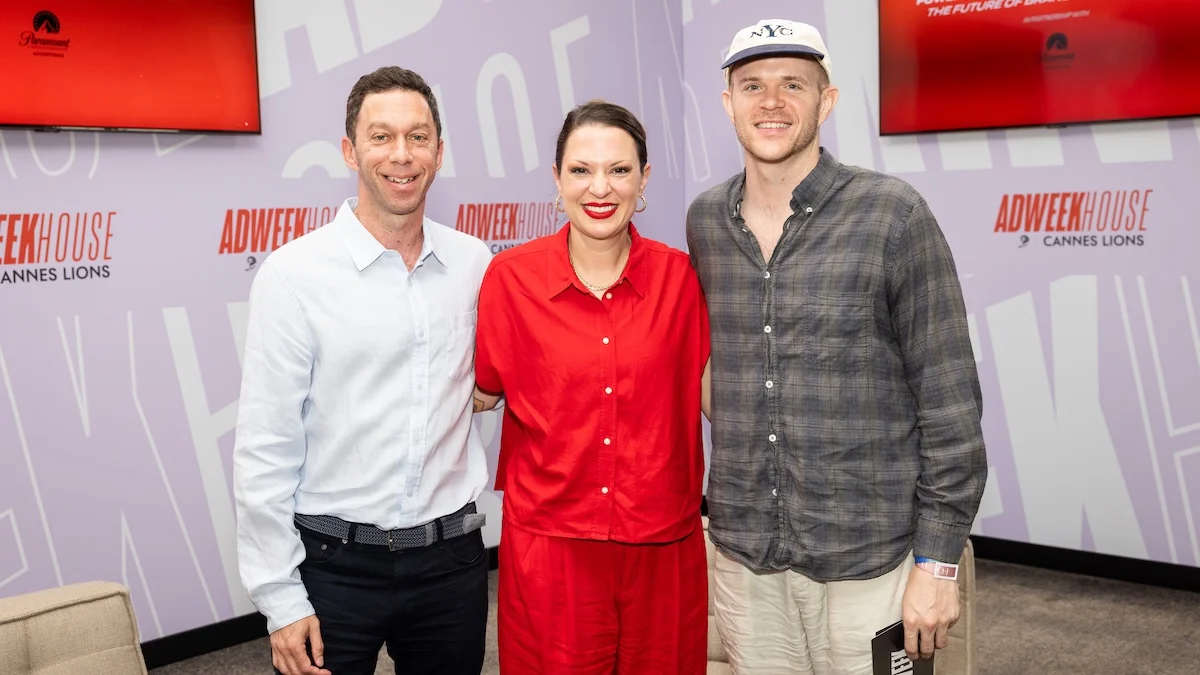
Recently, the hosts took the stage at Brandweek alongside iHeartMedia CEO Conal Byrne to deconstruct the anatomy of their enduring success. Far from just a quirky repository of urban legends and government cover-ups, the program serves as a masterclass in modern digital media, offering essential lessons on audience engagement, brand evolution, and the irreplaceable value of human connection.
Main Facts: The Anatomy of a Podcast Giant
At its core, Stuff They Don’t Want You To Know is an investigation into the machinery of secrecy. However, the corporate and creative machinery behind the show is equally fascinating.
The project brings together three distinct personalities whose chemistry has sustained more than a decade of daily and weekly deep dives into the unknown. Ben Bowlin, Noel Brown, and Matt Frederick do not present themselves as infallible academics; rather, they act as enthusiastic, skeptical, and deeply curious companions guiding listeners through labyrinthine historical mysteries, geopolitical anomalies, and fringe science.
The show’s commercial viability matches its cultural footprint. Bolstered by iHeartMedia’s immense distribution network, the podcast leverages multi-platform distribution—spanning audio feeds, YouTube ecosystems, and major video streaming platforms like Netflix—to monetize curiosity on an industrial scale.
During their Brandweek appearance, the hosts and their corporate leadership laid bare the foundational pillars that allow the show to thrive amidst intense competition. Their insights challenge conventional digital wisdom, proving that intuition, radical inclusivity of ideas, and an unwavering commitment to human-to-human interaction remain the ultimate drivers of content longevity.
Chronology: From Web 1.0 Roots to Multi-Platform Dominance
The lineage of Stuff They Don’t Want You To Know stretches back much further than the modern podcast boom, serving as a living historical artifact of the digital content revolution.
1998: The Genesis of Curiosity
The roots of the brand trace back to the launch of HowStuffWorks, a pioneering educational website founded by Marshall Brain. Designed to explain the inner workings of everyday items and complex systems alike, the site established a corporate appetite for accessible, curiosity-driven educational content long before "content marketing" became a ubiquitous industry term.
The Podcast Transition and the Birth of Stuff Media
As digital media evolved from static web pages to downloadable audio and video, HowStuffWorks expanded its footprint by launching dedicated podcast verticals. This digital expansion eventually led to the spinning off of the podcast division into an independent entity known as Stuff Media LLC, which housed a portfolio of popular shows designed to capture the burgeoning commuter and enthusiast audio markets.
2018: The iHeartMedia Acquisition
Recognizing the massive monetization potential and cultural value of premium spoken-word audio, media giant iHeartMedia swooped in. In 2018, iHeartMedia acquired Stuff Media LLC for a reported $55 million, instantly integrating Stuff They Don’t Want You To Know into its sprawling digital and broadcast infrastructure. This acquisition provided the show with advanced digital targeting, localized ad insertion, and unprecedented cross-promotional power across broadcast radio and digital apps.
Present Day: The Omnipresent Brand
Today, the program operates as an omnichannel behemoth. Having successfully navigated the transitions from early video podcasts to pure audio feeds, through a golden era on YouTube, and into modern video podcasting deals with platforms like Netflix, the show continues to expand its reach. Thirteen years after its inception, the franchise is not merely surviving the digital media churn; it is actively setting the benchmark for it.
Supporting Data: By the Numbers
To understand the scale of the achievement realized by Bowlin, Brown, and Frederick, one must look at the quantitative reality of the modern media landscape:
4.7 Million+: The estimated number of active podcasts globally, illustrating the hyper-competitive nature of the audio marketplace.
Top 100: The consistent positioning of Stuff They Don’t Want You To Know on weekly download charts in the United States, placing it in an elite tier of discoverability.
2,000+: The staggering milestone of published episodes, reflecting a grueling yet sustainable production schedule maintained over more than a decade.
$55 Million: The acquisition price paid by iHeartMedia in 2018 for Stuff Media LLC, cementing the commercial validation of the network’s foundational IP.
90% vs. 60%: Recent iHeart research data revealing that while 60% of consumers routinely use AI tools in their daily lives, over 90% explicitly reject AI-generated content in media, demanding authentic human voices instead.
Official Responses: Lessons from the Masters
At Brandweek, the dialogue between iHeart CEO Conal Byrne and the show’s hosts shed light on the strategic philosophies that keep the podcast relevant. Five core lessons emerged from their panel discussion:
1. All Ideas Deserve Consideration
Reflecting on the early days of the medium, Ben Bowlin emphasized that the show’s initial willingness to entertain seemingly absurd concepts was its greatest competitive advantage. In an era before established templates existed, the creative team operated without fear of judgment.
"When we first started off in this new frontier, there were no bad ideas," Bowlin told the Brandweek audience. "Luckily, we were able to have the agency, and a team behind us, that said: ‘We should try everything.’"
2. Your Audience Is Also Your Content
While traditional radio relied on call-ins, Stuff They Don’t Want You To Know treats its audience as an active, decentralized research bureau. This reciprocal relationship transforms passive listeners into subject-matter experts who elevate the production value of individual episodes.
Noel Brown highlighted an episode regarding nuclear weapons to illustrate this phenomenon. Rather than relying solely on public domain research, the hosts heard directly from an insider.
"We heard from a guy who is literally the guy that launches nuclear weapons, and he told us what that world is like," Brown said. "And it’s not a big red button, it turns out."
3. Metrics Can Include Your Gut Feeling
Data analytics dominate modern media boardrooms, but Conal Byrne and his hosts argue that quantitative metrics alone cannot capture artistic magic. Byrne monitors everything from customer acquisition costs and sales figures to gross margins and weekly download charts. Yet, he and his team still rely on "squishy" qualitative measurements.
Matt Frederick shared his personal post-production audit: "Did I feel good listening? Did the conversation move, and did it go in interesting directions?"
For Bowlin, the ultimate litmus test is far simpler: "Are we excited to do this again tomorrow?"
4. Evolution Equals Survival
Longevity in digital media requires a ruthless commitment to platform agnosticism. Byrne noted that the program’s survival across more than a decade is entirely due to its evolutionary agility.
"It’s not a mistake that Stuff They Don’t Want You to Know started out as a video podcast before we were even using the word podcast, [then] evolved into an audio podcast, had a honeymoon as a YouTube channel, and is now a major video podcast on Netflix," Byrne explained. "That willingness to evolve is a really important metric for digital creators."
5. Humans Want Human Content
Perhaps the most pressing industry insight centers on the existential anxiety surrounding generative artificial intelligence. With algorithms threatening to automate writing, voice acting, and media production, many executives panicked over the future of human labor. However, iHeartMedia’s internal research proved otherwise.
While 60% of people integrate AI tools into their workflows, over 90% of audiences actively reject AI-generated content.
"You would think that AI would take over everything," Byrne noted, recalling a period when his team questioned whether they should yield to automated production.
Instead, the data proved that automation cannot replace authenticity. Audiences "definitely still need human beings having a messy, organic, human conversation."
Implications: The Future of Curated Curiosity
The success story of Stuff They Don’t Want You To Know carries profound implications for the broader media and advertising industries.
First, it signals a definitive rebuke of homogenized, algorithmic content farms. As generative AI threatens to flood the internet with frictionless, synthetic text, audio, and video, audiences are actively retreating toward sanctuaries of genuine human imperfection. The "messy, organic" dialogue praised by Byrne is no longer just an aesthetic choice; it is a defensive economic moat against digital obsolescence.
Second, the show proves that niche curiosity, when paired with institutional distribution power, can generate sustainable, multi-decade commercial value. By refusing to talk down to their audience and instead treating conspiracy theories, urban legends, and fringe science as valid entry points for deep historical and sociological inquiry, Bowlin, Brown, and Frederick have built a community founded on mutual trust.
Ultimately, as media platforms continue to fracture and evolve—shifting seamlessly from web browsers to RSS feeds, YouTube recommendations, and streaming video apps—the fundamental rules of engagement remain unchanged. Whether exploring the secrets of the universe or questioning the utility of fermented cabbage, creators who honor their audiences, embrace radical intellectual curiosity, and stubbornly remain human will always find an audience waiting in the dark.