The proliferation of generative artificial intelligence has fundamentally altered the creative landscape. Across the digital ecosystem—from Instagram and Pinterest to professional portfolios on Dribbble and Behance—text-to-image models such as OpenAI’s DALL-E, Midjourney, and Stable Diffusion have made high-fidelity digital art accessible to anyone capable of typing a prompt.
This technological leap has sent ripples of anxiety and excitement through the creative industries. Design practitioners increasingly grapple with a profound question: Will AI replace designers?
In this comprehensive examination, we analyze the current state of design, address pressing industry concerns regarding artificial intelligence, and explore practical frameworks for how creators can harness AI as a force multiplier for productivity and innovation.
The Evolution of Design: From Manual Craft to Digital Vision
Mastering any traditional design discipline requires years of deliberate practice. Creators spend countless hours honing their ability to translate mental concepts into tangible visual artifacts. In the pre-AI era, design was heavily weighted toward execution—some practitioners argue the field has historically consisted of 95% laborious craft and only 5% conceptual art.
A significant portion of a designer’s energy goes into visualization. Yet, this process is fraught with friction. Unveiling a new concept to stakeholders only to discover that the visual execution fails to resonate can result in weeks of wasted labor. Ideas that miss the mark are routinely discarded, forcing teams back to the drawing board.
The Shift Toward Speed and Vision
Artificial intelligence radically compresses this timeline, shrinking the distance between ideation and visualization from days to mere minutes. Rather than spending hours wrestling with vector paths, rendering engines, or physical media, designers are pivoting toward the role of visionaries.
In this emerging paradigm, the human creator acts as a director—instructing the computational model on what to build while the machine handles the heavy lifting of manual execution. This does not devalue human input; rather, it elevates the importance of conceptual thinking, problem-solving, and strategic intent.
Key Industry Questions: Ownership, Labor, and Homogenization
As generative AI entrenches itself within professional workflows, several critical questions dominate industry discourse.

Can Designers Take Credit for AI-Generated Art?
The short answer is yes, legally speaking, but ethically and professionally, the matter is nuanced. Most current text-to-image tools offer limited operational control over the underlying generation process. Users input a string of descriptive text, and the system executes the request. Because the user lacks granular control over every pixel or vector, the resulting output often misses an authentic human touch and personal idiosyncrasy.
However, this limitation is temporary. Future iterations of design software are expected to offer granular parameter controls, enabling creators to embed their distinct artistic signatures deeply into the machine-learning pipeline.
Will AI Take Designer Jobs?
The anxiety surrounding job displacement is palpable. Many businesses are drawn to AI-generated imagery because it offers an economical, rapid alternative to hiring human digital artists for routine tasks. This dynamic has exerted downward pressure on the market value of digital art.
History offers a helpful lens for this anxiety. During the Industrial Revolution of the 19th century, textile workers in England destroyed mechanical looms out of fear that automation would eradicate their livelihoods. While machines did absorb heavy lifting and repetitive labor, they did not eliminate human involvement; instead, they transformed industries and created new categories of labor.
Similarly, artificial intelligence will not eradicate human ingenuity. The primary historical driver of tool invention has always been work efficiency, and AI is no exception. While basic, highly formulaic tasks may be automated, the strategic core of design—empathy, user understanding, and contextual problem-solving—remains uniquely human.
The Threat of Homogenized Design
A recurring critique of AI art is its tendency to produce homogenized, generic outputs. When thousands of creators feed identical prompts into popular models like Lexica Aperture or Midjourney, the resulting visual styles can begin to look strikingly uniform.

Yet, this phenomenon is not unique to artificial intelligence. The design community has long debated the "Dribbblisation of design"—a phenomenon where platform algorithms encourage widespread imitation of prevailing aesthetic trends. As the French painter Paul Gauguin famously observed: "Out in the sun, some painters are lined up. The first is copying nature; the second is copying the first; the third is copying the second."
AI models do not generate trends autonomously; they reflect the aggregate aesthetic data of human culture. As tools evolve to incorporate personalized training sets and proprietary datasets, the output will increasingly mirror individual creator personalities rather than generic averages.
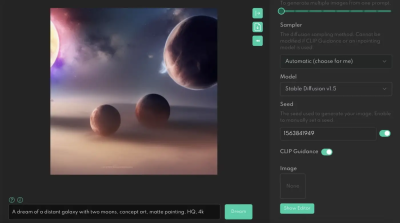
Legal Controversies and Copyright Battles
The rapid commercialization of generative AI has ignited fierce legal confrontations. In early 2023, a coalition of artists filed a high-profile class-action lawsuit against Midjourney, Stability AI, and DeviantArt, alleging widespread copyright infringement.
The core allegation centers on the training methodologies of these models, which ingest billions of copyrighted images scraped from the public web without explicit creator consent or compensation. Determining liability remains a complex legal challenge given the massive scale of the training datasets.
Despite ongoing litigation, the commercial world is actively integrating AI imagery. Major stock photography platforms, such as Shutterstock, have partnered with generative AI developers to introduce AI-generated stock assets while establishing compensation funds for contributing artists. Clearer regulatory frameworks and licensing standards are expected to solidify as global courts establish legal precedents for synthetic media.
A New Chapter in Design: Co-Creation with AI
Steve Jobs famously described the computer as "a bicycle for our minds"—the most remarkable tool humanity has ever devised to amplify cognitive capability. In the modern era, artificial intelligence functions as a bicycle for our creativity.
Creativity relies on the synthesis of life experiences, memories, and conceptual frameworks. Because AI requires human-generated work as its foundational training input, it cannot operate independently of human culture. However, it serves as an extraordinary "second brain," surfacing unexpected associations and visual directions that expand the creative horizon.
1. Visual Exploration and Mood Boarding
Traditionally, visual exploration involves scouring stock libraries and building manual mood boards on platforms like Pinterest. AI transforms this workflow into an interactive, conversational process.
Creators can leverage two primary generation workflows:
- Text-to-Image (txt2img): Users input a descriptive prompt alongside specific parameters—such as sampling steps (which dictate how many refinement iterations the model performs) and seed numbers (which allow creators to replicate or iterate closely upon a specific visual output).
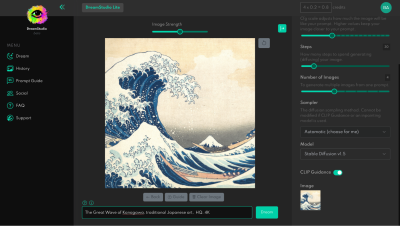
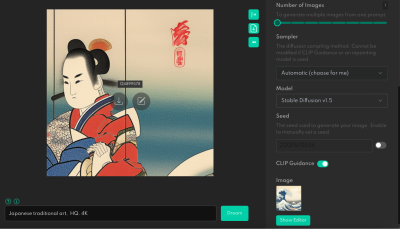
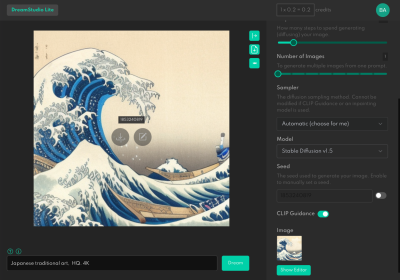
- Image-to-Image (img2img): Creators feed an existing image—such as a classical painting—into the system and adjust the image strength parameter. Setting image strength low (e.g., 5%) gives the AI vast interpretive freedom, while setting it high (e.g., 95%) yields subtle variations of the source material. This capability effectively modernizes and automates the mood-boarding phase.
2. Rapid Product Design and Prototyping
Product design cycles are historically protracted, often taking weeks to transition from initial wireframes to functional prototypes. AI compresses this timeline into minutes.

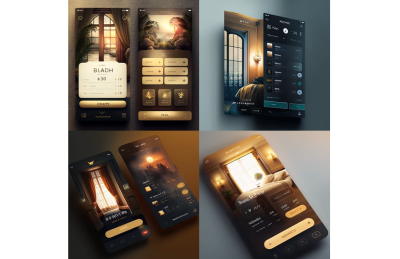
By inputting contextual prompts—such as "mobile app UI design, hotel booking, Dribbble style"—designers can instantly generate high-fidelity UI concepts. While current iterations of tools like Midjourney occasionally manifest artifacts (such as anatomical anomalies in human hands), the trajectory points toward seamless integration.
Future design software will automatically bake industry UX best practices, user personas, and customer journey maps directly into generative engines. Consequently, product teams will be able to visualize and stress-test fully articulated software concepts live during brainstorming sessions, bypassing traditional low-fidelity paper sketches.
3. World-Building for the Metaverse
As immersive digital environments and spatial computing platforms mature, content production demands will skyrocket. Recreating complex virtual cities and interactive environments manually is unsustainable. Designers will increasingly rely on AI to generate vast virtual worlds, shifting the professional role from a manual craftsperson to a spatial director who curates, refines, and optimizes machine-generated architecture and digital avatars.
Conclusion: Opening a New Chapter
Artificial intelligence is evolving far beyond a mere utility for asset generation. It is becoming an intuitive, collaborative team member.

The true zenith of AI-powered design will arrive when machine learning models learn not just from the collective internet, but specifically about and from individual creators. By reflecting a designer’s unique aesthetic preferences, functional requirements, and personal history, next-generation AI will produce outputs that carry a deeply authentic human fingerprint.
The future of design is expansive. Rather than diminishing the creative spirit, advanced technology will democratize artistic expression, empowering a broader population of thinkers to enrich our visual and digital world.