In the modern digital landscape, the technology industry is frequently obsessed with the "how"—the latest frameworks, the trendiest design patterns, and the pursuit of raw performance metrics. Yet, this relentless focus on execution often comes at the expense of the "why." As we continue to build a world dominated by smartphones, augmented reality, and IoT sensors, we are inadvertently creating a digital environment that excludes millions. To bridge this gap, practitioners are increasingly shifting their focus toward a core philosophy: the equivalent experience.
An equivalent experience is not merely a checklist of technical requirements; it is a commitment to ensuring that the intent of a digital product—its purpose, its utility, and its value—is accessible to the widest possible range of people, regardless of their device, their physical ability, or their circumstances.
The State of Things: Unconscious Bias in Design
The prevailing status quo in product development remains centered on a "default" user: someone who shares the same physical and cognitive capabilities as the designer or developer. This is not necessarily an act of malice, but rather an expression of deep-seated, systemic bias. When a developer says, "It works on my machine," or a designer claims, "It has enough contrast for my eyes," they are projecting their own experience onto a global user base that is vastly more diverse.
This mindset creates a digital caste system. If a web application is not responsive, mobile users are forced to pinch, pan, and zoom, effectively punishing them for the device they carry. If a site lacks proper scaling for text, it excludes users with vision impairments or those who are simply navigating the natural aging process. These design choices communicate a subtle but powerful message: you are not a priority, and therefore, you do not matter.
Chronology of the Accessibility Movement
The conversation around digital accessibility has evolved from a niche technical concern to a fundamental civil rights issue.
- The Early Web Era (1990s–2000s): Initial efforts were focused on basic standards, primarily driven by the W3C’s Web Accessibility Initiative (WAI). Accessibility was largely treated as an "add-on" for the altruistic.
- The Legal Tipping Point (2010s): As the web became the primary interface for essential services, legal reality shifted. Landmark cases, such as those involving Winn-Dixie and Domino’s Pizza, reached the highest levels of the judiciary. The courts increasingly ruled that digital accessibility is a matter of civil rights, asserting that barriers to online services are indistinguishable from physical barriers.
- The Modern Maturity Model (Present): We are currently in a phase where "equivalent experience" is moving beyond legal compliance. Organizations are beginning to recognize that accessible design is not just a defensive measure against lawsuits, but a prerequisite for innovation and market reach.
Supporting Data: The High Cost of Exclusion
The argument for accessibility is often framed through the lens of moral duty, but the economic data presents a compelling business case. Ignoring accessibility is, quite simply, bad for the bottom line.
The "Click Away" Penalty
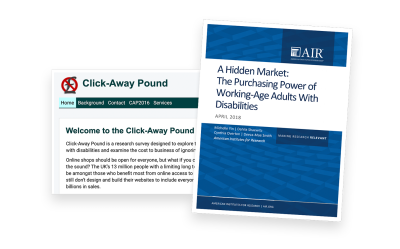
Research from the Click Away Pound Survey reveals that millions of potential customers abandon retail websites annually due to accessibility barriers. In a single study, this translated to over 17.1 billion pounds—approximately $21.1 billion USD—in lost revenue. When a user encounters a "broken" experience, they do not simply struggle through it; they leave.
The Untapped Market
The American Institutes for Research’s report, The Purchasing Power of Working-Age Adults With Disabilities, underscores the scale of this opportunity. There is an estimated $490 billion in disposable income among disabled working-age adults. When businesses ignore accessibility, they are essentially ignoring a market segment larger than many entire industries.
The "Rube Goldberg" Effect
Accessibility is often misunderstood as "adding features" to help disabled users. In reality, it is about removing the "Rube Goldberg" complexity that makes an experience difficult. For an able-bodied person, a button click is a single, intuitive action. For a user relying on assistive technology, a poorly coded button may require a series of convoluted, time-consuming workarounds. This is not "access"—it is a hurdle.

Official Perspectives and Real-World Impact
To understand the impact of these barriers, we must look at the stories of those who navigate them daily. Digital accessibility is not just about screen readers; it encompasses browser extensions, voice control, and ad-blocking software used for cognitive relief.
The Problem of Consistency
Damien Senger, a digital designer, relies on tools like Midnight Lizard to normalize color contrast and block distracting animations that trigger ADHD or migraine symptoms. When websites lack consistency in layout or use harsh, non-adjustable contrasts, they create barriers that force users to "defend" their own browsing experience through third-party tools.
The Loss of Autonomy
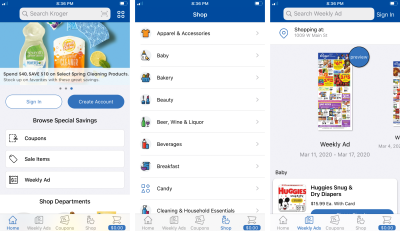
The most profound impact of poor design is the erosion of autonomy. When a grocery app fails to read item names correctly, or a government portal forces a user to seek help from others to pay a bill, the digital experience has failed its most basic purpose: to empower the individual. As Kenny Hitt, a longtime screen reader user, notes: "Persistence in solving problems is a requirement for any disabled person if you want to succeed in the world." But this persistence shouldn’t be a requirement for buying groceries or applying for a job.

Implications: Building for the Future
The shift toward "equivalent experiences" requires a fundamental change in how we manage software development and product feedback.
1. Reclassifying Accessibility Bugs
Accessibility issues are frequently treated as low-priority "nice-to-haves." They should be treated with the same severity as any other functional bug. If a checkout page is broken, it is a critical issue; if it is inaccessible, it is also a critical issue. Organizations must move beyond "nobody has complained before"—which is usually a sign that users have simply stopped trying—and proactively integrate accessibility testing into the CI/CD pipeline.
2. Radical Transparency
When an organization fails to meet accessibility standards, the response should not be silence or bureaucratic redirection. Users need clear, honest communication about what is being fixed and when. Establishing trust requires acknowledging the history of exclusion and demonstrating a tangible commitment to improvement.
3. The Shift to Inclusive Design
Ultimately, the goal is to stop thinking of accessibility as a task to be "solved." Instead, it should be a lens through which all design and development decisions are viewed.
As we look toward the future, the question is not "How can we make this compliant?" but rather, "Is this experience equivalent for everyone?" We are all, at some point, temporarily abled. Designing for the widest range of human diversity is not just an act of inclusion—it is the only way to build a web that is truly resilient, innovative, and capable of serving the entirety of our society.
Moving Forward
The challenge for the next decade of web development is clear: we must move past the legal minimums. Compliance is the floor, not the ceiling. By embracing the philosophy of the equivalent experience, we unlock the full potential of the web, turning a collection of walled-off digital spaces into a truly universal platform for human connection, commerce, and growth.
Other Resources & Further Reading
- Accessibility is about people, not standards by Nicolas Steenhout.
- A11y Rules (Soundbites) podcast.
- The Mismatch by Kat Holmes (on Inclusive Design).
- Web Content Accessibility Guidelines (WCAG) 2.1 (The official W3C standards).