As generative artificial intelligence tools continue their exponential surge across writing, design, and software development, a cloud of anxiety hangs over creative industries. Professionals who once believed their jobs were insulated from automation now face an existential question: Will AI render creators obsolete?
While machine learning models can process vast datasets and generate sophisticated visual assets in seconds, they fundamentally misunderstand the essence of design. AI is programmed to execute specific tasks by mimicking human outputs; it cannot replicate the nuanced, non-technical human behaviors that define true design work. By examining the framework of "designerly" skills—categorized by the head, heart, and hands—we can see why human creators maintain an unassailable advantage, and why AI is best deployed as a workflow amplifier rather than a replacement.
Main Facts: The AI Disruption vs. Human Reality
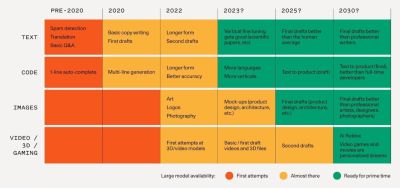
The anxiety gripping the creative sector is fueled by relentless media hype and speculative timelines predicting when artificial intelligence will match or exceed human capabilities across various domains. Platforms capable of generating text, code, images, and video from simple prompts have transformed the landscape of content creation.

Yet, this panic relies on a flawed premise: that humans and machines possess the same fundamental qualities.
- The Machine Model: Artificial intelligence operates by mimicking human intelligence through massive datasets—by some estimates, training on volumes equivalent to a quarter of the Library of Congress. It excels at processing data quickly, rationally, and consistently. However, it lacks consciousness, physical senses, and real-world experience.
- The Human Advantage: True creativity stems from a lifetime of emotional development, cultural context, subconscious processing, and sensory interaction with the physical world. While AI can simulate creation, it cannot be genuinely creative.
Designers spend years acquiring hard technical skills, but their ultimate impact relies on soft, "designerly" behaviors—a term coined by design researcher Nigel Cross to describe the underlying patterns of how designers think and act.
Chronology: From Remote Assumptions to Real-World Insight
To understand why human-centric skills cannot be automated, one must look at how design is practiced in the field.
At the height of the COVID-19 pandemic, a lead UX designer undertook the redesign of a tablet application used by sales representatives at the world’s largest food and beverage company. Initially restricted by lockdowns, the team relied entirely on video interviews and digital walkthroughs. While these virtual sessions provided baseline metrics, they failed to capture the messy reality of the sales representatives’ daily routines.
- Phase 1: Field Immersion. As soon as health restrictions permitted, the designer met two sales representatives at a local Walmart. Masked and socially distanced, the designer walked a mile in their shoes through dairy, pet food, and freezer aisles.
- Phase 2: Uncovering Hidden Friction. This physical visit revealed critical operational hurdles that never surfaced in video calls: sales reps were forced to juggle multiple devices and printouts, struggle with touchscreens inside low-lit, freezing walk-in freezers, and navigate crowded aisles without disrupting harried shoppers—repeating this grueling process 20 to 30 times a day, five days a week.
- Phase 3: Collaborative Innovation. Armed with profound physical and emotional insights, the global design team experimented with targeted concepts, iterated rapidly based on direct feedback, and launched a redesigned app that garnered glowing praise from both end-users and company stakeholders.
This transformation was not driven by algorithms, but by distinctly human capabilities: curiosity, empathy, and collaboration.
Supporting Data: The Head, Heart, and Hands Framework
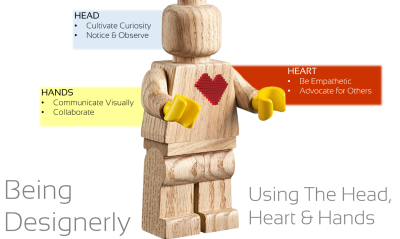
To organize the human advantages over artificial intelligence, experts look to the "head, heart, and hands" approach for transformative learning. These competencies are divided into three distinct pillars of human behavior.
1. The Head: Thinking Like a Designer
The intellectual foundation of design rests on curiosity and observation.
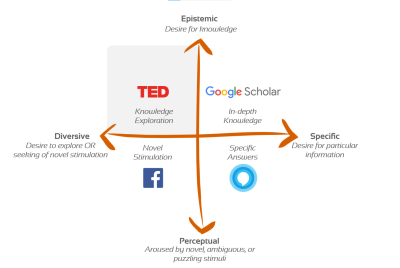
- Cultivating Curiosity: Curiosity is the innate desire to explore, experiment, and learn. While AI is restricted by its training data and lacks sensory organs to experience the physical world, humans possess boundless inquisitive potential. Psychologist Daniel Berlyne’s Theory of Human Curiosity highlights diversive-epistemic curiosity—the drive to explore new ideas and cross-pollinate knowledge. Dedicated daily exploration broadens the human mind in ways static algorithms cannot match.
- Noticing and Observing: Noticing is seeing something for the first time; observing is paying close intentional attention. Designers routinely immerse themselves in user environments to spot unarticulated needs. AI cannot replicate this because it relies entirely on pre-existing data, completely detached from emotional contexts or real-time environmental shifts.
2. The Heart: Feeling Like a Designer
Design is fundamentally an empathetic endeavor.
- Practicing Empathy: According to psychologists Daniel Goleman and Paul Ekman, empathy spans cognitive, emotional, and compassionate dimensions. Compassionate empathy drives humans not just to understand another person’s struggles, but to take action to alleviate them. AI can measure facial expressions or mimic sympathetic phrasing, but it has no personal history, no consciousness, and no capacity to genuinely feel.
- Advocating for Others: User advocacy sits at the heart of design. Designers act as voices for users within complex corporate ecosystems, navigating competing stakeholder interests and making ethical judgments. Algorithms can be programmed with rule-based safety guidelines—frequently resulting in erratic or overly rigid behavior—but they cannot make nuanced, ethically grounded judgment calls on behalf of human welfare.
3. The Hands: Acting Like a Designer
Execution requires tangible communication and collective effort.
- Visual Communication: Storytelling and visual thinking bridge gaps where words fail. Whether through rough whiteboard sketches, rapid wireframes, or physical prototypes, humans can "read the room," adapt to shifting moods, and translate abstract concepts into shared visions. AI lacks the spatial intuition, emotional intelligence, and environmental awareness to execute genuine visual communication independently.
- Collaboration: Solving complex problems requires multi-disciplinary teams to navigate social dynamics, negotiate compromises, and adapt on the fly. While AI tools can assist by transcribing notes, editing video, or drafting copy, they frequently err—as demonstrated by hallucinated biographies and inaccurate citations generated by LLMs. True collaboration remains an exclusively human domain.
Official Responses and Industry Perspectives
Tech leaders, economists, and creative directors increasingly view generative AI not as a terminator of human labor, but as a sophisticated productivity multiplier.
Industry analysts emphasize that while routine, repeatable tasks will continue to be automated, the strategic core of creative professions will elevate in value. Much like the culinary arts—where kitchen appliances and automated prep tools assist line cooks, yet rely entirely on master chefs for menu strategy, flavor balancing, and final execution—creative industries are undergoing a structural shift.
Design leaders stress that professionals who learn to leverage AI for rapid prototyping, data sorting, and pattern recognition will outperform those who resist the technology entirely. However, the ultimate decision-making authority—grounded in human values, cultural context, and emotional intelligence—must remain firmly in human hands.

Implications for the Future of Work
The rise of generative AI forces a necessary reckoning within the design and creative communities. The competitive advantage is shifting decisively away from pure mechanical execution and toward emotional and cognitive agility.
- Redefining Productivity: Creators will spend less time on manual labor (such as transcription, initial layout generation, or basic data crunching) and more time on high-level strategy, stakeholder alignment, and ethnographic research.
- Prioritizing Soft Skills: Educational curricula for designers and technologists must place equal—if not greater—emphasis on non-technical skills like empathy, active observation, and collaborative problem-solving.
- Embracing Augmentation: Professionals must view AI as a sophisticated assistant rather than a replacement peer. By integrating AI into daily workflows, creators can free up mental bandwidth to focus on what humans do best: understanding people, navigating real-world constraints, and crafting meaningful, transformative solutions.
Ultimately, artificial intelligence cannot be trained to replicate designerly skills because it lacks a lived human experience. By consciously developing our capacities for curiosity, observation, empathy, advocacy, visual communication, and collaboration, humans will not only survive the AI revolution—we will lead it.