By the Editorial Desk
Published: Insights & Analysis
Executive Summary & Main Facts
In the rapidly evolving landscape of digital product design, a persistent and costly misconception continues to plague corporate boardrooms and creative agencies alike: the interchangeable use of the terms "UI" (User Interface) and "UX" (User Experience). Industry veteran Paul Boag recently reignited this debate, arguing forcefully that treating these roles as synonyms fundamentally misunderstands the scope of modern design.
While a User Interface designer focuses strictly on the visual layout, aesthetics, and direct interactive elements of a screen, a User Experience designer is tasked with orchestrating the entirety of a user’s journey. This holistic responsibility becomes remarkably complex within the business-to-business (B2B) sector. Unlike fast-paced business-to-consumer (B2C) transactions, B2B sales cycles are characterized by extended timelines, multi-layered decision-making units, asynchronous communications, and a hybrid mix of digital touchpoints and human-to-human interactions.
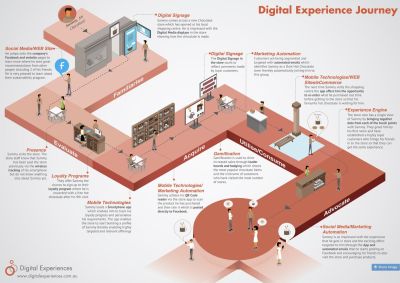
According to product strategy experts, optimizing a single digital asset—such as a landing page or a mobile app—is virtually useless if the broader ecosystem surrounding that asset is fractured. True UX design requires mapping the entire customer journey, identifying and plugging structural "gaps," managing the transition between digital systems and human personnel, and ultimately designing a seamless, end-to-end sales funnel that nurtures prospective clients over weeks, months, or even years.

Chronology of the UX vs. UI Evolution
To understand how the industry arrived at this strategic crossroads, it helps to examine the chronological evolution of digital design roles over the past two decades:
- The Early Web Era (Late 1990s – Early 2000s): The digital landscape was dominated by "webmasters" and graphic designers. At this time, visual presentation and basic HTML layout were the primary concerns. The term UX did not yet exist in the corporate vernacular.
- The Rise of Usability (Mid-2000s): As websites grew more complex, the discipline of Information Architecture (IA) and Usability Engineering emerged. Pioneers began studying how humans interact with digital systems, focusing on efficiency, task completion, and cognitive load.
- The Specialization Split (2010s): With the proliferation of smartphones and mobile apps, the interface itself became a dedicated discipline. The title "UI Designer" was coined to describe specialists in visual styling, typography, and interactive component libraries. Simultaneously, "UX Designers" began focusing on user research, wireframing, and workflow optimization.
- The Contemporary Crisis (Present Day): Today, many organizations conflate the two roles, hiring UX designers under the false assumption that their primary deliverable is high-fidelity interface wireframes. Thought leaders like Boag argue that this administrative shortcut severely diminishes the strategic value of UX professionals, reducing them to glorified screen decorators.
Supporting Data & The Anatomy of B2B Complexity
The necessity for holistic UX design is rooted in the inherent complexity of enterprise commerce. B2B transactions differ fundamentally from retail consumer purchases. While a B2C customer may move from product discovery to checkout within five minutes, a B2B client typically undergoes a protracted evaluation process.
The Anatomy of a B2B Journey
- Discovery of Need: A business encounters an operational bottleneck. They may turn to organic search, industry publications, or conference presentations to find educational resources. At this stage, a hard sales pitch is counterproductive.
- Information Gathering & Nurturing: Recognizing a problem does not immediately unlock a corporate budget. Months may pass as stakeholders build a business case. During this gap, prospective clients rely on email newsletters, webinars, and thought-leadership content to stay connected with potential vendors.
- Vendor Shortlisting: Once budgets are secured, decision-makers actively evaluate software solutions, agencies, or enterprise service providers. This involves navigating websites, reading case studies, and interacting with sales representatives via digital channels (Zoom, email, chat).
- Conversion and Onboarding: The transition from a sales pipeline into active project execution or software adoption.
Research into modern buyer behavior indicates that companies utilizing advanced Sales Pipeline Software and Customer Relationship Management (CRM) tools—such as Gong.io or Salesforce—experience significantly lower drop-off rates during the nurturing phase. However, software alone cannot fix a broken journey. When data silos exist between marketing, sales, and customer success teams, prospective clients inevitably fall through the cracks.
Official Perspectives and Industry Insights
Industry analysts and seasoned practitioners have increasingly spoken out against the narrow framing of UX design within corporate structures.
"Perhaps this is a controversial statement, but I hate it when UI and UX designers are referred to interchangeably. To my mind, at least, they are different roles, with the clue being in the names," notes Paul Boag in his foundational analysis of B2B sales journeys. "User Interface designers design the interface, while User Experience designers are concerned with the entirety of the user’s experience."
The Danger of Premature Conversion
A classic symptom of fragmented UX thinking is the misuse of high-friction conversion mechanisms. Consider the ubiquitous website overlay: a first-time visitor lands on a B2B platform, and a modal immediately appears offering a discount code in exchange for an email address.
From a siloed UI perspective, the button looks clean, and the conversion rate of the modal might be tracked locally. From a holistic UX perspective, however, the interaction is disastrous. The user has not yet seen the product, does not understand its value, and views the pop-up as an intrusive annoyance. By mapping the customer journey, designers learn to sequence touchpoints appropriately—reserving promotional offers or high-commitment calls to action until the visitor has had sufficient time to evaluate the offering.
Plugging the "Gaps"
Gaps in the user experience occur naturally whenever a customer transitions across boundaries—whether shifting from a mobile device to a desktop computer, moving from an automated marketing email to a live sales call, or being transferred between corporate departments while on hold.

Forward-thinking enterprises are actively working to eliminate these friction points. For instance, modern banking applications have begun removing redundant security checks when a customer calls support directly from the authenticated mobile app. Because the user has already verified their identity digitally, forcing them to repeat security questions over the phone represents an unmitigated structural gap.
Implications for Organizations and Design Professionals
The realization that user experience extends far beyond software interfaces carries profound implications for organizational design, hiring practices, and professional development.
1. Re-evaluating the UX Job Description
If an organization hires a UX designer and restricts their daily activities to producing Figma wireframes or sketching app screens, that organization is failing to leverage the strategic capabilities of the professional. UX designers must be granted the mandate—and the organizational access—to audit entire business processes, from initial marketing touchpoints to post-sale customer support.
2. Bridging the Digital-Human Divide
One of the most neglected areas in modern digital design is the human factor. In B2B environments, many critical touchpoints are technically digital (such as Zoom calls, webinars, or automated email sequences), but fundamentally interpersonal. When an overzealous sales representative pushes for a closed deal too early, or when a customer support team relies on robotic, unhelpful stock replies, the overarching user experience collapses. UX designers must work alongside sales enablement teams, providing communication frameworks, coaching templates, and empathy training to ensure that human-to-human touchpoints align with digital promises.

3. Embracing End-to-End Journey Mapping
Organizations must move away from siloed key performance indicators (KPIs) that measure individual web pages or isolated app features in a vacuum. By implementing comprehensive customer journey maps, teams can visualize the emotional highs and lows of their clientele, identify operational bottlenecks, and design a cohesive sales funnel that guides users gently and naturally toward conversion.
Conclusion
Improving user experience is not merely a matter of polishing pixels or choosing the right shade of blue for a call-to-action button. True user experience encompasses the entire continuum of a customer’s interaction with a brand—spanning across devices, time zones, software applications, and human conversations.
For B2B organizations striving to stand out in crowded markets, breaking down internal silos and empowering UX designers to look beyond the screen is no longer optional. It is the definitive differentiator between a business that merely maintains a website and one that cultivates lasting, profitable customer relationships.