In the modern digital landscape, the phrase "scratch your own itch" is frequently thrown around as startup gospel. Yet, few founders execute it with the methodical, iterative precision of Ben Bozzay. In a recent episode of the Niche Pursuits podcast, Bozzay sat down to discuss the evolution of Tech Lockdown—a cybersecurity and productivity platform that has scaled to $20,000 in monthly recurring revenue (MRR) entirely as a bootstrapped, solo-founded venture.
What makes Tech Lockdown’s trajectory compelling is not merely its financial milestone, but its unconventional anatomy. The business did not begin with a polished product roadmap, venture capital funding, or a multi-tiered marketing funnel. It started with a personal battle against digital distraction, ultimately transforming through a sequence of organic business model mutations: free content, paid guides, productized memberships, DNS filtering, and finally, a robust Software-as-a-Service (SaaS) architecture.
Main Facts: At a Glance
- The Founder: Ben Bozzay, a technologist with a unique professional background spanning software engineering in the cybersecurity sector and digital marketing agency ownership.
- The Business: Tech Lockdown, a specialized digital control and accountability platform designed primarily for adults seeking robust, enterprise-grade internet restrictions.
- Current Revenue Milestone: $20,000 in Monthly Recurring Revenue (MRR).
- Team Size: Solo founder, operating with targeted freelance contractors and leveraging modern AI toolsets for operational scale.
- Traffic & Acquisition: Peak organic search volume reaching approximately 75,000 monthly visitors, driven primarily by hyper-specific, technical SEO strategies.
- Ecosystem Expansion: Includes a secondary application, "LivingRoom," designed around home screen visibility and AI-driven content monitoring.
Chronology: The Evolution of Tech Lockdown
The journey of Tech Lockdown is defined by a slow, deliberate evolution driven entirely by customer demand rather than speculative product development.
Phase 1: The 2020 Pandemic and the Root Problem
The origin of Tech Lockdown dates back to the spring of 2020. Amid the widespread COVID-19 lockdowns, Bozzay—like millions of remote workers globally—found his screen time spiraling out of control. However, Bozzay possessed a critical advantage: an advanced technical background in cybersecurity and software engineering.
Standard consumer-facing app blockers and browser extensions proved entirely inadequate for his skill set. Because he understood how code executed on his machines, he could effortlessly bypass or uninstall any consumer-grade blocker he installed. Recognizing that basic tools were useless for tech-savvy individuals, Bozzay began engineering enterprise-grade security protocols—systems typically deployed by corporations to govern employee work devices—to restrict his own personal hardware.
Phase 2: Documenting the Experiment
Without any initial commercial intent, Bozzay began documenting his technical workaround strategies. He published instructional write-ups on Medium, shared insights within specialized Reddit communities, and recorded YouTube tutorials detailing how to implement corporate-level restrictions on personal machines.
The response was immediate and overwhelming. Rather than viewing the information as esoteric, readers flooded his comment sections and inbox requesting further assistance and consulting. Bozzay recognized that he had identified a critical market gap: consumer blockers were too easily bypassed, while enterprise solutions were entirely inaccessible to individuals lacking IT departments.
Phase 3: Monetization and the Shift to Paid Content
By 2021, Bozzay transitioned his content hub from third-party publishing platforms to his own domain, Tech Lockdown. As search engines indexed his highly technical guides, organic search traffic began to compound.
Capitalizing on this momentum, he introduced a paid membership model. Rather than software, this initial monetization layer offered structured, comprehensive installation guides. Users gladly paid for these resources because they saved hours of frustrating trial-and-error across scattered online forums. Crucially, this monetization model succeeded because it was preceded by an immense volume of high-trust, valuable free information.
Phase 4: The Inevitable Pivot to SaaS
While paid content generated early revenue, it exposed a structural limitation inherent to information products: once a customer successfully configured their digital lockdown system, their need for the content expired, terminating their subscription lifecycle.
To build a sustainable, compounding business model, Bozzay needed recurring utility. In 2022, he introduced a proprietary DNS filtering service. This pivot fundamentally transformed the enterprise. Customers were no longer merely paying for static information; they were subscribing to an active, ongoing software tool designed to solve a persistent daily challenge.
Phase 5: The 2023 Layoff and Full-Time Transition
In 2023, amidst broader tech sector corrections, Bozzay was laid off from his corporate engineering role following a 10% workforce reduction. At this juncture, Tech Lockdown was generating less than $2,000 per month in profit—a figure insufficient to offset his lost corporate salary, let alone newly acquired private health insurance premiums.
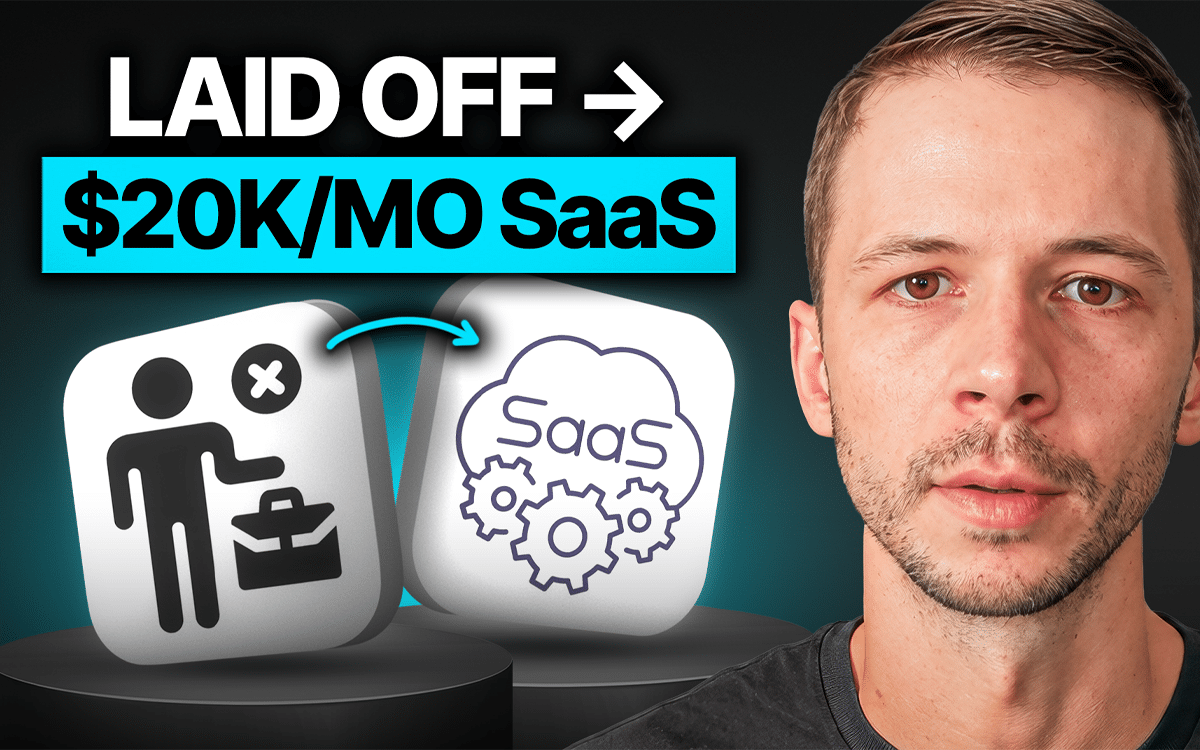
Faced with a lucrative corporate job offer that represented the safe financial choice, Bozzay and his wife elected to double down on the startup. The initial months of full-time operation were marked by intense, exhausting labor with virtually flat revenue growth. Yet, through unyielding persistence and continued content output, the compounding effects of his SEO and product strategy finally caught fire.
Supporting Data: SEO, Funnels, and Market Positioning
Tech Lockdown’s ascent to a $20K MRR enterprise highlights the power of focused, high-intent organic acquisition. While many digital publishers panicked over algorithmic volatility and the rise of AI-generated search summaries, Bozzay’s traffic remained resilient due to the hyper-specific nature of his content.
The Technical SEO Playbook
Bozzay deliberately ignored broad, generic keywords like "best website blocker," which are dominated by massive affiliate review sites. Instead, he targeted long-tail, highly specific technical queries—such as preventing users from terminating a blocking utility via the Windows Task Manager.
Although traditional SEO keyword research tools frequently reported negligible search volume for these granular queries, Bozzay understood that real users experiencing acute pain points were searching for them. This strategy yielded massive dividends:
- Organic Reach: Scaling to approximately 70,000 to 75,000 monthly organic visitors.
- Content Trees: Establishing a thematic content architecture where broad top-of-funnel conceptual articles seamlessly linked down to granular, procedural technical guides.
- Branded Terminology Resilience: Anticipating the shift toward AI-driven search engines by embedding unique, proprietary frameworks and branded terminology that search engines and AI models must cite directly.
Defining the Core Audience: Adults, Not Parents
The vast majority of digital wellness applications focus on parental control use cases—parents restricting children’s devices. Bozzay identified that this market dynamic was fundamentally flawed when applied to adults.
A parent possesses ultimate administrative authority: they can physically confiscate a device, alter passwords, or revoke access. An adult self-restricting, however, retains administrator access, recovery keys, and the technical capacity to dismantle their own guardrails. By deliberately designing Tech Lockdown for adults struggling with self-regulation—such as remote professionals, entrepreneurs, and individuals battling compulsive digital habits—Bozzay secured a defensible, high-intent niche.
Official Perspectives and Strategic Implications
Reflecting on his journey, Bozzay emphasizes that founders do not need to wait for a polished, venture-backed product launch to build a viable business.
"You don’t need to serve every audience at once. You don’t need to launch with the final product. You can start by solving a painful problem, documenting the process, and improving the offer as customers show you what they need next."
Implications for Bootstrapped SaaS Founders
The Tech Lockdown case study provides a blueprint for modern bootstrapped entrepreneurs:
- Validation Through Documentation: Writing about personal problem-solving acts as a natural market filter, attracting an audience experiencing identical pain points before a single line of software code is written.
- The Content-to-Software Pipeline: Transitioning from free content to paid guides, and subsequently to SaaS, mitigates financial risk by ensuring that every phase of product development is funded and validated by existing customer demand.
- Resilience Against Market Volatility: In an era where traditional SEO and digital marketing are increasingly disrupted by artificial intelligence, deep, highly specialized technical expertise and proprietary frameworks create an un-scrappable moat.
Future Horizons: Beyond Tech Lockdown
Today, Tech Lockdown continues to expand under Bozzay’s solo leadership, supported by strategic contractors and automated tooling. His upcoming product milestones include engineering an advanced iPhone mobile device management (MDM) solution that bypasses the traditional requirement for a hard device reset—a technical hurdle that has frustrated the industry for years.
Simultaneously, Bozzay is scaling his secondary application, LivingRoom. While Tech Lockdown focuses heavily on hard restriction and device-level enforcement, LivingRoom introduces a complementary paradigm: home screen visibility, accountability partnerships, and AI-driven screenshot monitoring to detect inappropriate digital content passively.
As Bozzay navigates the complexities of scaling past his current milestones, his trajectory serves as an enduring testament to the power of patience, deep technical focus, and listening closely to the market one user at a time.