By: B2B Enterprise News Desk
Published: September 2026
Main Facts
In the current tech landscape, a quiet yet significant talent migration is underway among senior B2B executives. While the tech headlines are dominated by hyper-growth artificial intelligence startups scaling at 300% to 1,000% annually, a growing cohort of seasoned Chief Revenue Officers (CROs), Chief Marketing Officers (CMOs), and Vice Presidents of Customer Success are making a deliberate career pivot. They are leaving the chaotic trenches of early-stage chaos to join mature companies growing at a modest 0% to 10%.
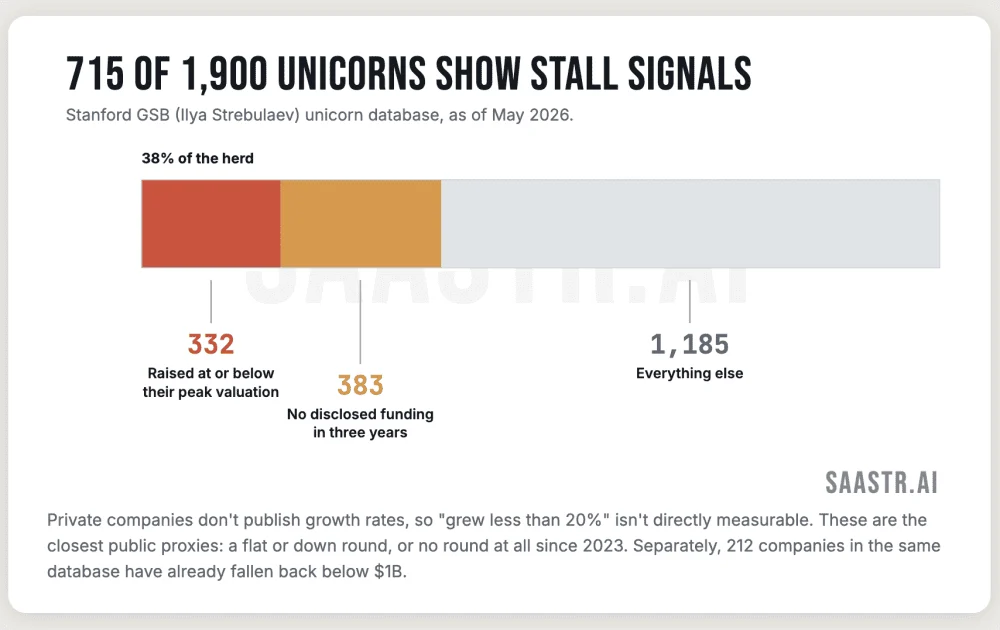
Driven by current market data—estimating roughly 1,400 to 1,700 unicorns globally following the massive market minting of 2021 and 2022—a significant portion of these once-high-flying enterprises have plateaued. They are no longer expanding exponentially, but neither are they shrinking. Many are cash-flow positive, resilient, and anchored by robust legacy operations. Far from signaling corporate stagnation, maintaining flat growth or low single-digit expansion ($0%$) at scale represents a formidable operational challenge. It requires sophisticated enterprise management, mature go-to-market (GTM) playbooks, and heavy lifting to offset natural customer churn, making these steady-state roles surprisingly attractive for executive leadership seeking stability, healthy cash compensation, and sustainable work-life balance.
Chronology
To understand how the market reached this unique juncture, it helps to examine the trajectory of modern B2B tech over the past decade and a half:
- 2012–2022 (The Classic SaaS Era): The modern Software-as-a-Service (SaaS) playbook was codified. Executives mastered predictable metrics: Annual Recurring Revenue (ARR), Gross Revenue Retention (GRR), Net Revenue Retention (NRR), structured sales development representative (SDR) pipelines, and account-based marketing (ABM).
- 2021–2022 (The Unicorn Boom): Venture capital liquidity peaked, minting between 1,400 and 1,700 unicorns globally (as tracked by indexes from Hurun, CB Insights, and Eqvista). Thousands of tech companies scaled rapidly, often prioritizing growth at all costs.
- 2023–2025 (The Correction & AI Disruption): As interest rates rose and markets tightened, many of these 2021-era unicorns hit a growth ceiling. Simultaneously, the explosion of generative AI upended traditional GTM strategies, forcing early-stage companies to constantly question their pricing units, sales motions, and reliance on human labor versus AI agents.
- 2026 (The Great Executive Realignment): Executive fatigue set in. The relentless pressure of the "996" work culture (9 AM to 9 PM, 6 days a week) at hyper-growth AI startups pushed seasoned leaders to look for alternatives. Concurrently, mature $150M–$1B ARR companies stabilized their cost structures, reaching cash-flow breakeven or profitability. This created a formal, highly lucrative employment category for executives willing to steer steady, slow-growth ships.
Supporting Data
The economics of a $150M ARR company growing at 0% reveal that maintaining a flat trajectory is far from a passive exercise. Consider a representative mid-market B2B software firm:
- The Churn Reality: With a standard Gross Revenue Retention (GRR) rate of 88%, an enterprise with $150M in ARR sees $18 million walking out the door every year due to customer churn, downsells, seat contraction, corporate mergers, and champion turnover.
- The Acquisition Burden: To achieve flat (0%) growth, that same organization must successfully close $18 million in brand-new and expansion ARR.
- The Deal Math: Assuming an average enterprise deal size of $150,000, the company must land 120 new logos annually alongside a deeply coordinated account expansion motion.
- Organizational Scale: Accomplishing this requires a fully staffed commercial engine:
- A sales organization of 30 to 50 quota-carrying enterprise reps.
- A sophisticated, functioning marketing funnel.
- A dedicated Solutions Engineering (SE) team.
- A Customer Success (CS) team aggressively fighting for every renewal and upsell.
- A product organization shipping enough continuous value to keep renewal conversations from derailing.
Furthermore, market index data highlights the vast universe of mature firms operating in this bracket. Hurun’s index places the global unicorn count at 1,603, while CB Insights tracks roughly 1,400 and Eqvista logs upwards of 1,700. A massive share of these companies are settled firmly into the 0%–10% growth band, possessing the balance sheets required to attract top-tier executive talent with heavy cash components.

Official Responses and Industry Insights
Industry analysts, executive recruiters, and veteran operators have increasingly weighed in on this shifting paradigm. The consensus points to a fundamental divergence in what senior leaders want out of their careers.
- The Pre-AI Playbook Still Dominates Mature Operations: At AI-native startups scaling at 300% to 1,000% year-over-year, executives report that everything learned over the prior decade is up for debate weekly. Compensation structures, SDR models, pricing frameworks, and the viability of human-led demos are constantly scrutinized. By contrast, at a $150M ARR enterprise growing at 3%, the mandate is clear: execute the proven playbook. Territory design, rigorous pipeline coverage ratios, disciplined win/loss analysis, and targeted pricing tweaks take precedence over existential business model pivots.
- The Compensation Equation: While early-stage AI startups frequently offer sub-market cash salaries offset by speculative equity and intense burnout, mature 0% growers have a distinct financial advantage. Having restructured and trimmed operational fat over recent years, these firms are frequently cash-flow positive. At the VP and C-suite levels—especially in companies scaling past $500M in ARR—they offer substantial, reliable cash compensation paired with performance-based equity kickers designed to nudge growth into double digits.
- The Burnout Factor: Industry veterans note that not every experienced executive wants to spend Sunday evenings in a high-stakes Slack channel debating whether an AI agent should completely replace human sales development. For leaders prioritizing families, sustainable health, or simply a preference for predictable, high-level execution over radical transformation, the steady-state enterprise offers an appealing professional home.
Implications
While the prospect of joining a stable, cash-rich company running a predictable playbook sounds idyllic to fatigued leaders, industry experts warn that this career path comes with distinct risks and strategic implications:
1. Flat is One Bad Quarter Away from "Down"
An enterprise experiencing flat growth is precariously positioned. If mishandled, a flat trajectory can quickly devolve into a declining business. A downward slide brings severe consequences: aggressive workforce reductions, private equity intervention, distressed corporate restructuring, and leadership spending quarters locked in data rooms rather than engaging with customers. Consequently, executive due diligence when joining a 0% grower must be far more rigorous than evaluating a traditional hyper-growth startup.
2. The Danger of Stagnation for Rising Talent
For executives whose primary skill set lies in rapid zero-to-one scaling, entering a slow-growth environment can lead to professional atrophy. The core competencies required to move a company from 3% growth to 11% growth—such as micro-optimizing onboarding gaps, refining ideal customer profiles (ICPs), and engineering incremental pricing expansions—require immense patience and tactical discipline, which may not suit every leadership style.
3. A Redefinition of Executive Success
Ultimately, this trend signals a broader maturation of the tech executive labor market. Success is no longer exclusively measured by triple-digit top-line growth fueled by venture capital subsidies. For a significant segment of the B2B executive class, success is being redefined: running a healthy, cash-generating, resilient business that respects human boundaries while delivering exceptional value to shareholders, employees, and customers alike.