In the rapidly evolving landscape of digital content creation, solo entrepreneurs and lean marketing teams face an unrelenting paradox: the demand for consistent, multi-platform publishing has never been higher, yet the human hours required to ideate, draft, and format content remain strictly finite.
For years, creators have defaulted to an all-or-nothing binary regarding artificial intelligence—either rejecting it entirely to preserve a manual, authentic voice, or blindly outsourcing every creative decision to a machine, resulting in homogenized, recognizable "AI slop."
However, a middle ground is emerging. According to AI strategist Nicky Saunders, creators can build a personalized "AI Creative Director" using advanced language models like Anthropic’s Claude. By integrating AI as a persistent layer within existing creative workflows—rather than a total replacement for human thought—creators can transform raw, unstructured voice journals into polished, multi-platform content assets that maintain a distinct brand voice.
Main Facts: The Anatomy of an AI Creative Director
The core architecture of an AI-powered creative system relies on treating the language model not merely as a chatbot, but as a long-term collaborator equipped with persistent memory, specific design rules, and direct pipeline integrations.
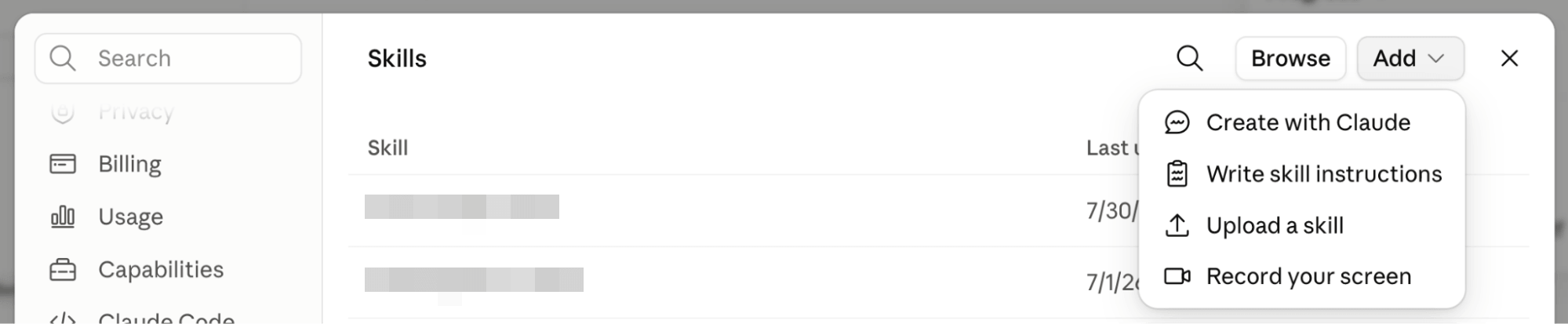
- The Core Tool: Anthropic’s Claude serves as the central brain, utilizing persistent "skills" (saved instruction sets and rules) to bypass the need for repetitive prompting in new chat windows.
- The Input Source: Rather than staring at a blank page, the workflow begins with unscripted, spoken voice journals (inspired by Julia Cameron’s The Artist’s Way morning pages), which capture authentic thoughts, frustrations, and reflections.
- The Output Pipeline: Through automated pipelines connecting tools like Notion, Claude Cowork, Apify, Higgsfield, and HeyGen, a single journal entry expands into Twitter/X threads, Substack essays, YouTube scripts, Instagram carousels, and newsletter drafts.
- The Human-in-the-Loop Safeguard: AI handles ideation, drafting, and asset production, but human judgment strictly governs final selection, editing, and publishing. Direct programmatic publishing access is withheld from the AI to ensure security and brand safety.
Chronology: The Evolution of Content Workflows
The journey from manual content creation to automated, AI-augmented multi-platform publishing has undergone distinct phases over the past several years.
Phase 1: The Manual Content Grind
Historically, content creators operated in silos. Writing a newsletter, recording a video, and designing social carousels required discrete, time-consuming efforts. Creators spent hours battling writer’s block, often resulting in content droughts when client work or business operations took precedence.
Phase 2: The Generic AI Experimentation Era
With the advent of mainstream generative AI, creators began prompting tools like ChatGPT or early versions of Claude with basic commands like, "Write a LinkedIn post about marketing." While this increased output speed, it triggered a market saturation of bland, predictable copy lacking distinct human perspective, leading to audience fatigue.
Phase 3: The Integration Layer & Skill-Based AI
As model capabilities advanced—introducing persistent project memory, API connectors, and specialized model tiers—forward-thinking strategists like Nicky Saunders began shifting toward integrated workflows. Instead of treating AI as a standalone text generator, creators started building foundational style guides, uploading visual inspiration libraries, and training custom AI "skills" that reflect their exact cadence, vocabulary, and platform-specific formatting rules.
Phase 4: The Autonomous DraftLoop Pipeline
The current frontier involves end-to-end automation pipelines, such as DraftLoop. By connecting automated scrapers (like Apify) and creative generators (like Higgsfield and HeyGen) directly to Claude via Model Context Protocol (MCP) connectors, daily voice notes are automatically transcribed, analyzed, and transformed into multi-channel publishing queues without manual file transfers.
Supporting Data and Technical Implementation
Building a functional AI creative director requires establishing strict foundational layers before deploying automated workflows.

1. Establishing Creative Vision and Style
According to Saunders, feeding an AI model raw instructions without context yields generic output. Creators must first define their creative vision—the intended audience takeaway, emotional resonance, and strategic goal (e.g., lead generation, community engagement, or direct sales).
Style is defined by "showing, not telling." Creators aggregate visual inspiration from Pinterest boards, magazine covers, or website screenshots into a Claude project. Claude analyzes these references to identify technical design parameters—such as color saturation and layout composition—teaching the AI the creator’s aesthetic vocabulary. Furthermore, existing brand assets can be uploaded to generate comprehensive style and voice guides automatically.
2. Building Core Claude Skills
A Claude skill functions as a reusable instruction set and persistent memory bank. Two primary skills form the foundation of the system:
- The Brand Voice Skill: Trained on extensive speech and writing samples—including Zoom transcripts, podcast appearances, newsletters, and social posts—this skill enables Claude to match the creator’s natural voice with an 80% to 85% accuracy rate on the first pass, drastically reducing human editing time.
- The Platform Style Skill: This module maps out how the creator’s communication style shifts across different mediums, ensuring that a thought leadership essay on Substack differs fundamentally in structure, pacing, and tone from a punchy Twitter/X thread or a YouTube video script.
To scale the collection of source material, tools like Apify can be utilized to scrape public content, video transcripts, and engagement metrics from platforms like YouTube and Instagram, feeding historical data directly into the AI’s knowledge base.
3. Executing the DraftLoop Workflow
The daily execution of the system follows a structured timeline:
- 8:00 AM (Automated Check): Claude Cowork scans the creator’s Notion workspace for new daily voice journal entries.
- The Journaling Process: Spoken during a morning walk using unstructured voice-to-text notes, the journal acts as an authentic debrief. If the creator reports feeling stuck, iterative questioning (the "three whys" technique) roots out underlying business insights.
- 11:00 AM (Human Review): Claude generates an initial batch of ideas, threads, scripts, and quote graphics inside Notion. The creator reviews the output, selects high-potential concepts, and directs Claude to expand specific items into full video scripts or newsletter editions.
- Visual & Video Generation: Tools like Higgsfield generate carousels and animated assets directly within the chat interface, while avatar-simulation tools like HeyGen allow creators to listen to script delivery before filming.
4. Model Selection for Precision Tasks
Different tasks demand different computational capabilities. Creators utilizing advanced tiers find that models like Claude Fable 5 Low outperform larger models on short-form, high-precision tasks—such as crafting viral tweet hooks, email subject lines, and carousel headlines—where every single word carries significant weight.
Official Perspectives and Expert Insights
Industry experts emphasize that the true value of artificial intelligence in creative fields lies in acting as a 24/7 sounding board rather than an autonomous publisher.
Nicky Saunders describes AI as a "twenty-four-seven brain-warming buddy." In moments of creative fatigue or late-night ideation, having a responsive partner prevents ideas from vanishing by morning. Moreover, AI provides crucial early validation, keeping creative momentum alive by identifying which concepts have structural merit and suggesting viable execution vectors.
Crucially, AI also serves as a data-driven counterbalance to human restlessness. Creators frequently grow bored with core topics they have covered repeatedly, driving them to chase novel ideas that may not resonate with their audience. By analyzing historical engagement metrics, Claude can redirect creators back to proven themes that consistently drive community interaction and comments.
However, strict boundaries remain necessary. Industry consensus dictates that automated systems should manage ideation, drafting, and asset creation, while final quality control, brand alignment, and scheduling remain firmly in human hands. Granting AI direct access to publish on social channels introduces unnecessary risks regarding platform compliance and brand voice integrity.

Implications for the Future of Content Creation
The mainstream adoption of AI creative directors marks a fundamental shift in how digital media businesses operate.
- Democratization of Scale: Solo creators can now maintain a publishing footprint across YouTube, Substack, LinkedIn, Twitter/X, and Instagram that previously required a dedicated editorial and production team.
- The Shift from Creator to Editor: As AI absorbs the mechanical burden of drafting, formatting, and repurposing, the primary job description of a content creator evolves from a linear writer to a high-level curator, editor, and strategic director.
- Authenticity as a Defensive Moat: Because automated pipelines rely entirely on authentic human inputs—such as raw voice journals, personal experiences, and genuine reflections—the resulting content retains a unique perspective that generic, prompt-engineered AI copy cannot replicate.
Ultimately, building an AI creative director does not remove the human element from content creation; rather, it amplifies it, allowing creators to spend less time wrestling with a blank page and more time sharing their authentic expertise with the world.