The conversation surrounding artificial intelligence in the web development ecosystem has largely been dominated by noise. For years, tech headlines have focused on flashy, surface-level capabilities: AI generating rapid-fire landing pages, churning out SEO content, or creating quick brochure sites with a few keystrokes. For many digital agencies, this relentless wave of hype has sparked a distinct sense of fatigue.
However, beneath the hyperventilating press releases and LinkedIn posturing, a more pragmatic evolution is quietly taking place. Leading WordPress agencies are moving past the novelty of generative pixels and looking at how AI can fundamentally optimize internal operations, streamline Standard Operating Procedures (SOPs), and elevate client service models from behind the scenes.
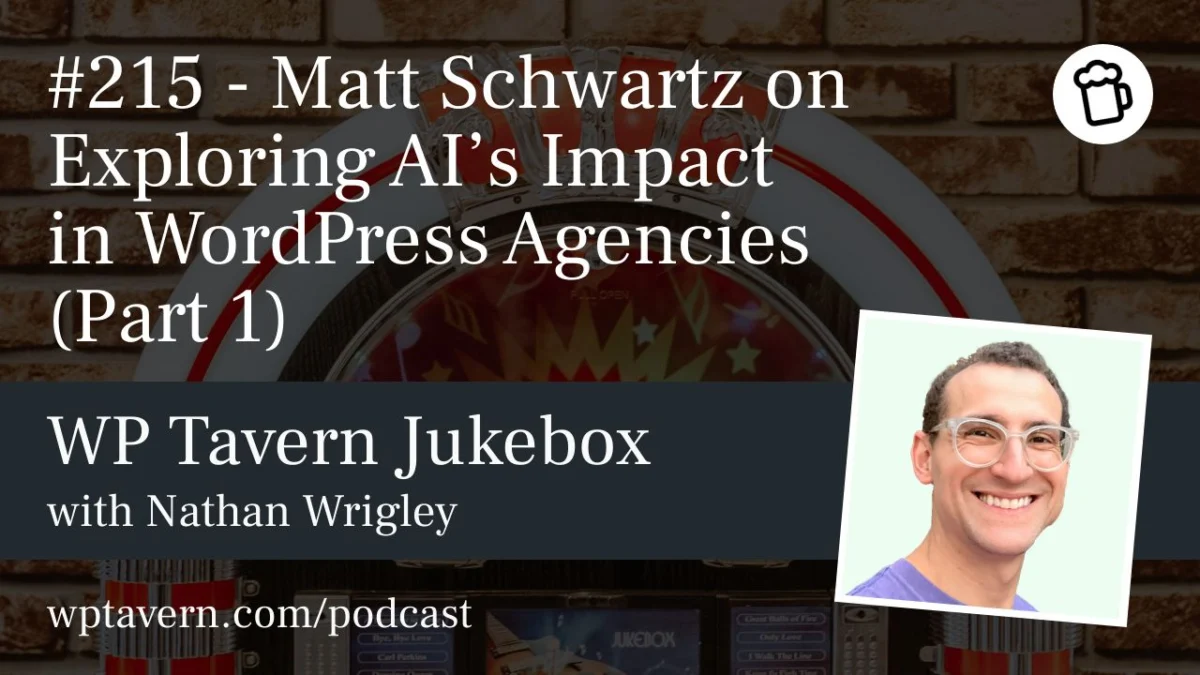
In a recent episode of the Jukebox Podcast from WP Tavern, host Nathan Wrigley sat down with Matt Schwartz, founder of Inspry—an Atlanta-based WordPress and WooCommerce agency launched in 2011, and creator of the WordPress testing product CheckView. Together, they explored a critical yet often overlooked perspective: how AI is reshaping the operational backbone of a WordPress agency without necessarily taking the human touch away from the final product.
Main Facts: Shifting the Focus from Execution to Operational Value
The core premise of Schwartz’s agency-focused AI strategy is simple: execution is becoming a commodity, but process and workflow are where true value lies.
- The Commoditization of Web Development: Just as drag-and-drop builders leveled the playing field a decade ago, AI-driven tools are steadily standardizing the creation of simple websites and brochure sites. As a result, the sheer execution of building a basic web page is no longer a strong competitive differentiator.
- Process over Pixels: Rather than showcasing AI to clients or relying entirely on automated page generation, forward-thinking agencies are utilizing AI to refine their internal operations—optimizing client onboarding, project management, debugging, and proposal drafting.
- The "Human-in-the-Loop" Imperative: Despite the speed and capability of modern language models and AI agents, critical agency touchpoints—such as client support, debugging, and final design review—still demand strict human oversight to prevent errors and protect brand reputation.
Chronology: From Early Web Development to the AI Era
Understanding Schwartz’s perspective requires looking at how agency workflows have evolved over the past two decades.
The Early Days: Stumbling into Web Design
Schwartz’s journey into web design began long before modern content management systems dominated the market. Like many agency owners of his generation, he stumbled into the industry as a middle schooler building HTML tables for clubs and experimenting with early digital templates. By high school, he had transitioned to paid freelance projects, building a site for his mother’s dentist office and funding his education through custom web work.
During his time at the University of Georgia studying Information Systems, he encountered early content management systems like Drupal—a harsh technical reality check for a young developer. Upon graduation, rather than taking a traditional corporate consulting route, he chose to stay the course, eventually founding Inspry in 2011 and moving firmly into the WordPress ecosystem by 2013.
The Solo Operator’s Struggle with Process
Like many self-taught freelancers and agency founders, Schwartz operated for years without formalized SOPs. Without the structure of a large corporate environment, every email template, pricing tier, and workflow had to be invented on the fly. It was only after scaling the business and hiring team members that the necessity of formalized, repeatable processes became clear.
The Seismic Shift of the 2020s
The last three to four years have marked a sharp departure from the gradual, incremental technological shifts of the past. SaaS platforms and tools no longer evolve slowly; the landscape changes seismically week by week. For agency owners accustomed to manual project management, the rapid maturity of artificial intelligence has forced a stark reckoning: adapt internal processes to meet rising client expectations, or watch profit margins and competitive edges erode.
Supporting Data and Strategic Implementation
To successfully integrate AI without falling into the trap of superficial automation, agencies must adopt a methodical, data-driven approach. Schwartz outlines several key methodologies that agencies can leverage today.
1. The AI Vision Document
One of the most innovative concepts introduced is the AI Vision Document. Much like an agency writes a mission statement or outlines core values to guide human behavior, an AI vision document establishes clear guardrails and boundaries for artificial intelligence usage across a business.
By auditing historical time-tracking data—such as pulling records from platforms like Everhour through tools like Claude to analyze team task distribution—agency owners can identify genuine operational bottlenecks. The vision document explicitly defines:
- Where AI is permissible: Tasks involving pattern recognition, data summarization, initial draft generation for proposals, and routine debugging.
- Where AI is restricted: Critical client support moments, final code deployment, and direct, sensitive client communications.
2. Upgrading Agency Operations and Workflows
AI excels at tasks that require synthesizing large amounts of unstructured data quickly. Agencies are putting this capability to work in several operational pillars:
- Discovery and Proposals: Rather than spending dozens of unbillable hours building custom proposals for prospective clients, agencies can feed meeting transcripts, client website data, and past proposals into an AI model to draft comprehensive, nuanced Scopes of Work (SOWs) in minutes.
- Meeting Summaries: Automated transcription and summarization tools have quickly transitioned from futuristic novelties to mundane staples of daily operations, ensuring that action items and task assignments are accurately captured without manual note-taking.
- Debugging and WordPress Management: Leveraging REST APIs, Automattic’s Abilities APIs, and third-party solutions, AI agents can ingest server logs, review complex PHP errors, and suggest targeted resolutions in a fraction of the time it would take a human developer to isolate a one-off issue.
3. Expanding Service Offerings: The AI Consultancy Model
Rather than viewing AI as a threat to billable hours, agencies can package their AI expertise as a core service offering. By deploying automation tools like n8n or Make, agencies can build lightweight internal web apps or business automations for clients—solutions that previously would have been cost-prohibitive for small businesses. This shifts the agency’s value proposition from selling a static $5,000 brochure site to delivering ongoing operational efficiencies that directly save or generate revenue for the client.
Official Perspectives and Industry Realities
While the utility of AI in agency operations is undeniable, industry leaders urge a healthy dose of skepticism regarding its limitations.
The temptation to completely automate customer support workflows remains high, but it is fraught with risk. In moments of customer frustration—when technical issues or billing disputes arise—introducing an automated chatbot or a rigid AI response loop often exacerbates client irritation. Schwartz notes that customer support is arguably the most sensitive touchpoint in an agency lifecycle, requiring genuine human empathy and nuance rather than accelerated deflection.
Furthermore, the "free pass" often granted to AI hallucinations—where developers repeatedly trust flawed code or incorrect outputs from language models—presents a dangerous double standard.
“You hire a developer, they lie to you twice, you’re probably going to fire them,” Schwartz observes. “But with AI, we just keep giving them a second chance.”
Mitigating this risk requires an unwavering commitment to the human-in-the-loop model. Whether reviewing generated code blocks, checking automated meeting notes, or manually verifying the layout of an edited Gutenberg block, human oversight remains the ultimate safeguard against brand damage and technical failure.
Implications for the Future of WordPress Agencies
As WordPress itself evolves—with the core development team actively laying the groundwork for native AI readiness—the platform is transitioning into a robust infrastructure layer. In the coming years, agency workflows will likely pivot away from manual navigation of the WordPress admin dashboard. Instead, developers and clients alike will interact with sites through conversational agents and specialized tools capable of handling structural edits, content updates, and routine maintenance seamlessly.
For WordPress agency owners and freelancers, the message is clear: the goal is not to blindly chase every technological trend or saturate business operations with unvetted automation. Rather, it is to thoughtfully evaluate internal processes, protect core values, and leverage AI precisely where it enhances human capability—ultimately delivering deeper, more measurable strategic value to clients in an increasingly competitive marketplace.