The landscape of online commerce is shifting beneath our feet, and at the heart of this transformation lies WooCommerce—the engine powering a significant portion of the global web. As the platform navigates a rapidly changing digital environment, it is balancing the weight of its massive, decentralized open-source legacy with the need for modern, SaaS-like agility.
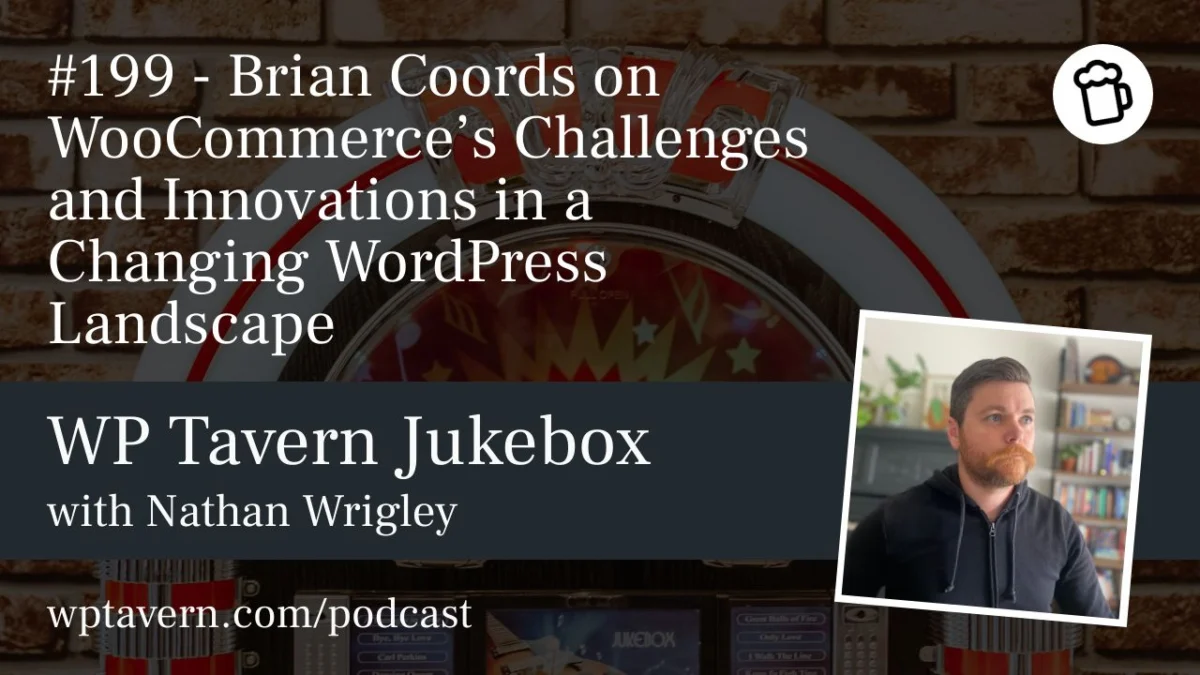
In a recent episode of the Jukebox Podcast, Brian Coords, a Developer Advocate at WooCommerce and a veteran of the WordPress ecosystem, sat down with host Nathan Wrigley to discuss how the company is bridging the gap between internal engineering and the global developer community. From the impact of artificial intelligence to the challenges of competing with billion-dollar SaaS giants, Coords provided a rare, behind-the-scenes look at the strategies driving one of the world’s most significant open-source projects.
Main Facts: The Evolution of a Digital Titan
WooCommerce has evolved from a simple WordPress plugin into a comprehensive e-commerce solution. Under the umbrella of Automattic, the company has spent the last 18 months undergoing a significant rebrand and internal realignment. The objective is clear: to reposition WooCommerce as a robust, modern alternative to closed-source platforms like Shopify and BigCommerce, without sacrificing the freedom that open-source software provides.
The role of a Developer Advocate, as Coords describes it, is the connective tissue of this mission. By maintaining documentation, running office hours, and fostering feedback loops through the WooCommerce Community Slack—which boasts over 30,000 members—the team ensures that the needs of agencies and developers are heard by the internal engineers building the product.
Chronology: A Decade of WordPress Growth
Brian Coords’ journey into his current role at Automattic is representative of the career paths often found in the WordPress space. Having started his career as a high school teacher and nonprofit worker, Coords spent over a decade in the agency world, managing WordPress sites through the rise of page builders and the subsequent, tectonic shift toward the block editor.
His transition to Automattic roughly a year ago placed him in a unique position to witness a company in transition. During this period, Automattic has focused on centralizing its efforts. Rather than having disparate teams working on redundant features across the WordPress ecosystem, the company is pushing for a more unified approach. This involves a closer collaboration between the WooCommerce team and the core WordPress engineers, ensuring that as WooCommerce pushes the boundaries of block-based editing, it simultaneously contributes to the improvement of the WordPress core experience.
Supporting Data: The Global Reach of WooCommerce
The scale of WooCommerce is difficult to overstate. Operating on a vast percentage of the internet, the platform is not merely an English-speaking phenomenon. As highlighted at the recent State of the Word address, WordPress—and by extension, WooCommerce—is now used on more non-English websites than English ones.
This global footprint presents unique logistical challenges. E-commerce is fundamentally tied to local infrastructure: currency, payment providers, tax regulations, and shipping logistics. Coords notes that the sheer diversity of WooCommerce users worldwide is a testament to the platform’s flexibility. Unlike proprietary SaaS solutions that may only operate in specific regions, WooCommerce is utilized by businesses in jurisdictions where local banks and niche payment providers are the only viable options. This "Wild West" of global integration is a core strength, yet it creates a complex support environment that the team must navigate daily.
Official Responses: Competing with SaaS Giants
One of the most pressing questions for any open-source project is how to remain competitive against the "tsunami" of well-funded SaaS companies. With platforms like Shopify plastering their advertisements across public transport and prime-time media, WooCommerce faces a branding hurdle.
Coords clarifies that WooCommerce does not necessarily compete by matching the advertising budgets of its rivals. Instead, the company focuses on its unique value proposition: control and extensibility.
"We’re not a SaaS, but we can sit there next to the SaaS," Coords explains. By repositioning the brand, the company is successfully entering spaces—such as non-WordPress specific e-commerce trade shows—to capture a broader market. The goal is to ensure that when enterprises weigh their options, WooCommerce is viewed as a mature, professional-grade solution rather than "just" a plugin.
Furthermore, the team is actively engaging in demand generation and targeted marketing. By partnering with agencies through the Automattic for Agencies program, WooCommerce is building a professional network that serves as a force multiplier for the brand, helping them reach the right users without needing to blanket the entire world in advertisements.
Implications: The AI Paradigm Shift
Perhaps the most significant development on the horizon is the integration of Artificial Intelligence. For Coords and his team, AI is not just a trend—it is a functional tool that is already changing how stores are managed.
Streamlining Store Management
One of the most exciting innovations currently in beta is the use of AI to perform administrative tasks. Coords discusses an "MCP server" integration that allows AI models like ChatGPT or Claude to interact directly with a WooCommerce store. This allows a user to provide natural language prompts, such as, "Update my products for a sale," or "Write descriptions for these 50 items." The AI handles the heavy lifting, logging into the backend and executing tasks that would previously have required hours of manual input.
The Future of Shopping Discovery
Beyond backend management, the way consumers discover products is set to change. Coords envisions a future where AI-driven chat interfaces become the primary way users interact with commerce. While the current web experience is heavily reliant on visual cues—scrolling through galleries and clicking "Add to Cart"—the future may involve AI agents performing utility-based shopping on behalf of the user.
"I think it’s going to be important for people that have WooCommerce stores that their products show up there," Coords notes. The implications for SEO are profound; the discoverability of a product will soon depend on how well a site’s data is indexed by AI agents rather than just traditional search engines.
A Measured Approach
Despite the excitement, the team is maintaining a cautious, "slow and steady" approach. In the open-source world, the philosophy of not rushing into new features—and allowing the community to build around a stable, foundational layer—has historically been the key to WordPress’s longevity. Coords emphasizes that while AI is consuming all the oxygen in the room, the most responsible path is to test, gather community feedback, and ensure that any new tool is secure, reliable, and genuinely useful for the end user.
Conclusion: A Bright Horizon for 2026
As WooCommerce looks toward 2026, the strategy remains rooted in collaboration. By strengthening its ties to WordPress Core, doubling down on the block-based editing experience, and cautiously integrating AI to simplify the merchant experience, WooCommerce is positioning itself to lead the next generation of online retail.
For developers and agencies looking to get involved, the message is clear: the ecosystem is open. Through channels like the developer blog at developer.woo.com and community-led initiatives, the barrier to entry remains low, and the opportunities for growth remain high. As Coords concludes, the future of the platform is not just about the code, but about the diverse, global community of people who continue to build, innovate, and thrive within the WooCommerce landscape.