By the Editorial Board
Published in Retail & E-Commerce Insights
In the modern digital marketplace, the obsession with acquisition often eclipses the art of retention. For years, direct-to-consumer (DTC) brands and digital storefronts have funneled capital into top-of-funnel marketing—chasing first-time buyers through high-cost social media ads and aggressive search engine optimization. Yet, far fewer enterprises invest equal energy into what happens immediately after the digital receipt hits the inbox.
In this critical post-purchase window, foundational decisions are silently made. Will the buyer remember your brand tomorrow? Will they return for a second purchase, or will your enterprise slowly fade into obscurity while competitors capture their attention?
According to industry analysts and recent consumer data, the answer increasingly depends on a single, highly nuanced variable: timing.
Not more emails. Not louder promotions. Not deeper discounts. Simply put, customer retention in the digital age relies entirely on delivering the right message at the exact moment of behavioral relevance.
Main Facts: The Shift from Frequency to Relevance
For decades, the standard operating procedure for email marketers experiencing a dip in engagement was straightforward: send more. If open rates flatlined, brands doubled down on frequency, flooding customer inboxes with daily campaigns, flash sales, and desperate reminders.
However, contemporary empirical data suggests that frequency is rarely the root cause of disengagement. Consumers do not unsubscribe or tune out because they receive too few emails; they disengage because communications arrive completely out of context. A promotional blast that feels urgent and exciting on a Friday afternoon can feel tone-deaf or outright annoying on a Monday morning.
Recent industry benchmarks underscore this behavioral shift. Data compiled in Omnisend’s 2025 e-commerce metrics report reveals a striking operational disparity: while automated, behavior-triggered emails account for a minute fraction of total sends, they drive a disproportionately massive share of overall revenue.
Specifically, automated flows generate approximately 37% of email-driven sales from a mere 2% of total email volume. This statistical chasm highlights a fundamental truth of modern marketing: precision engineering and contextual timing vastly outperform generic, high-volume broadcast campaigns.
Timing transforms communication. It bridges the gap between what a customer has just done—or is poised to do—and a message that feels genuinely useful rather than purely promotional. This inherent relevance creates a hyper-personalized experience, even when executed via automated backend software.
Chronology: The Anatomy of the Customer Lifecycle
To understand how timely emails alter the revenue trajectory of a business, one must examine the chronological progression of the modern buyer’s journey. Retention is not a singular event; it is a carefully orchestrated sequence of behavioral milestones where timing, intent, and relevance must intersect.
Phase 1: The Post-Purchase Window (Immediate Reassurance)
The most critical chronological juncture occurs right after a customer completes their first transaction. At this exact moment, the consumer is experiencing a unique psychological duality: they are emotionally invested in the brand, yet they are also subconsciously seeking validation that they made a financially sound decision.
Historically, brands treat this phase as a transaction end-point. Timely-email frameworks, however, treat it as a beginning. A well-constructed post-purchase sequence arriving within hours or days of the sale focuses purely on confirmation and confidence. By setting clear delivery expectations, offering helpful product guidance, or reinforcing the value of the acquisition, brands actively combat buyer’s remorse and dramatically increase the probability of a second purchase.
Phase 2: The Quiet Period (Nurturing Without Selling)
Following the initial purchase, brands often enter a dangerous "quiet period." Many enterprises panic and default to generic, low-value promotional blasts. Conversely, sophisticated retention strategies utilize this lull to stay present without executing a hard sell.
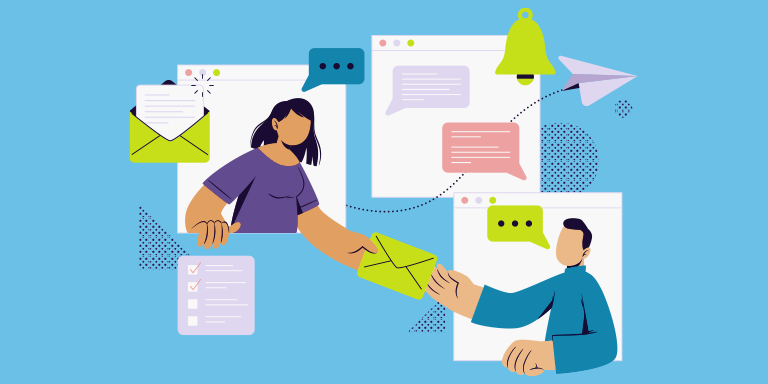
During this phase, emails that educate, inspire, or demonstrate how to extract maximum utility from the purchased item keep the relationship warm. Trust is compounded organically during this quiet window, ensuring the brand remains top-of-mind without fatiguing the consumer.
Phase 3: The Re-Entry Moment (Natural Re-Engagement)
Eventually, the customer reaches a natural inflection point where they are ready to return. This re-entry moment might be governed by product consumption cycles, seasonal shifts, or specific onsite behaviors. When a retention email arrives precisely at this juncture, it feels intuitive rather than persuasive. The call to action requires zero friction because the timing aligns seamlessly with the consumer’s internal state.
Supporting Data: The Psychology Behind Behavioral Triggers
Why do behaviorally triggered emails wield such disproportionate power over consumer behavior? The answer lies at the intersection of cognitive psychology and human habit formation.
Most purchasing decisions are not calculated, hyper-rational exercises; they are heavily influenced by emotion, routine, and immediate context. When an email arrives at a precise psychological moment, it requires minimal cognitive load. The timing itself does the heavy lifting.
- The Power of Recognition: When a digital message explicitly reflects an action a customer has just taken—such as registering a product, browsing a specific category, or completing an onboarding module—it signals that the brand is actively paying attention. This psychological feedback loop rapidly increases brand trust and lowers consumer resistance.
- Capitalizing on Momentum: Immediately following an interaction, consumers are mentally primed to engage further. A timely follow-up maintains this momentum. If a business misses this narrow cognitive window, the emotional connection dissipates far faster than leadership anticipates.
- Alleviating Decision Fatigue: Modern consumers are inundated with choices. By timing an email to coincide with a natural re-engagement point, brands eliminate decision fatigue. The customer does not have to debate whether they need the product; the email arrives when that decision is already half-formed, making the resulting purchase feel natural and effortless.
Official Responses and Industry Perspectives
Marketing automation platforms and industry leaders have increasingly aligned around the thesis that volume-based email marketing is rapidly losing efficacy.
“The era of blasting your entire database with the same generic promotion three times a week is drawing to a close,” notes a senior e-commerce strategist at Omnisend. “Consumers have developed sophisticated filters—both mental and technological—against irrelevant noise. Brands that survive and scale in the coming years are those that treat email not as a megaphone, but as a responsive, intelligent concierge service.”
Founders and digital operators who have adopted behavior-based automation frameworks report immediate qualitative shifts in customer sentiment. Rather than receiving complaints about inbox clutter, brands utilizing hyper-timed sequences note an increase in positive replies, higher customer lifetime value (LTV), and significantly reduced unsubscribe rates.
Industry experts emphasize that transitioning to this model does not require expanding marketing teams or inflating operational overhead. Instead, it demands a strategic audit of existing customer data streams to identify high-intent micro-moments.
Implications: The Future of E-Commerce Retention
The implications of this shift toward timely, behavioral messaging extend far beyond open rates and click-through metrics. For modern e-commerce enterprises, mastering the retention equation is fast becoming a matter of operational survival.
As customer acquisition costs (CAC) across major digital advertising networks continue their relentless upward trajectory, relying solely on first-time buyers is a precarious business model. Enterprise profitability increasingly hinges on maximizing customer lifetime value and driving repeat purchases at a low marginal cost.
By restructuring email marketing strategies around behavioral cues rather than arbitrary calendar schedules, businesses achieve several transformative outcomes:
- Erosion of Ad-Spend Dependency: When repeat revenue is unlocked through automated, perfectly timed retention flows, brands can reduce their reliance on expensive, top-of-funnel ad campaigns to maintain baseline revenues.
- Enhanced Brand Equity: Customers who feel understood rather than targeted develop a deeper, more resilient loyalty. They view the brand as a supportive partner rather than an aggressive merchant.
- Operational Efficiency: Automated flows operate continuously in the background. Once established, they generate revenue autonomously, freeing up marketing teams to focus on creative strategy, product expansion, and community building.
Conclusion
Ultimately, customers do not return to a brand because they receive more emails. They return because the right message materializes at the precise moment it is needed.
When digital communications are harmonized with real human behavior rather than arbitrary marketing schedules, email ceases to feel like an intrusive marketing channel. Instead, it integrates seamlessly into the customer experience, building long-term trust, familiarity, and enduring loyalty.
For founders and enterprise leaders looking to capture this repeat revenue without scaling manual workloads, leveraging advanced automation platforms like Omnisend offers a clear path forward. Through behavior-based triggers, dynamic personalization, and built-in social proofing tools, brands can effortlessly convert fleeting operational moments into sustainable, long-term revenue streams.