By Editorial Staff
Retail media has cemented its position as the fastest-growing sector in modern digital advertising. Transforming everything from massive digital marketplaces to niche independent online storefronts, ads published directly by retailers—epitomized by giants like Amazon Sponsored Products—have turned traditional ecommerce platforms into high-yield media empires.
Yet, beneath the staggering financial projections and record-breaking quarterly earnings reports lies a complex economic friction. While retail media networks promise targeted reach at the exact moment of purchase intent, industry analysts and academic researchers are raising urgent questions regarding its true net value. For brands buying the ads and retailers hosting them, retail media is not a guaranteed win. Instead, it is a high-stakes balancing act between generating incremental growth and merely paying a heavy tax on sales that would have happened anyway.
Main Facts
Retail media advertising encompasses sponsored product listings, banner ads, native search placements, and off-site sponsored campaigns deployed directly through a retailer’s digital ecosystem. Unlike traditional programmatic advertising, which relies on third-party cookies across open web publishers, retail media thrives on closed-loop, first-party shopper data.
At its core, the value proposition of retail media for advertisers is proximity to the point of transaction. When a consumer searches an ecommerce platform for "waterproof hiking boots," their commercial intent is exceptionally high compared to a passive user scrolling through a social media feed. This immediate path to conversion has fueled massive corporate investment.
However, the foundational mechanics of retail media expose a dual-sided risk for the digital economy:
- For Advertisers: Retail media creates genuine value only when it unlocks incremental demand—meaning sales that the brand would not have captured through organic search rankings or word-of-mouth alone. If an advertiser is forced to pay for sponsored placements simply to protect existing market share from competitors bidding on the same keywords, the campaign acts as an invisible margin tax rather than a growth engine.
- For Retailer-Publishers: Operating an in-house ad network can cannibalize core retail revenue. If a sponsored placement displaces a high-margin organic product sale or degrades the overall user experience through cluttered, irrelevant recommendations, the short-term advertising revenue can ultimately erode long-term business performance.
Chronology and Evolution of the Retail Media Market
The trajectory of retail media transitioned from a novel experimental channel into a dominant advertising pillar over the past decade.
- The Early Pioneers (Mid-2010s): Amazon pioneered modern retail media monetization by introducing Sponsored Products. Initially viewed as a simple utility for third-party marketplace merchants seeking visibility, the model quickly proved to be exceptionally lucrative.
- The Omnichannel Expansion (2018–2021): Recognizing Amazon’s immense profitability margins on advertising, non-endemic brick-and-mortar giants—including Walmart, Target, and major grocery chains—began building their own proprietary retail media networks (RMNs). By leveraging loyalty card data and physical storefront traffic, these legacy retailers transformed into digital media powerhouses.
- The Post-Cookie Gold Rush (2022–2024): As privacy regulations (such as Apple’s App Tracking Transparency and upcoming third-party cookie deprecation by Google) disrupted traditional programmatic advertising, brands aggressively redirected marketing budgets toward retail media. The channel offered deterministic attribution tied directly to actual purchase data.
- The Maturation and Scrutiny Phase (2025–Present): With global retail media expenditures soaring past historical ceilings, both enterprise brands and independent merchants began pushing back against rising ad costs. Industry dialogue shifted away from top-line revenue growth toward genuine Return on Ad Spend (ROAS) accountability, prompting academic institutions to formally analyze the risk of margin erosion.
Supporting Data: The Scale of the Boom
The financial footprint of the retail media market is massive, characterized by double-digit annual compounding growth.
According to landmark research published in the Journal of Retailing, global retail media spending surpassed $140 billion in 2024. Within the United States market alone, spending reached approximately $54 billion during that same timeframe.
More recent macroeconomic forecasts underscore the unstoppable momentum of the sector. Data from eMarketer projects that U.S. retail media ad spending will surge to $69.33 billion in 2026, representing an aggressive 17.9% year-over-year increase from 2025 levels.
Despite these towering figures, analysts point out that capital allocation within the market requires unprecedented precision. The sheer size of the spending pool means that inefficiencies, wasted ad dollars, and margin erosion are occurring on a multi-billion-dollar scale.
Official Perspectives and Industry Insights
Market observers, econometricians, and brand executives have increasingly scrutinized the mechanics of retail media, warning that standard performance metrics can be profoundly misleading.

The Illusion of Return on Ad Spend (ROAS)
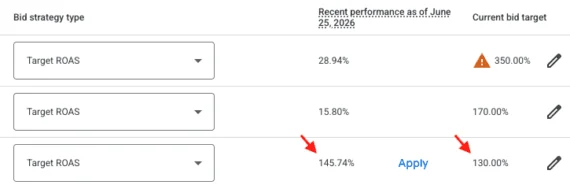
For marketplace advertisers, relying solely on standard ROAS metrics is no longer sufficient. A brand reporting an $8-to-$1 return on ad spend may falsely assume the campaign is a massive success. However, if those same customers would have found and purchased the product organically without the sponsored ad, the investment generated zero incremental value.
The Journal of Retailing report specifically highlighted growing concern across the enterprise brand community that retail media networks frequently capture fees on non-incremental sales. When marketplaces introduce a higher density of sponsored slots, organic search visibility naturally declines. Consequently, sellers are forced into defensive bidding wars just to maintain their historical sales baselines.
The Retailer’s Margin Dilemma
The paradox applies equally to the retailers publishing the ads. Consider a standard ecommerce category page that consistently generates $100,000 in monthly merchandise sales and $30,000 in gross profit.
If a primary supplier agrees to pay $3,000 per month for a prominent sponsored banner placement, store executives may celebrate the influx of high-margin advertising revenue, anticipating gross profits to climb to $33,000.
However, if that sponsored placement diverts shopper attention away from even higher-margin alternative products or causes total merchandise gross profit to drop to $28,000, the true math tells a sobering story:
- The retailer collected $3,000 in media revenue.
- The retailer lost $2,000 in core product gross profit.
- Total net gain: Only $1,000.
In worse scenarios—where product-line gross profit drops to $26,000—the introduction of the $3,000 ad campaign actually lowers overall business profitability by $1,000. Advertising revenue spiked, but overall financial health declined.
Practical Strategies for Advertisers and Retailers
Navigating the retail media landscape requires shifting focus from top-line visibility metrics to deep, incremental impact analysis.
How Advertisers Can Measure True Incrementality
Because traditional platform dashboards naturally attribute conversions that would have occurred organically, sophisticated advertisers are adopting advanced measurement frameworks:
- Randomized Control Experiments (Geo-Testing): Enterprise brands frequently run market-level holdout tests—turning off retail media ads in specific geographic regions while maintaining them in others—to measure the true net lift in sales.
- Marketing Mix Modeling (MMM): Advanced econometric modeling helps brands understand the channel-specific contribution of retail media relative to social media, search engine marketing, and linear channels.
- Small Business Approaches: Smaller e-commerce merchants can evaluate performance by monitoring organic traffic baselines, tracking new-customer acquisition rates, and periodically testing "dark periods" (pausing campaigns) to isolate the true baseline of organic demand.
How Retailer-Publishers Can Protect User Trust
For platforms hosting ads, balancing monetization with user experience is critical. Over-monetizing search result pages with excessive sponsored products or irrelevant algorithmic recommendations degrades the shopping experience. When a storefront becomes difficult to navigate or loses consumer trust, long-term conversion rates suffer, leading to a permanent attrition of high-value shoppers.
Broader Implications for the Future of Ecommerce
As retail media hurtles toward its projected 2026 milestones, the industry stands at a structural crossroads. The days of treating retail media as an unquestioned growth channel are coming to a close.
The overarching takeaway for the digital economy is clear: retail media is neither an inherent win nor an automatic loss.
- When retail media acts as a catalyst for profitable new demand, it serves as a powerful engine for brand expansion.
- When it merely functions as a tollbooth on existing organic traffic, it acts as a tax on profitability for both buyer and seller.
Ultimately, long-term success in the retail media ecosystem will belong to brands that master incrementality testing and retailers who fiercely protect the integrity of their customer experience. In an economy where every basis point of margin matters, understanding the difference between vanity metrics and true incremental value is the ultimate competitive advantage.