The WordPress ecosystem—the backbone of over 40% of the entire internet—is currently facing an insidious, rapidly evolving crisis. While website security has traditionally focused on direct site hacks, malware injections, and brute-force vulnerabilities, a more dangerous trend is quietly taking root: supply chain attacks.
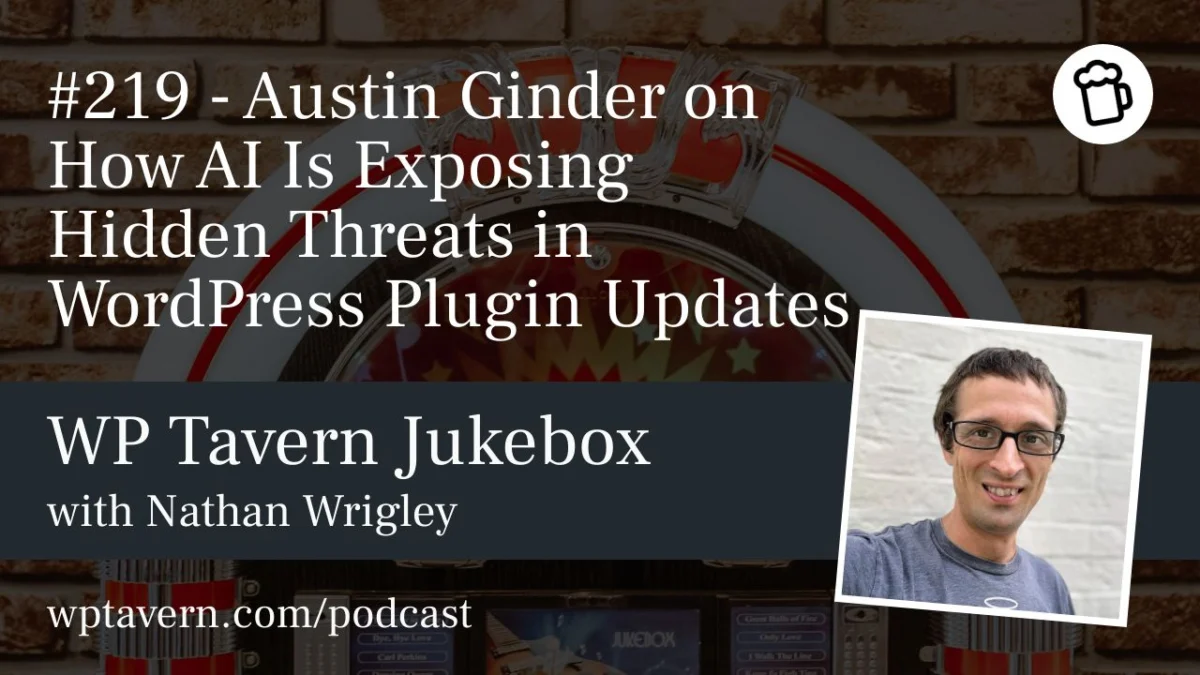
In a recent episode of the WP Tavern Jukebox podcast, host Nathan Wrigley sat down with Austin Ginder, a veteran developer and founder of Anchor Hosting who manages thousands of WordPress sites, to discuss how the democratization of AI is helping unearth these hidden threats. Ginder’s accidental deep dive into automated code forensics has revealed a chilling reality: bad actors are no longer just breaking into websites; they are buying them, hijacking them, and weaponizing the official plugin supply chain from the inside out.
Main Facts: The Anatomy of a Supply Chain Attack
Unlike traditional cyberattacks that exploit a specific vulnerability to gain unauthorized access to a single website, a supply chain attack targets the upstream components of software development and distribution. In the context of WordPress, this means manipulating plugins—the essential extensions that give WordPress sites everything from contact forms to e-commerce capabilities.
According to Ginder, these attacks generally manifest in two primary ways:
- Repository Hijacking: Malicious actors compromise developer credentials for the WordPress.org repository, seizing control of accounts to push out malicious code updates disguised as routine maintenance.
- Corporate Acquisition and Weaponization: In an alarming escalation, bad actors are spending thousands—sometimes six figures—to purchase legitimate, established plugin companies. Once they control the intellectual property and the existing user base, they silently inject malicious payloads or third-party updaters into the plugin code.
When an end user clicks "update"—or worse, relies on automated background updates—they unwittingly download a compromised version of a trusted plugin. Because the core functionality of the plugin often remains intact, the end user remains completely unaware that a backdoor has been opened, SEO spam has been injected, or their site has been primed for a larger exploitation campaign.
Chronology: From Accidental Discovery to the WP Beacon Project
Ginder’s entry into the world of security forensics was entirely serendipitous, beginning in February 2026.
The February Awakening
While performing a routine malware cleanup for a client site that had remained secure for years, Ginder utilized advanced AI tools—specifically Claude Code—to investigate the root cause of the infection. Before the advent of AI, thorough malware cleanups were fraught with uncertainty; developers could never be 100% certain that every trace of malicious code had been eradicated.
Using AI, however, Ginder was able to run comprehensive, file-by-file forensic audits. This deep dive did not just clean the site; it traced the infection upstream to a compromised WordPress plugin.
Uncovering the Pattern
What initially looked like an isolated incident quickly snowballed into a broader pattern. Over the following weeks, Ginder uncovered multiple distinct supply chain incidents, proving that the threat was systemic.
- The Essential Plugins Incident: The WordPress Plugin Team identified suspicious activity within a package of over 30 plugins, swiftly shutting them down and issuing alerts. Ginder’s AI scans revealed that this massive takedown stemmed from a corporate acquisition where the new owners had weaponized the plugin suite.
- The Widget Logic Infiltration: While monitoring JavaScript embeds for unauthorized changes (a custom security measure designed to catch credit card skimmers), Ginder flagged an anomaly. A long-standing widget plugin was covertly embedding malicious sports-related JavaScript.
- The Quick Redirection Discovery: Using a custom AI-built scanning tool to check his clients’ infrastructure for variant codebases, Ginder discovered 12 sites running a hijacked version of a redirection plugin that was entirely absent from the official WordPress.org repository.
- Dormant Code in "Scroll To Top": Perhaps most alarming was the discovery of a compromised "Scroll To Top" plugin installed across 20,000 sites. The malicious code was entirely dormant, sitting quietly in the background waiting for the bad actors to "pull the trigger" and execute their payload.
The Launch of WP Beacon
Realizing that traditional vulnerability databases were unequipped to track bad actors rather than just bad code, Ginder launched WP Beacon (wpbeacon.io). Designed as a dedicated resource for tracking, documenting, and alerting the community to supply chain attacks, WP Beacon aims to bridge the gap between individual developers, hosting providers, and security researchers.
Supporting Data and the Power of AI Forensics
The sheer scale of the WordPress ecosystem makes manual security auditing nearly impossible. The official WordPress.org repository hosts over 60,000 plugins. Going back through the Subversion (SVN) pipeline to inspect every line of code, every file change, and every developer commit with human eyes is entirely unfeasible.
This is where AI has completely transformed the playing field. Ginder highlights that for a modest monthly subscription fee, an individual developer can leverage large language models to:
- Cross-reference thousands of files against known secure baselines.
- Analyze variant versions of plugins running across different client sites.
- Generate high-level, detailed security forensic reports in minutes rather than weeks.
However, Ginder emphasizes a critical economic reality: hosting providers are sitting on a gold mine of untapped security data. Millions of websites hosted globally experience malware infections daily. If hosting companies deployed AI-driven forensic tools across their infrastructure to analyze these infections and trace them back to their source, the industry could uncover coordinated attack patterns much faster.
Official Responses and Remediation Challenges
The WordPress Plugin Review Team and Security Team have drawn praise from researchers for their responsiveness. In the incidents uncovered by Ginder, the team acted swiftly to close down compromised repositories, issue warnings, and, in severe cases, deploy official patches that overwrote vulnerable codebases.
Yet, remediation is an uphill battle. Stopping a supply chain attack requires a multi-pronged approach:
- Closing Repositories: Preventing new downloads of the compromised plugin via WordPress.org.
- Infrastructure Takedowns: Working with security-minded hosting professionals (such as former Kinsta engineer Sal, who assisted Ginder) to suspend the domains and servers hosting the bad actors’ rogue update channels.
- Forced Overwrites: Utilizing WordPress’s rare capability to push emergency patches directly to user sites to overwrite malicious code.
Despite these measures, bad actors are resilient. Ginder noted that one particular operator has been cycling through new accounts and plugins for over a decade, simply pivoting to a new strategy every time their infrastructure is dismantled.
Implications for the Future of Open Source Security
The rise of AI-driven supply chain attacks forces the WordPress community to confront uncomfortable questions about the nature of open-source software, plugin governance, and security architecture.
The Openness Paradox
WordPress thrives on its radical openness. Anyone can write a plugin, submit it to the repository, and update it freely. Unlike closed ecosystems like Apple’s iOS App Store—which enforce strict permission-based systems, hardware sandboxing, and rigorous manual reviews for every update—WordPress operates on a model of mutual trust.
While introducing granular, app-store-style permissions or mandatory human code reviews for every plugin update might increase security, it would fundamentally alter the "Wild West" ethos that developers love about WordPress. As Ginder noted, developers want to be able to code rapidly and deploy solutions without bureaucratic friction.
A Call to Action for Site Owners and Hosts
The takeaway from Ginder’s investigation is clear: set-it-and-forget-it security is no longer viable.
- For Site Owners: Automated updates, while convenient, carry inherent risks if the upstream plugin vendor has been compromised. Regular audits and a robust backup strategy are essential.
- For Hosting Providers: Hosts must move beyond passive security (firewalls and malware scanners) and adopt proactive, AI-assisted forensic auditing to detect anomalies before attackers execute their payloads.
- For the Community: Projects like WP Beacon underscore the necessity of collaborative intelligence. Security is no longer just about patching vulnerabilities; it is about tracking the malicious actors behind them.
As long as financial incentives exist for cybercriminals to exploit popular software, supply chain attacks will persist. However, as Ginder and other independent researchers have demonstrated, the very technology empowering bad actors—AI—may ultimately provide the defenders with the tools needed to keep them at bay.