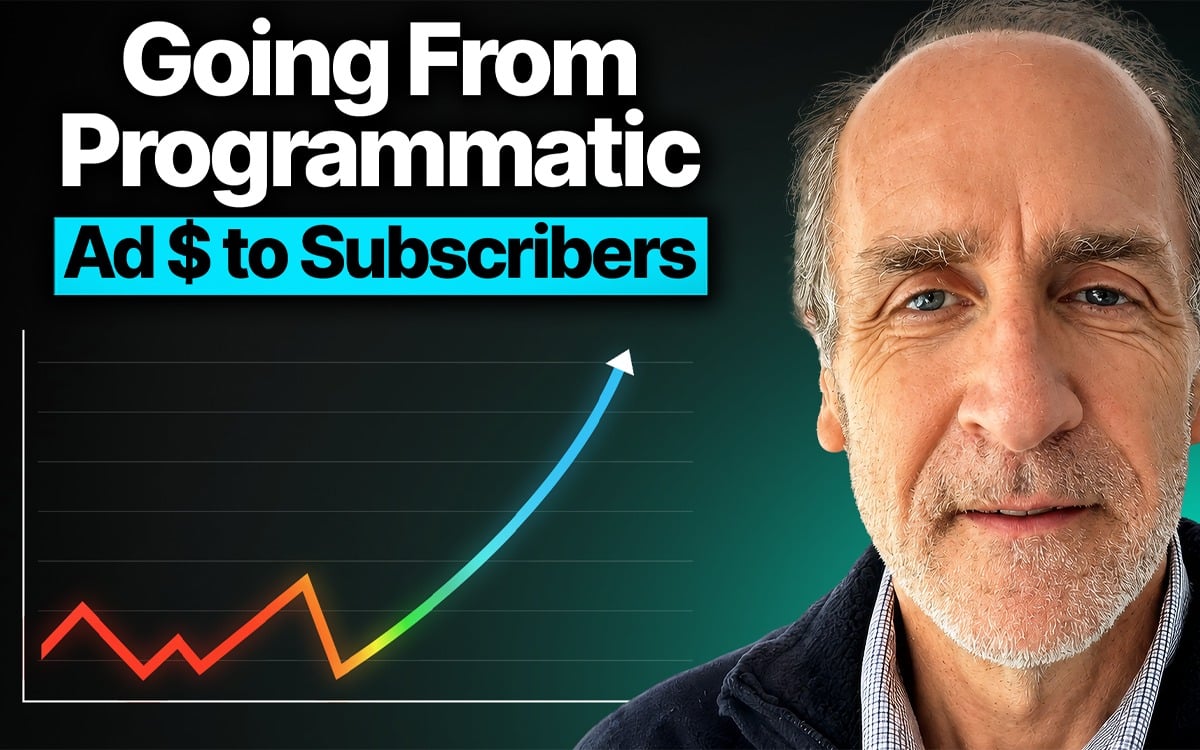
In the modern digital publishing landscape, the traditional reliance on programmatic advertising has become an increasingly volatile rollercoaster. Publishers frequently find themselves at the mercy of algorithm updates, shifting social media referral traffic, and fluctuating ad rates. However, a select group of veteran independent media operators have managed to bypass these uncertainties by cultivating deeply loyal, paying audiences.
Recently, on an episode of the Niche Pursuits podcast, host Taegan Goddard—founder and publisher of the prominent political analysis site Political Wire—sat down to deconstruct how he built a thriving, sustainable digital media business. Goddard shared the operational blueprints behind transitioning an ad-driven daily briefing into a resilient, subscription-backed powerhouse that attracts between 4 to 5 million monthly readers, proving that loyal political junkies are more than willing to pay for premium curation and analysis.
The Genesis: Adapting a Print Legacy for the Digital Age
From the Washington Wire to the Open Web
The roots of Political Wire stretch back to a simple, highly focused editorial concept inspired by traditional print media. Goddard initially modeled his vision on the Wall Street Journal’s historic "Washington Wire" column—a curated, highly readable daily briefing that aggregated interesting political notes, gossip, and developments directly from the newspaper’s Washington bureau.
Adapting this format for the nascent internet, Goddard set out to build a digital destination where readers could find distilled, fast-paced political updates without wading through endless page-one filler. Over nearly two decades of operation, Political Wire evolved into a trusted multi-source aggregator underpinned by sharp editorial judgment.
Rather than attempting to cover every single development in the political sphere, Goddard curates content specifically tailored for high-intent political junkies. This precise editorial filter transforms casual visitors into habitual readers. According to Goddard, the site routinely publishes between 30 and 50 posts a day—maintaining this relentless publishing schedule across weekdays, weekends, holiday breaks, and major election cycle surges. This high-frequency rhythm has trained core readers to visit the site five, six, seven, or even eight times daily.
Chronology and Evolution: Scaling Through Decades of Media Shifts
The trajectory of Political Wire offers a compelling timeline of digital publishing adaptation, moving from a standard ad-supported blog to a sophisticated hybrid membership model.
- The Early Years (Mid-2000s): Political Wire established its core brand identity as an indispensable daily briefing, capturing early web traffic through rapid curation and establishing deep trust among political professionals, journalists, and enthusiasts.
- The Ad-Revenue Era: As traffic scaled, the site integrated programmatic display advertising. While partnerships with monetization platforms like Mediavine provided a steady baseline of income, the inherent volatility of ad RPMs (Revenue Per Mille) and seasonal dips highlighted the need for a more predictable financial foundation.
- Introduction of the Paid Tier (Over a Decade Ago): Recognizing that his most dedicated readers derived immense professional and personal value from his insights, Goddard introduced a paid membership option. Initially centered on his exclusive political commentary—previously published by external outlets like The Week and The Daily Beast—the paid tier laid the groundwork for a recurring revenue model.
- The Product Bundling Phase: Over the subsequent decade, Goddard systematically expanded the paid offering from a single analysis column into a comprehensive member bundle, integrating ad-free browsing, a private weekly podcast, interactive quizzes, and community benefits.
- Refinement and AI Integration (Present Day): Today, Political Wire leverages advanced conversion strategies, AI-assisted user journey critiques, and multi-tier pricing models to minimize churn and maximize yield from its hyper-engaged audience base.
Supporting Data: Traffic Spikes, Churn Metrics, and Pricing Realities
Understanding the financial mechanics of Political Wire reveals why subscription models often outperform pure ad plays in niche markets.
The Election Cycle Discovery Engine
Traffic patterns for Political Wire are intrinsically tied to the rhythm of American politics. While baseline monthly traffic hovers steadily between 4 and 5 million visitors, that figure can easily double or triple during major election cycles.
Goddard notes that user interest typically begins climbing organically around June or July of an election year, culminating in massive traffic spikes throughout September and October. This predictable surge acts as a powerful top-of-funnel discovery engine:
- New Visitor Influx: Millions of casual readers flood the site during the election frenzy.
- Conversion Pathways: A percentage of these newly arrived visitors stick around long-term, transitioning from casual consumers to loyal daily readers, and eventually into paying subscribers via well-placed on-site membership prompts.
The Mathematics of Membership Pricing
Goddard’s pricing strategy yields crucial insights into digital product valuation. Political Wire currently structures its pricing tiers to incentivize long-term commitment:
- Monthly Subscription: Priced at $8 per month (totaling $96 annually).
- Standard Annual Membership: Priced at $80 per year, representing an effective 17% discount compared to the monthly option.
- Friends-and-Family / Inner Circle Tiers: Offering advanced access, breaking news text alerts, off-the-record video briefings, and multi-user account sharing.
Perhaps the most striking data point shared by Goddard is his pricing psychology revelation: across thousands of active members and multiple price increases over the years, he has received only a single customer complaint regarding price hikes. This metric serves as a clear indicator that the core audience deeply values the product, and suggests that many specialized digital publishers chronically underprice their offerings relative to the perceived value they deliver.
Insights and Industry Implications: The Power of the Bundle
Smoothing Out Revenue Volatility
For digital publishers exhausted by the whims of search engine algorithms and social media feed changes, subscription models offer a starkly different operational reality. While programmatic advertising remains a viable tool for monetization—capturing broad-market reach and ad-driven revenue on free tiers—it remains fundamentally at the mercy of external market conditions.
Conversely, subscription revenue, when paired with low churn rates, introduces financial predictability. Knowing baseline monthly recurring revenue (MRR) well in advance allows independent publishers to invest confidently in editorial expansion, technology upgrades, and long-term business planning.
Why Bundling Drives Retention
Goddard emphasizes the strategic brilliance of the "bundle." By packaging disparate value propositions into a single membership tier, publishers make it exponentially harder for users to justify canceling. At Political Wire, the membership ecosystem includes:
- Exclusive Analysis: Goddard’s personal political commentary and foresight.
- Ad-Free Browsing: A cleaner, faster, uninterrupted user experience prized by heavy daily users.
- Private Podcasts: Weekly audio touchpoints (such as the Trial Balloon podcast) that establish auditory routines.
- Interactive Community Elements: Weekly political quizzes and member discussions that foster a sense of belonging.
Because different subscribers value different components of the bundle—one person may stay strictly for the ad-free speed, while another relies on the private podcast—the overall churn rate drops significantly. The subscription ceases to be a single-feature purchase and transforms into an indispensable part of the user’s daily routine.
Applying the Blueprint: Lessons for Modern Content Creators
Goddard’s multi-decade success story offers actionable takeaways for independent content creators, niche site operators, and digital media entrepreneurs:
- Embrace a Hybrid Model: Publishers do not need to choose exclusively between ads and subscriptions. Utilizing a free, ad-supported tier captures top-of-funnel reach and casual discovery, while a robust paid tier converts the most dedicated segment of the audience into predictable recurring revenue.
- Do Not Fear Price Increases: If an audience is deeply engaged and relies on a publication for professional or personal insights, they are generally willing to pay fair market rates. Incremental pricing tests often reveal untapped headroom.
- Leverage Modern Tools for Optimization: Digital publishers should not hesitate to experiment with conversion funnels. Goddard notably uses modern AI tools (such as ChatGPT and Claude) as low-cost consultants, uploading site screenshots to solicit fresh design perspectives and conversion optimization ideas.
- Cultivate Personal Connection: In an era dominated by faceless aggregators and AI-generated content, human editorial voice and accountability matter more than ever. Readers who subscribe to Political Wire are paying for Taegan Goddard’s individual judgment, institutional memory, and unwavering dedication to his craft.
Final Thoughts
The evolution of Political Wire demonstrates that sustainable digital publishing is entirely achievable when creators shift their focus from raw pageviews to genuine audience loyalty. By thoughtfully combining a high-reach free tier with an indispensable, multi-faceted paid bundle, publishers can insulate themselves against ad market volatility while building enduring, resilient media businesses.