
SAN FRANCISCO — In the fast-paced ecosystem of digital commerce and direct-to-consumer brand building, an old marketing axiom has taken on existential weight: What worked yesterday will not necessarily work tomorrow.
As digital landscapes become increasingly saturated, consumer attention spans contract, and email inboxes groan under the weight of relentless promotional noise, the margin for error has evaporated. For modern entrepreneurs, leaning on intuition, guesswork, or historical best practices is no longer just inefficient—it is a financial liability.
Industry analysts, growth strategists, and marketing automation platforms agree: A/B testing has graduated from a tactical “nice-to-have” feature to a fundamental, non-negotiable operational pillar. Whether scaling a lean SaaS funnel or driving repeat purchases for a high-growth e-commerce brand, organizations that systematically test, measure, and iterate are quietly outperforming competitors who rely on static assumptions.
Main Facts: Decoding the Data Behind Email Optimization
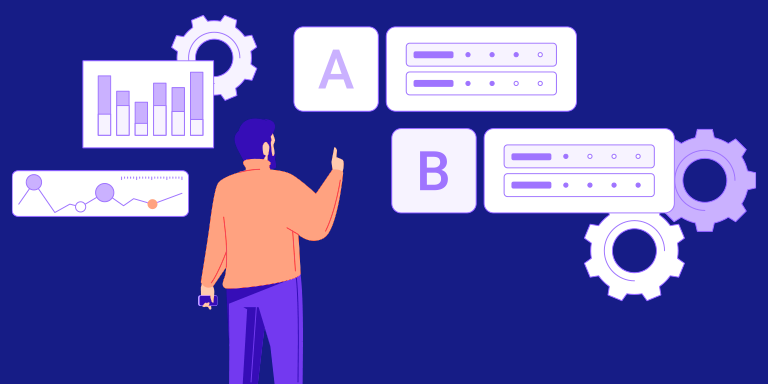
At its core, A/B testing—or split testing—is the practice of comparing two versions of a digital asset (such as an email subject line, a call-to-action button, or an entire landing page) against each other to determine which performs better statistically.
While the concept applies across web design, advertising, and user experience, its impact is perhaps most acutely measurable in email marketing. Recent comprehensive industry analyses underscore the sheer power of optimization. According to benchmark data from marketing platform Omnisend, average email open rates across their merchant base rose from 22.9% in 2022 to 25.1% in 2023, while click-through rates ticked upward from 1.2% to 1.5%.
Crucially, these aggregate gains were not driven by larger mailing lists or inflated ad budgets. Instead, they were the direct result of refined segmentation, better creative alignment, and rigorous A/B testing.
The data grows even more compelling when evaluating automated flows. Triggered communications—such as welcome series, browse abandonments, and abandoned cart recovery sequences—generate dramatic efficiency gains. Omnisend’s research reveals that automated emails achieve:
- 52% higher open rates than standard promotional campaigns.
- 332% higher click-through rates.
- A staggering 2,361% higher conversion rate.
These figures highlight a profound reality: while standard broadcast campaigns suffer from blanket messaging, automated flows capture high-intent users at exact psychological moments. However, maximizing their yield requires continuous fine-tuning through split testing.
Chronology: The Evolution of Conversion Rate Optimization (CRO)
To understand where digital marketing stands today, it is helpful to trace the chronological shift from broad-stroke advertising to hyper-targeted, data-driven optimization.
Phase 1: The Era of Mass Broadcasting (Early 2000s)
In the early days of commercial email and digital marketing, the primary challenge was infrastructure: simply getting messages delivered to an inbox. Campaigns were largely monolithic. Marketers sent identical blasts to entire subscriber databases, treating audiences as homogeneous blocks. Success was measured in top-of-funnel metrics like list size and total volume sent.
Phase 2: The Rise of Basic Segmentation (2010s)
As inboxes grew crowded, open rates began to decline. Marketers responded by introducing basic demographic and behavioral segmentation. Brands began dividing audiences by past purchases or geographic location, recognizing that relevance bred engagement. However, within those segments, messages remained static. A single email draft was approved by committee and sent out without empirical validation.
Phase 3: The Continuous Iteration Framework (Present Day)
Today, the fastest-growing digital brands operate on a philosophy of continuous experimentation. A/B testing is no longer deployed solely during crises or major website redesigns. Instead, it is institutionalized as a daily workflow. Modern tools allow brands to test micro-elements—such as send times, sender names, and preheader text—in real time, allowing audience preferences to dictate creative direction rather than internal hunches.
Supporting Data: The Power of Compound Lifts
Skeptics of systematic testing often dismiss marginal gains. When an experiment yields a 5% lift in open rates or a 10% bump in clicks, it is easy to view the result as trivial. This, growth experts argue, is a fundamental misunderstanding of compounding math.
When incremental improvements cascade through an entire marketing funnel, the downstream financial impact is exponential. For instance, Omnisend case studies tracking e-commerce merchants who optimized their abandoned cart recovery flows reported additional monthly revenue gains averaging around $5,000. These windfalls were not achieved by acquiring new traffic or doubling ad spend; they were unlocked by extracting more value from existing assets through systematic subject line iterations and sharper calls-to-action.
The Consumer Psychology of the Inbox
Consumer behavior reinforces the necessity of testing. Data indicates that 43% of consumers decide whether to open an email based solely on the subject line. Conversely, poor, misleading, or overly aggressive copy drives 69% of users to mark messages as spam, instantly damaging sender reputation and long-term email deliverability.
Personalization further amplifies engagement. Omnisend confirms that personalized subject lines boost open rates by up to 26%. However, personalization goes beyond inserting a subscriber’s first name; it involves matching the exact tenor, value proposition, and timing to the recipient’s immediate lifecycle stage.
What High-Growth Brands Should Be Testing
Effective A/B testing is not about randomly swapping button colors or tinkering with fonts. It is a structured exploration of human psychology. High-leverage elements worth continuous experimentation include:
1. Subject Lines (The Gateway to Engagement)
- Goal: Improve open rates.
- Why it matters: If an email is never opened, the copy inside is irrelevant.
- What to test: Curiosity-driven hooks versus direct, benefit-led statements; the inclusion of emojis versus plain text; and questions versus declarative sentences.
2. Calls-to-Action (The Conversion Catalyst)
- Goal: Increase click-throughs.
- Why it matters: This is the critical juncture where passive reading transforms into active commercial intent.
- What to test: First-person versus second-person pronouns (e.g., "Get My Discount" vs. "Get Your Discount"); urgency-driven copy; and button design hierarchy.
3. Send Time and Frequency
- Goal: Maximize visibility.
- Why it matters: Even world-class content will fail if it arrives when an inbox is flooded or the recipient is asleep.
- What to test: Morning versus evening delivery slots; weekday versus weekend performance; and frequency pacing to prevent subscriber fatigue.
4. Sender Name and Preheader Text
- Goal: Build trust and curiosity.
- Why it matters: The "from" field and the preview snippet often carry more weight in mobile email clients than the subject line itself.
- What to test: Sending from a company name versus a named founder or executive (e.g., "Support" vs. "Sarah from [Brand]"); utilizing preheader text to continue the subject line’s narrative.
5. Micro-Audience Segmentation
- Goal: Boost relevance and lifetime value.
- Why it matters: Blanket messaging alienates niches. Hyper-targeted campaigns convert.
- What to test: Messaging tailored to VIP repeat buyers versus one-time purchasers; win-back campaigns segmented by elapsed time since last activity.
Official Perspectives and Industry Implications
Industry leaders emphasize that A/B testing does more than just optimize individual campaigns—it builds institutional intelligence.
"Every test you run is a data point that reveals what your audience truly values," notes a senior growth strategist at a leading direct-to-consumer incubator. "When you discover that your buyers respond better to urgency than to social proof in an email subject line, that insight shouldn’t stay siloed in your email marketing tool. It should inform your paid social ad copy, your landing page headlines, and your product positioning."
Implications for Lean Teams
For lean startups and resource-constrained entrepreneurs, the implications are clear: testing is the ultimate equalizer. Massive enterprises can afford to brute-force growth through sheer capital expenditure. Smaller brands must punch above their weight by being analytically agile.
By running tests on sample sizes as small as 1,000 recipients—or utilizing smart distribution splits (such as sending 20% of a list to Variant A, 20% to Variant B, and the winning 60% to the remainder)—even bootstrapped teams can achieve statistically significant insights without risking their entire database.
A Practical Framework for Smart Experimentation
To avoid common pitfalls—such as running tests without clear goals or drawing conclusions from insufficient data—experts recommend a standardized, repeatable framework:
- Formulate a Hypothesis: Move away from random experimentation. Define what you expect to happen and why (e.g., "We believe a benefit-driven CTA will increase click rates by 10% over a generic link").
- Isolate Variables: Test one element at a time. Changing the subject line, layout, and button color simultaneously makes it impossible to identify which modification drove the result.
- Align Metrics with Goals: Ensure your success metric matches the variable being tested (e.g., measuring open rates for subject line tests, and conversion rates for landing page layout tests).
- Ensure Statistical Significance: Always deploy tests across an adequately sized sample pool to filter out anomalies and false positives.
- Document and Archive: Maintain an internal repository of testing outcomes. Over time, this archive transforms into a proprietary playbook detailing exactly how your specific audience thinks, behaves, and buys.
The Path Forward
In an economic climate where customer acquisition costs continue to climb, optimization is no longer optional. Brands that treat marketing as a static broadcast channel will continue to watch their margins shrink. Conversely, those that embed continuous experimentation into their operational DNA will turn their existing customer bases into engines of resilient, compounding growth.
Tools built specifically for fast-moving e-commerce and digital brands—such as Omnisend—have streamlined this process, allowing founders to automate sophisticated flows, segment audiences effortlessly, and execute A/B tests without juggling disconnected software suites.
Ultimately, mastering A/B testing does not require a data science degree or an enterprise budget. It requires intellectual curiosity, disciplined execution, and an unwavering commitment to letting the customer dictate what works.