INDUSTRY ANALYSIS — For digital marketing agencies scaling their operations, success is often a double-edged sword. As client portfolios expand, the administrative burden of campaign management grows exponentially. Every morning across the globe, paid media specialists engage in a familiar ritual: opening spreadsheets, cross-referencing dashboard metrics, and investigating why specific accounts are misspending.
At the performance marketing agency GrowRoom, this routine consumed countless hours of high-level talent. However, a recent operational pivot highlights how programmatic automation—specifically, custom Google Ads scripts—can transform agency workflows, shifting teams away from mind-numbing data gathering and toward high-value strategic execution.
Main Facts: The Anatomy of Agency Inefficiency
The core challenge facing modern pay-per-click (PPC) agencies is not a lack of sophisticated tools, but rather the operational friction of tying disparate data points together.
- The Problem: Monitoring budget pacing across a diverse, multi-client portfolio traditionally requires manual data extraction, cross-account auditing, and subjective interpretation of spend anomalies.
- The Scale: At GrowRoom, a standard manual audit of client accounts required roughly 30 minutes per day. Multiplied across five business days and a standard 20-day work month, this amounted to 10 hours of manual labor per team pod dedicated solely to basic data verification and report writing.
- The Solution: The agency engineered a custom, Manager Accounts (MCC-level) Google Ads script designed to automate data retrieval, anomaly detection, performance diagnostics, and executive reporting.
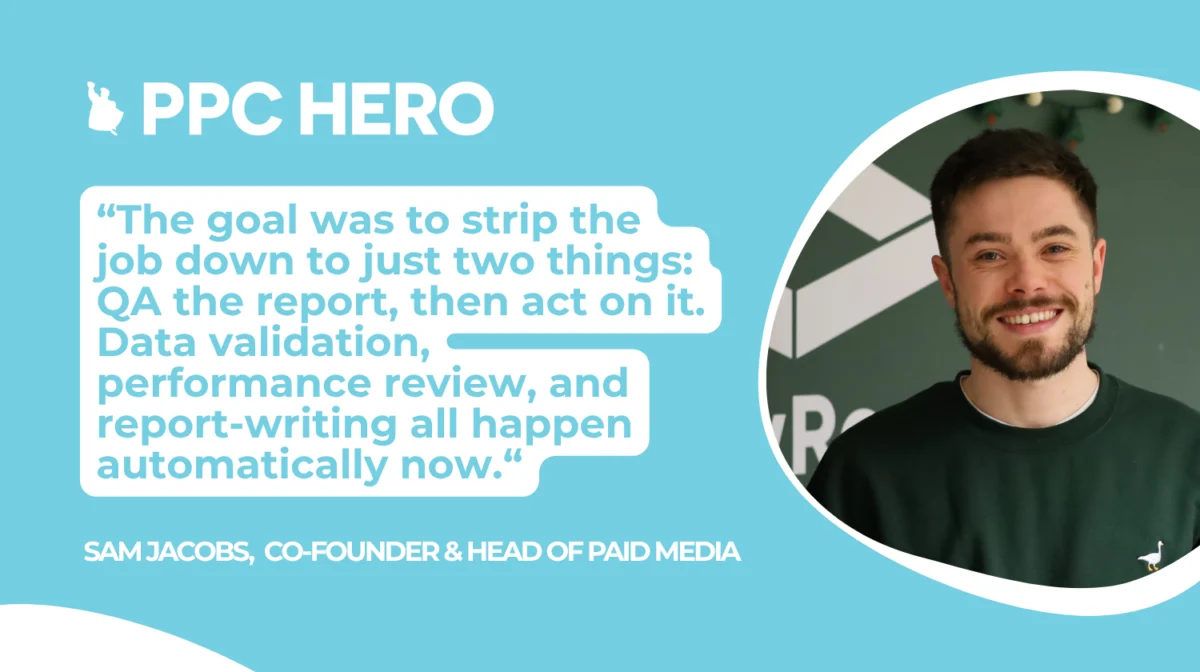
- The Result: The initiative successfully restructured the morning workflow, reducing a multi-step manual audit into a streamlined, automated briefing delivered directly to a shared inbox by 9:00 AM daily.
Chronology: From Manual Monotony to Programmatic Precision
The transition from manual spreadsheets to automated intelligence did not happen overnight. It was born out of growing pains and iterative development.
Phase 1: The Breaking Point (Early Growth)
As GrowRoom’s client roster expanded, leadership noticed a recurring bottleneck. Account managers were spending the first hour of their workday performing repetitive diagnostic checks. Budget pacing sheets pulled raw numbers from Google Ads, but humans had to manually read, validate, and interpret the data. They had to ask: Why is this account overpacing? Are cost-per-clicks (CPCs) rising? Is market demand shifting?
Phase 2: Identifying the Operational Drain
An internal time-audit revealed the staggering cost of these routines. With each account manager sinking half an hour daily into data validation, the agency was losing valuable billable hours to non-strategic tasks. Out of a four-step process—gathering data, analyzing performance, writing reports, and implementing changes—only the final step actually drove client growth. The first three were purely administrative overhead.

Phase 3: Script Development and Iteration
Recognizing the need for a programmatic fix, the technical team began building a custom Google Ads script. Rather than merely flagging budget variances, the script was engineered to conduct the diagnostic investigation automatically. Tested iteratively within the Google Ads script editor, the code evolved from a simple pacing calculator into an advanced recommendation engine.
Phase 4: Deployment and Workflow Integration
Once stabilized, the script was deployed at the MCC level. Now, every morning before staff sit down at their desks, the automated system compiles cross-account summaries, diagnoses spend drifts, and issues granular optimization recommendations.
Supporting Data: The Mechanics of the Script
To understand why GrowRoom’s automated solution proved so effective, one must examine how the script bridges the gap between raw data and actionable intelligence.
Traditional pacing sheets merely indicate what is happening (e.g., "Account A is 15% under budget"). GrowRoom’s script determines why it is happening.
[Raw Google Ads Data]
       │
       ▼
[MCC-Level Script Execution] ──(Filters Completed Days)
       │
       ▼
[Performance Diagnostics] ────(Scans Keywords, CPCs, & Auctions)
       │
       ▼
[Automated Shared Inbox Report] ──(Delivered Daily at 9:00 AM)
       │
       ▼
[Human QA & Strategic Implementation]
Key Functional Layers of the Script:
- Pacing Classification: Evaluates monthly spend targets against month-to-date figures, automatically categorizing accounts as on pace, overpacing, or underpacing, while calculating the required average daily spend moving forward.
- Historical Performance Scans: Analyzes the trailing 30 days of campaign and ad group data to identify budget inefficiencies, isolating top-performing conversion drivers versus underperforming keywords.
- Auction Insights Integration: Flags macro-level shifts within the competitive landscape, determining whether external market competition is driving up CPCs and causing budget drift.
- Structured Reporting: Packages all insights into a clean summary table with distinct pacing narratives, sent directly to a centralized team inbox every morning.
Official Perspectives: Lessons Learned from the Implementation Front
Implementing custom automation in live enterprise environments rarely goes off without a hitch. GrowRoom leadership shared critical technical insights and operational guardrails for agencies looking to replicate their success:
- Human-in-the-Loop Safeguards: Agency leadership strongly cautions against granting scripts autonomous budget-altering capabilities. “It’s a recommendation engine, not an autopilot,” notes the agency’s technical lead. Human account managers must retain final authority over implementation to prevent algorithmic misfires.
- Infrastructure Setup: Running scripts via personal logins creates administrative clutter. GrowRoom recommends utilizing a dedicated, shared reporting account to handle script execution and notification distribution cleanly.
- Algorithmic Nuances: Early testing revealed a common pitfall: including current-day spend in pacing calculations. Because a given day’s budget has not yet been fully expended, active-day data falsely flags every account as underpaced. Restricting calculations strictly to completed days (up to 23:59 the previous evening) eliminated these false signals.
- Data Hygiene: Technical precision is paramount. Simple oversights, such as case-sensitivity mismatches in column headers, can cause script execution to fail during deployment.
For developers embarking on similar projects, the agency points to official resources like the Google Ads Scripts Documentation and the Google Ads Scripts Examples Library as essential foundational tools.

Implications: The Future of Agency Workforce Management
The implications of GrowRoom’s programmatic shift extend far beyond a cleaner morning routine. By reclaiming roughly 10 hours per month per management pod, the agency fundamentally altered how its human capital is deployed.
1. Shift from Tactical to Strategic
When administrative tasks are offloaded to code, account managers can pivot toward high-level strategic thinking. Instead of spending mornings wrangling data, specialists now dedicate their energy to proactive campaign architecture, creative testing frameworks, and multi-channel expansion strategies that directly impact client ROI.
2. Scalability Without Linear Headcount Growth
For digital agencies, scaling revenue has traditionally required a linear increase in headcount to manage mounting workloads. Automated diagnostic tools break this paradigm, allowing existing teams to manage larger portfolios without sacrificing account health or reporting quality.
3. The Rise of the "Augmented" Marketer
The success of GrowRoom’s script underscores a broader industry trend: the evolution of the modern digital marketer. As AI and programmatic scripts absorb repetitive administrative burdens, the value of a media buyer increasingly lies in their ability to interpret automated insights, apply creative problem-solving, and execute high-impact strategic initiatives.
Ultimately, GrowRoom’s experience demonstrates that the future of agency operations belongs to those who successfully combine machine efficiency with human ingenuity.