In the world of digital marketing, the "average" is a dangerous metric. Often cited in boardroom presentations and campaign retrospectives, the elusive industry average conversion rate is frequently treated as a North Star. However, according to the latest data from the 2024 Unbounce Conversion Benchmark Report, relying on generic baselines is a strategic misstep that can obscure growth opportunities and lead to misplaced expectations.
The report, which synthesizes data from over 57 million conversions, 41,000 unique landing pages, and 464 million pageviews, reveals that conversion success is highly contextual. Whether you are a SaaS founder, an ecommerce manager, or a legal professional, your "good" is not the same as your competitor’s.

The Baseline Reality: Understanding Median Conversion Rates
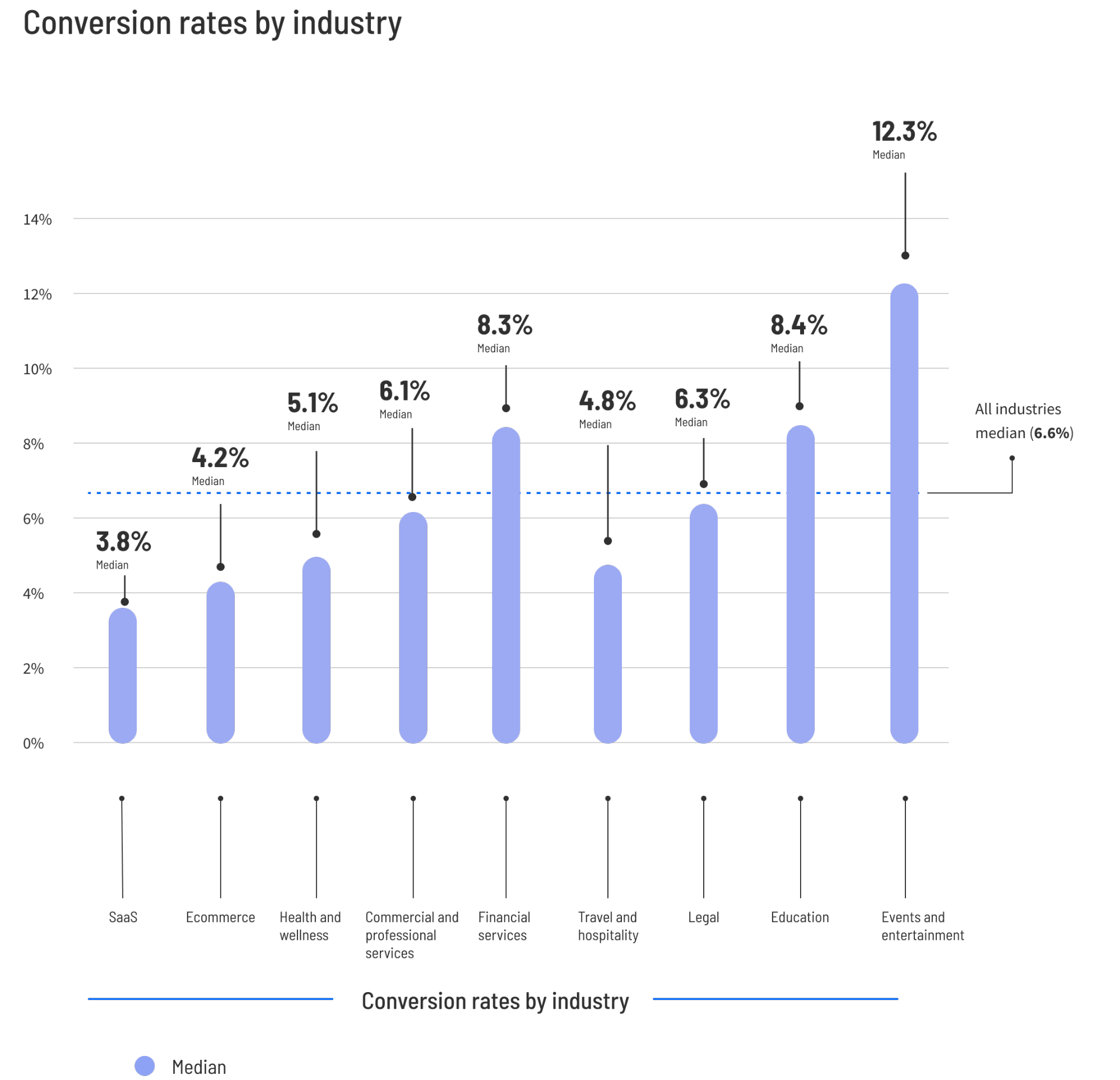
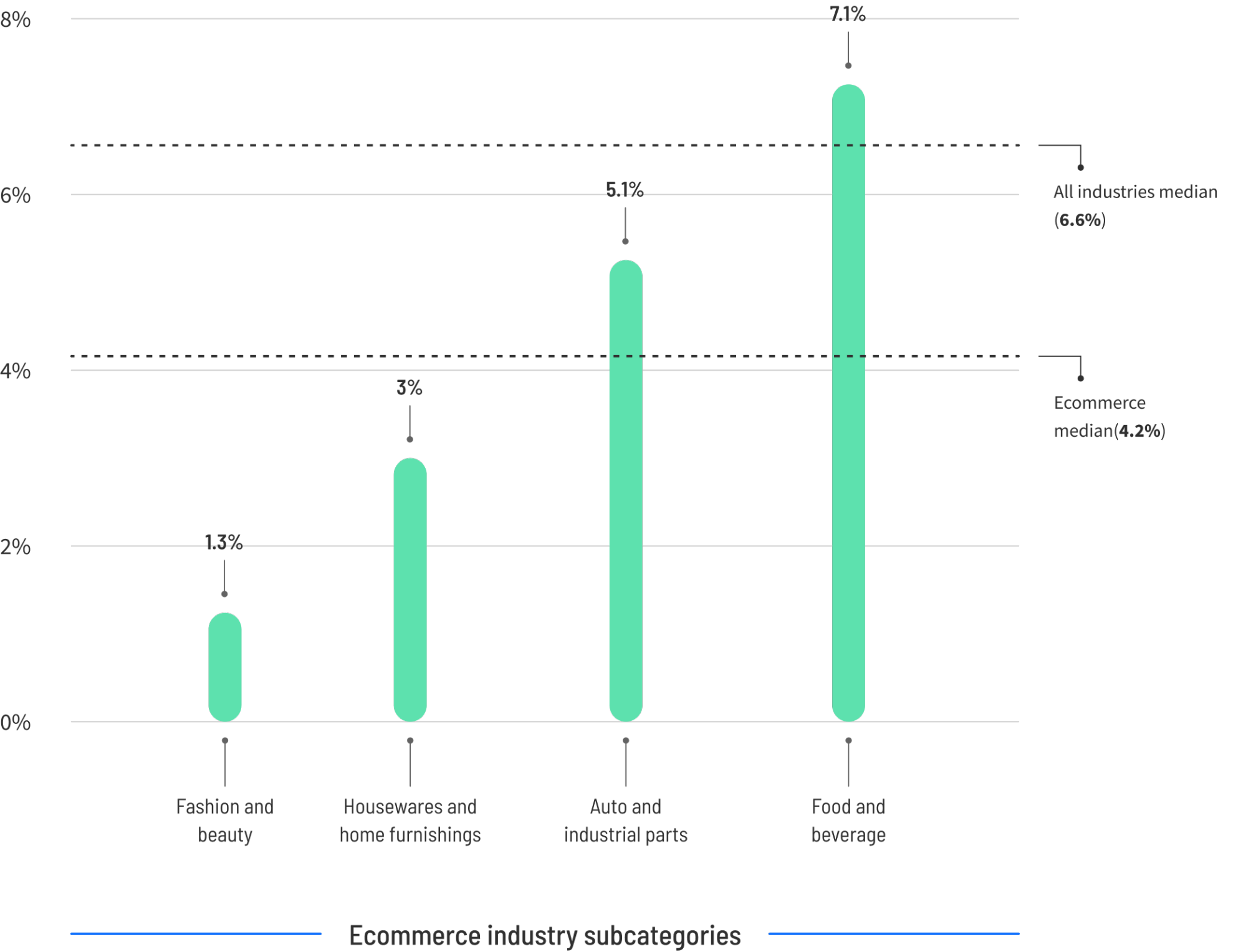
The median conversion rate across all industries currently sits at 6.6%. While this figure provides a high-level pulse of the digital landscape, it acts only as a starting point—a "middle-of-the-pack" benchmark.
Josh Gallant, founder of the organic growth firm Backstage SEO and contributor to the report, emphasizes that median values are used specifically to avoid the skewing effects of "unicorn" pages—rare, high-performing outliers that convert at extreme rates. By focusing on the median, marketers gain a clearer view of what is realistically achievable.

"Think of it like the average height of all humans," Gallant notes. "It’s a number, but on its own, it doesn’t tell you much about what’s average for your specific demographic." To truly understand performance, marketers must look beyond the aggregate and into the granular, industry-specific data.
Industry-Specific Performance: A Tale of Two Sectors
The disparity between industries is vast. A "good" conversion rate—defined by the report as the 75th percentile—can range from 11.4% to over 40% depending on the sector.
Ecommerce: The Volume Game
Ecommerce landing pages hover at a 4.2% median. However, top-tier performers are achieving 11.4% or higher. For a high-traffic store, that jump represents a massive shift in revenue. For instance, at 10,000 monthly visitors, moving from the median to the top quartile could yield an additional 720 conversions per month. Assuming an average order value of $75, that optimization results in $54,000 of incremental monthly revenue.
SaaS: Navigating Complexity
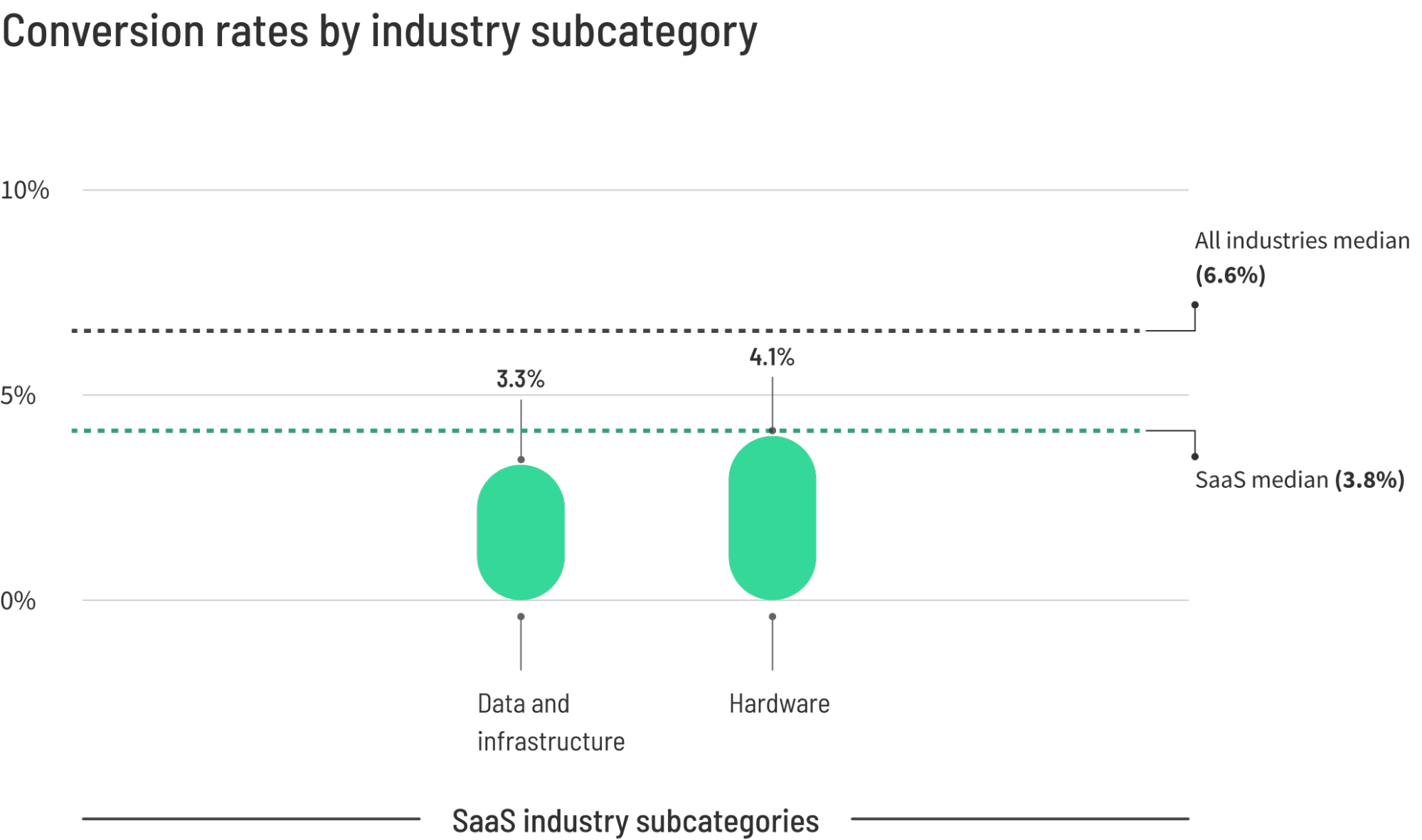
SaaS companies face a median conversion rate of 3.8%. The lower baseline reflects the inherent complexity of software products and longer sales cycles. Potential users are often in a research phase rather than an acquisition phase. To reach the top 25% (11.6% conversion), SaaS brands must excel at reducing perceived risk, often through "no-credit-card" trials or clear, pain-point-driven messaging.
Financial and Legal: High Intent, High Stakes
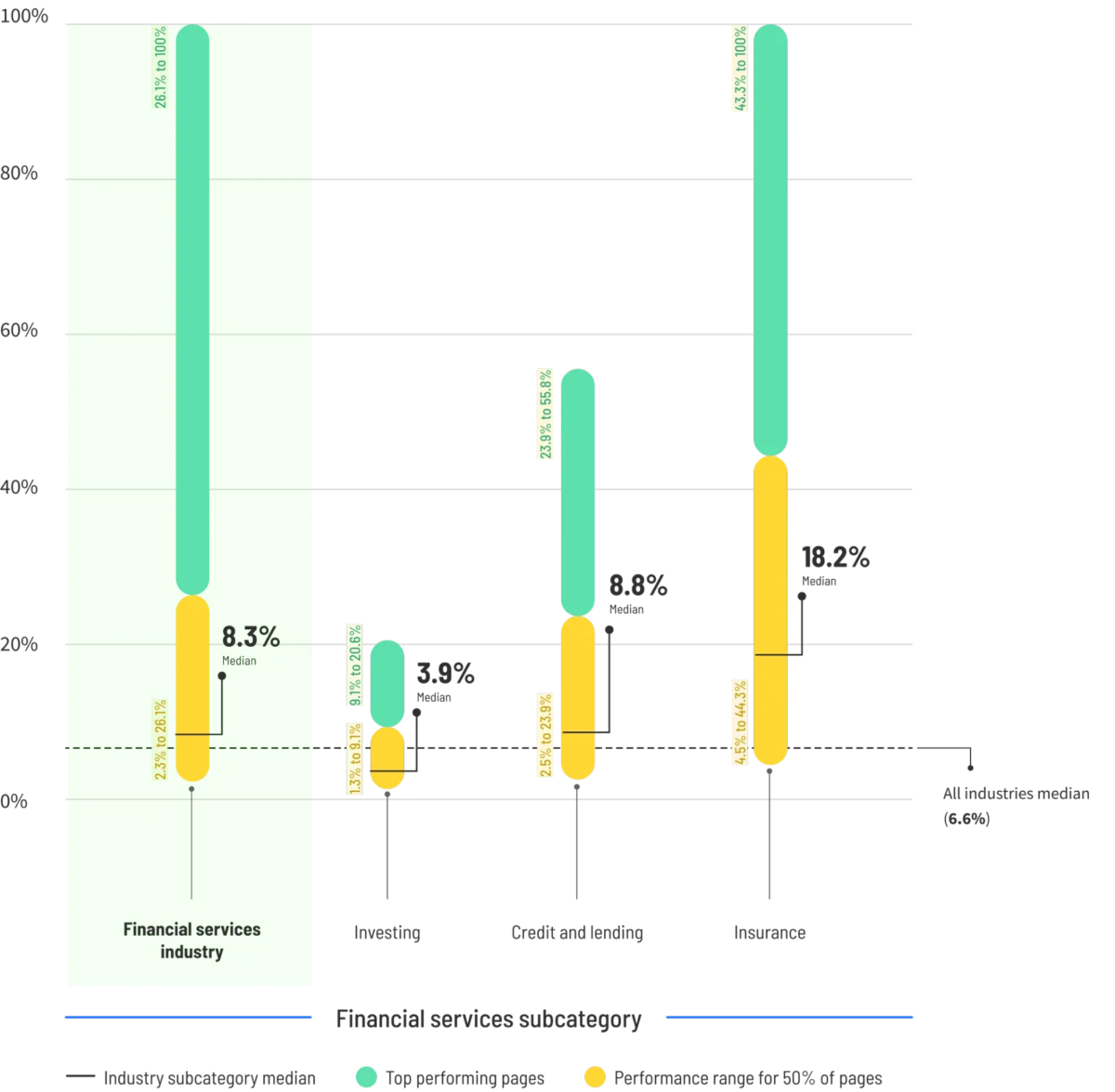
Financial services (8.3% median) and legal services (varies by sub-niche) operate under different rules. In finance, insurance landing pages can see rates as high as 18.2%. In the legal sector, mobile performance is critical; legal pages convert at 21% on mobile, significantly higher than on desktop. This trend is driven by urgency—users in need of legal representation after an accident or incident are rarely sitting at a desk, preferring the immediate accessibility of their smartphones.
Supporting Data: The Impact of Traffic and Device
Context extends beyond the industry itself; it reaches into the mechanics of how visitors arrive at your page and what device they use.
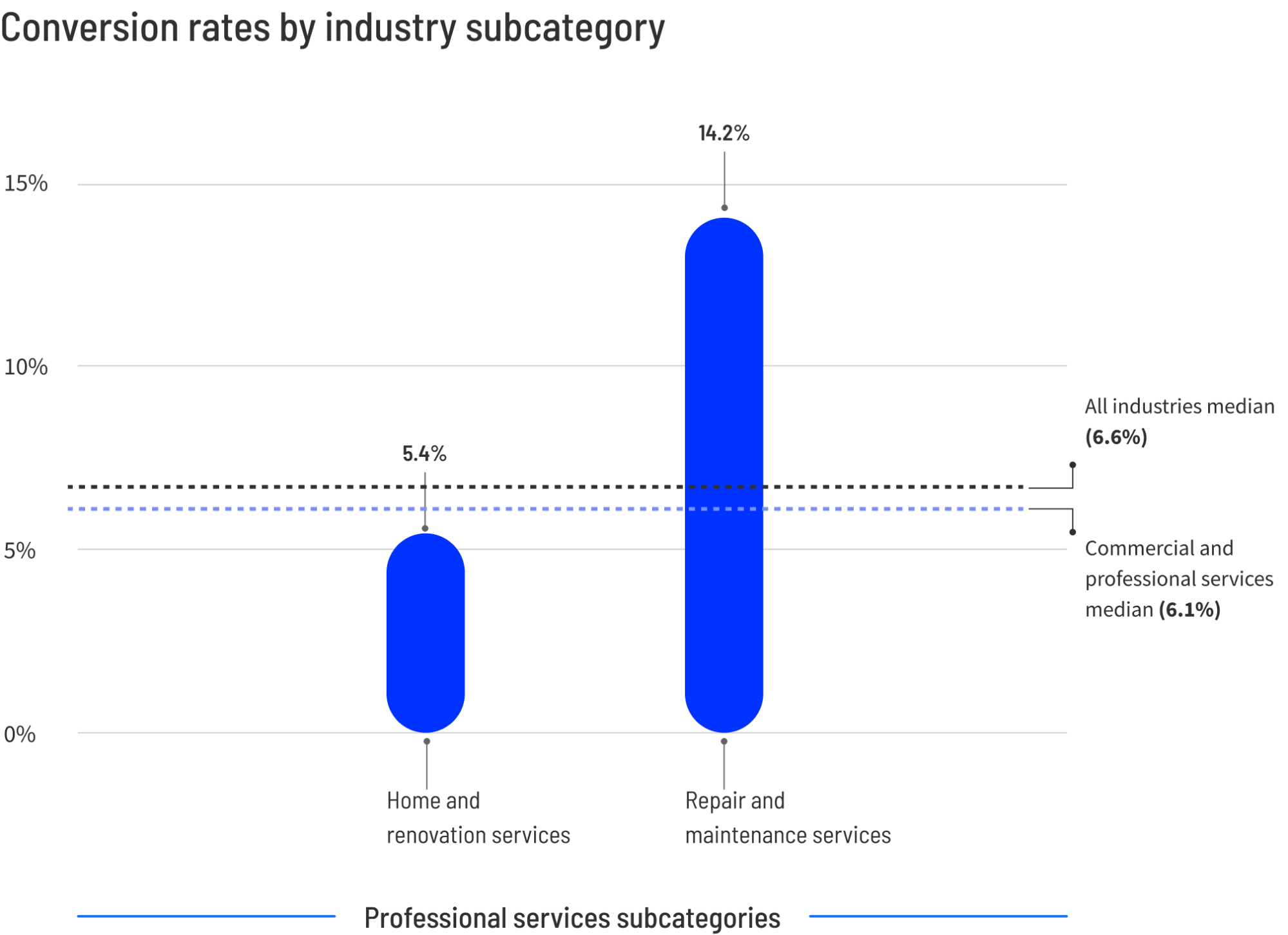
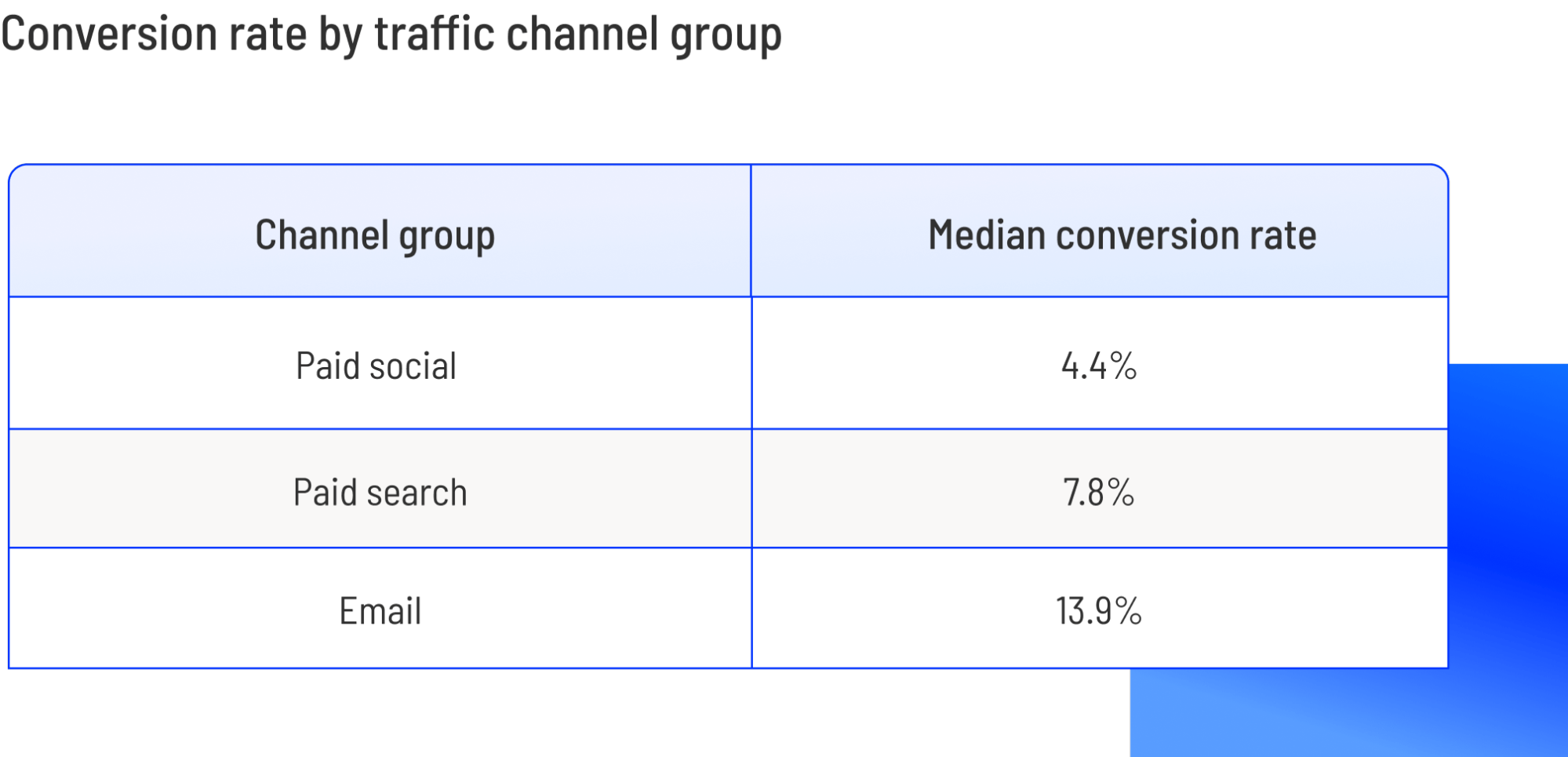
- Traffic Source Matters: In professional services, email traffic consistently outperforms other channels, converting at roughly 14%, while paid social channels often struggle to clear 4.4%.
- The Device Gap: While desktop has traditionally been the conversion powerhouse, the report highlights a significant shift. In financial services, mobile traffic converts 27.8% better than desktop, proving that "best practices" are often just outdated myths.
- Reading Ease: Perhaps one of the most actionable data points is the correlation between reading level and conversion. Content written at a 5th–7th grade reading level converts at 11.1%—more than double the performance of pages utilizing high-level, "professional" jargon.
Implications for Modern Marketers
The data suggests that the goal is not merely to reach the industry median, but to systematically test and iterate to join the top 25% of performers. This "top-quartile" threshold represents the true measure of success.
5 Proven Tactics for Optimization
For marketers looking to move the needle, the 2024 Conversion Benchmark Report suggests five non-negotiable tactics:
- Simplify Copy: Remove industry jargon. If a 12-year-old cannot understand your value proposition, your conversion rate will likely suffer.
- Iterative A/B Testing: Focus on one variable at a time—whether it be CTA color, button text, or form length. Testing multiple elements simultaneously makes it impossible to isolate what actually drove the increase.
- Strategic Social Proof: Don’t hide your credibility at the bottom of the page. Place testimonials, review counts, and client logos in direct proximity to your primary call-to-action.
- Mobile-First Polish: Since mobile accounts for 83% of landing page visits, verify your page functionality on actual devices. A "mobile-responsive" design is no longer enough; it must be "mobile-optimized" for speed and ease of use.
- Remove Friction: Strip away navigation menus, social media icons, and any secondary links that don’t serve the primary conversion goal. Every extra click is a potential exit point.
Conclusion: The Path to Excellence
The gap between the "average" and the "excellent" is not a product of luck; it is a result of a disciplined, data-driven approach to conversion rate optimization (CRO).
Marketers who successfully scale their performance focus on four pillars: absolute clarity in messaging, relentless speed optimization, building trust through social proof, and aligning the offer perfectly with visitor intent. As the industry evolves, the companies that thrive will be those that treat their benchmarks not as a ceiling to reach, but as a map to navigate toward constant, incremental growth.
The message is clear: stop chasing the mythical industry average. Instead, focus on understanding your specific audience, testing your hypotheses, and systematically removing the barriers that prevent your visitors from taking the next step. In a crowded digital marketplace, the ability to convert is the ultimate competitive advantage.