In the rapidly evolving landscape of artificial intelligence, a fundamental shift is occurring. For the past two years, the industry has been dominated by the "chatbot paradigm"—a model where users provide prompts to an LLM, receive text or code in return, and then manually copy, paste, or execute that output themselves. While tools like ChatGPT and Claude have significantly boosted productivity, they remain passive assistants.
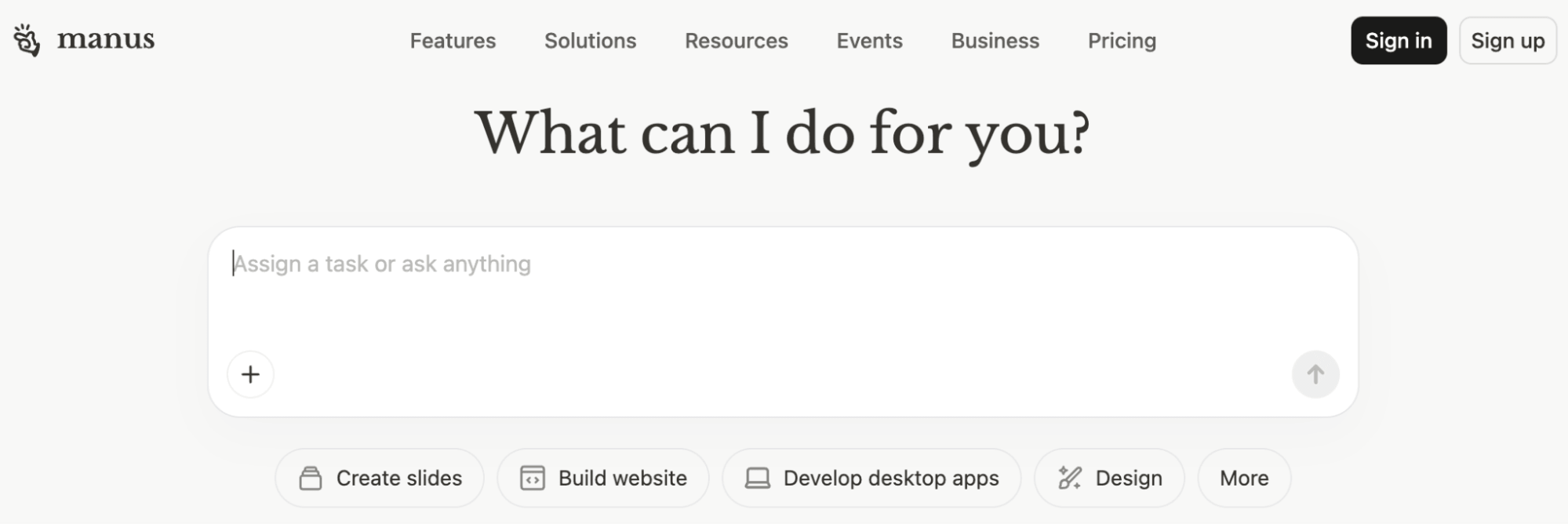
Enter Manus, an agentic AI platform designed to bridge the gap between "knowing" and "doing." Unlike standard chatbots that ask, "How can I help you?"—implicitly putting the burden of execution on the user—Manus asks, "What can I do for you?" and then proceeds to execute multi-step workflows autonomously. By interacting with web platforms, managing files, and coordinating complex sequences without human intervention, Manus represents the next frontier in business automation.
The Evolution of AI: From Passive to Agentic
The primary distinction between a chatbot and an agent lies in agency. A chatbot is a conversation partner; an agent is a digital employee. Kate vanderVoort, a marketing and communications strategist, emphasizes that the Manus experience is fundamentally different because it is built for execution.
"Manus doesn’t just respond to prompts; it executes them," vanderVoort explains. By navigating the web, logging into third-party tools, and synthesizing multi-platform data, Manus eliminates the "human-in-the-middle" bottleneck that plagues most AI implementations. Remarkably, this transition to agentic workflows does not require advanced programming skills. The system is designed for natural language interaction, making it accessible to business leaders who prioritize outcomes over technical implementation.
Chronology: How the Agentic Workflow Operates
To understand the power of Manus, one must look at how it replaces traditional, fragmented workflows.
1. The Pre-Manus Era: Fragmented Execution
Before the adoption of agentic tools, a typical consulting workflow—such as client proposal generation—was a manual, three-to-four-hour ordeal. A consultant might use Perplexity for research, pivot to Gemini for deep data extraction, shift to a canvas tool to organize KPIs, and finally move to Claude to draft the actual proposal. At every stage, the consultant acted as the "glue," manually transferring information between disparate interfaces.
2. The Manus Shift: Unified Execution
With Manus, the process is consolidated. A user provides a single, high-level directive. Manus then initiates a chain of events: it conducts the research, constructs a briefing dashboard, and drafts the personalized proposal. The user’s only manual intervention is a simple upload of the initial call transcript. This transformation reduces a half-day project into a session costing roughly $5 in credits, fundamentally changing the economics of professional services.
3. Scaling Complexity
The capability of these agents extends beyond simple drafting. In a recent test with a large manufacturing firm, Manus was tasked with creating an entire training program. The agent operated autonomously for nearly 50 minutes, executing 42 individual steps. It identified that the project requirements necessitated seven modules rather than the proposed six, and delivered a complete curriculum, including a 150-page training manual and a fully functional, interactive testing module. For the client, this represented the completion of a two-year project that had previously stalled at the early stages.
Supporting Data: Understanding the Credit Model
Manus operates on a credit-based subscription model, which is essential to understand for cost-effective deployment.
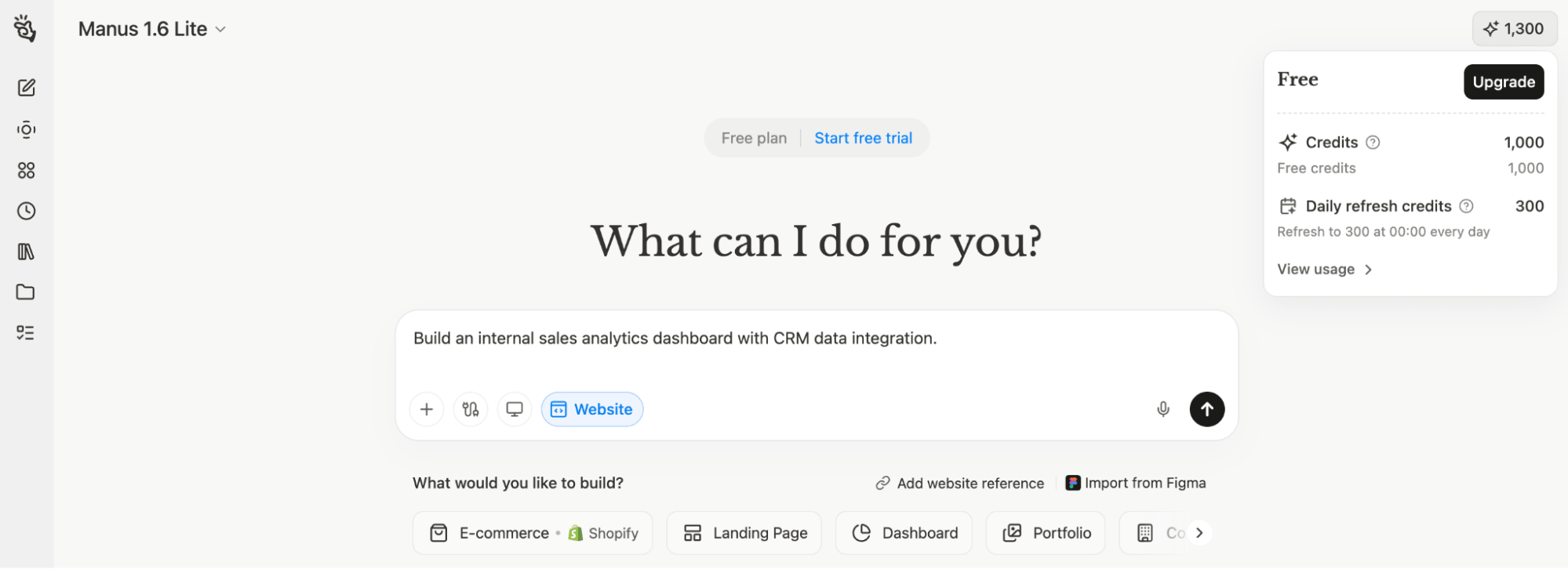
- The Baseline: Subscription tiers start at $20/month (4,000 credits), scaling up to $40 (8,000 credits) and $200 (40,000 credits) for high-volume users.
- Operational Costs: A simple query may cost between 5 and 10 credits. However, heavy-duty autonomous workflows—such as those involving multi-site research and document synthesis—can consume 900 or more credits per run.
- The "Refresh" Factor: Every plan includes 300 "refresh" credits daily. While sufficient for light, daily tasks, users must plan for paid tiers to accommodate the deep, agentic workflows that provide the highest ROI.
It is important for users to note that these credits do not roll over; they are a "use-it-or-lose-it" resource at the end of each billing cycle.
Four Ways to Deploy Manus
Manus offers four modes of access, each tailored to specific operational environments:
- Browser-Based Access: The standard entry point, capable of interacting with online platforms as if it were the user. It can manage CRM data or LinkedIn prospecting without the user ever exposing their login credentials.
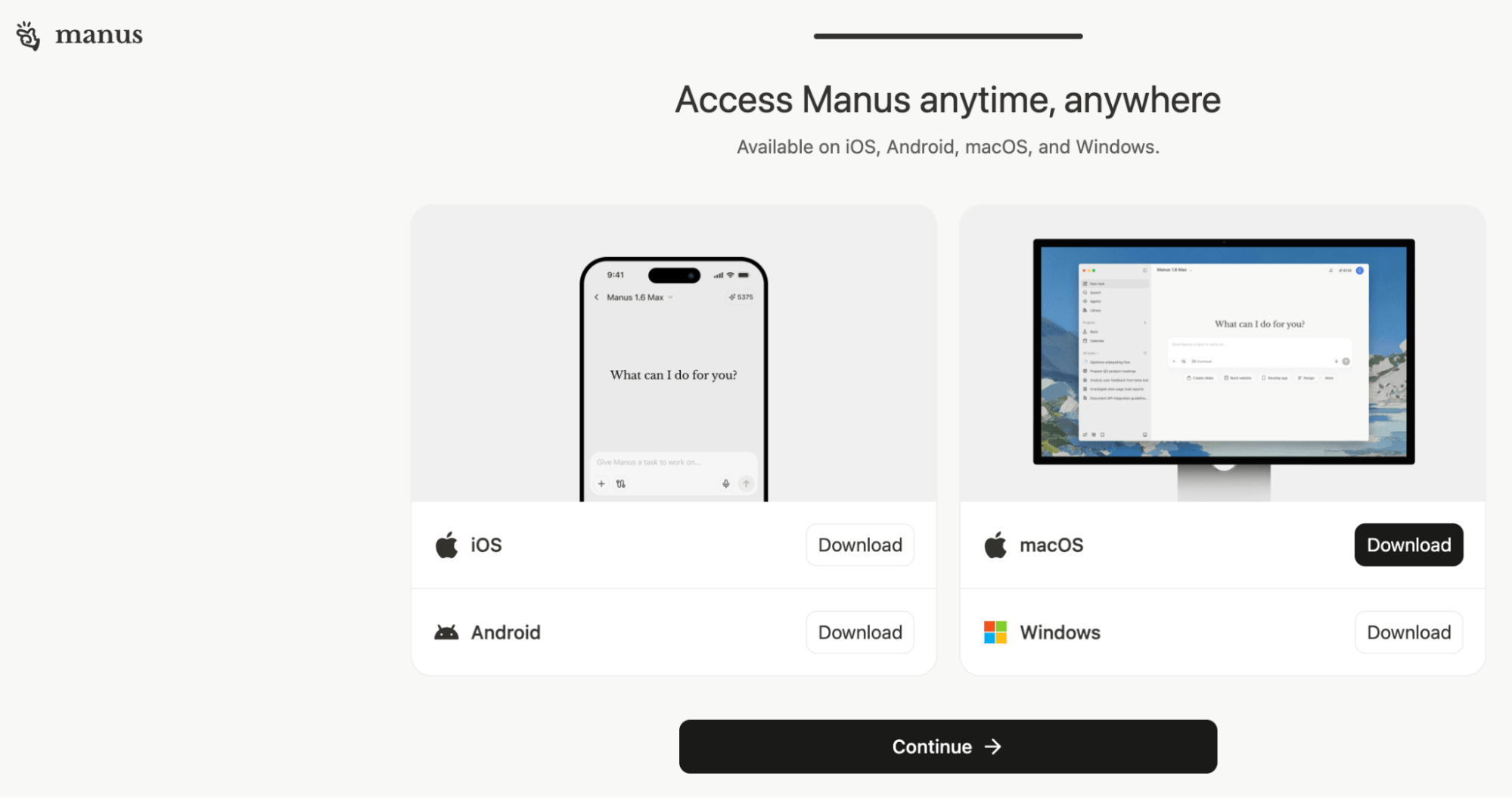
- Desktop Application: By installing the agent locally, Manus gains the ability to interact with files stored directly on your computer, bypassing the need for manual uploads and downloads.
- Telegram Integration: For users on the go, the Telegram agent allows for remote monitoring and input. If a long-running desktop task requires a decision, the agent pushes a notification, allowing the user to guide the process from a smartphone.
- Cloud Computer: This is the flagship mode. It runs as a persistent virtual environment in the cloud, maintaining databases that accumulate knowledge over time. It can serve as a 24/7 social media manager, continuously monitoring trends and updating content databases without the need for the user to keep their local machine running.
Strategic Implications: Moving Beyond the "Chatbot Mindset"
The most significant hurdle for new Manus users is the "chatbot mindset." Professionals often treat AI agents like interns, engaging in rambling, stream-of-consciousness brainstorming. This is inefficient.
"If you hired a $500-per-hour consultant, you wouldn’t spend the first hour brainstorming out loud," vanderVoort notes. "You would show up with a brief."
The "Prompt-as-a-Product" Strategy
To maximize ROI, users should utilize other LLMs (like Perplexity or GPT-4) to write the prompts for Manus. By using a voice-to-text tool to perform a "brain dump" and instructing an LLM to "write a highly optimized prompt for a Manus agent," users can create robust, structured briefs. Crucially, one must include the instruction: "Do not do the task; only write the prompt." This ensures that the agent receives a professional-grade briefing, resulting in significantly higher-quality output.
The Power of "Skills"
Manus utilizes "Skills"—zip files containing instructions, style guides, and examples—to make workflows reusable. A skill acts as a permanent, repeatable process. Once a task is performed successfully, the user can save the entire sequence as a skill, turning a one-time win into a scalable, automated asset.

The most potent application of this is the development of a Business Intelligence Center. By narrating their standard operating procedures (SOPs) into voice-to-text and feeding them into a Manus skill, businesses can encode their unique reasoning, logic, and brand voice into the agent. This ensures that the AI’s output isn’t just a generic script, but a reflection of the company’s internal methodology.
Conclusion: The Future of Work
The transition to agentic workflows signifies that the era of "manually-operated AI" is drawing to a close. By delegating complex, repeatable processes to agents like Manus, professionals can reclaim thousands of hours currently lost to administrative friction.
However, success with these tools requires a shift in management philosophy. It demands the ability to document processes, think in structured workflows, and treat AI as a digital employee rather than a search engine. For those who can make this transition, the rewards—in terms of efficiency, scale, and competitive advantage—are immense. As we look toward the future, the winners will not be those who are the best at "prompting," but those who are the best at architecting the agentic workflows that define their business operations.