In the volatile landscape of modern digital media, where algorithmic shifts and the fluctuating programmatic advertising market can sink a publication overnight, one veteran publisher has carved out a path of remarkable stability. Taegan Goddard, the founder of Political Wire, has spent the last 18 years transforming a simple editorial briefing into a thriving, subscriber-supported enterprise.
In a recent episode of the Niche Pursuits podcast, Goddard joined host Spencer Haws to deconstruct the mechanics of his business model. The conversation centered on a fundamental shift in publishing strategy: moving away from a total reliance on "chasing pageviews" toward cultivating a deep, predictable revenue stream through a premium subscription bundle.
The Genesis: A Digital Evolution of the "Washington Wire"
The story of Political Wire began with a straightforward editorial hypothesis. Goddard sought to modernize the concept of the Wall Street Journal’s legendary "Washington Wire" column—a curated, insider-focused briefing that condensed the noise of the capital into digestible, high-value notes.
By adapting this format for the web, Goddard wasn’t trying to be an exhaustive news aggregator; rather, he practiced rigorous editorial judgment. He focused on delivering content that was timely, relevant, and actionable for "political junkies." This commitment to consistency has transformed Political Wire into a daily habit. With a cadence of 30 to 50 posts per day, the site has cultivated a loyal readership that checks in as many as eight times during a single 24-hour cycle. This rhythm is not merely a publishing schedule—it is the heartbeat of the site’s retention strategy.
Chronology of a Subscription Business
Goddard’s journey is defined by his ability to pivot alongside the changing tides of the internet.
- Early Years (The Foundation): The site established its brand identity as a free, ad-supported, high-frequency briefing service, building the initial trust and traffic volume necessary for later monetization.
- The Transition (Unbundling to Rebundling): Initially, Goddard "unbundled" the vast array of political news from traditional newspaper outlets. He later "rebundled" that curated value into a paid membership, offering a premium layer of service that went beyond what was available to casual visitors.
- The Scaling Phase (Election Cycles): Goddard learned to leverage the cyclical nature of political interest. With traffic often doubling during election years, he turned the free site into a top-of-funnel discovery tool, capturing new readers during news spikes and converting them into long-term subscribers during the quieter lulls.
- The Mature Phase (The Bundle Era): Over the last decade, the membership product evolved from a simple "analysis" tier into a comprehensive ecosystem featuring ad-free browsing, private podcasts, weekly quizzes, and, crucially, a "friends and family" sharing model that has become a pillar of his churn-reduction strategy.
Supporting Data: The Power of Predictability
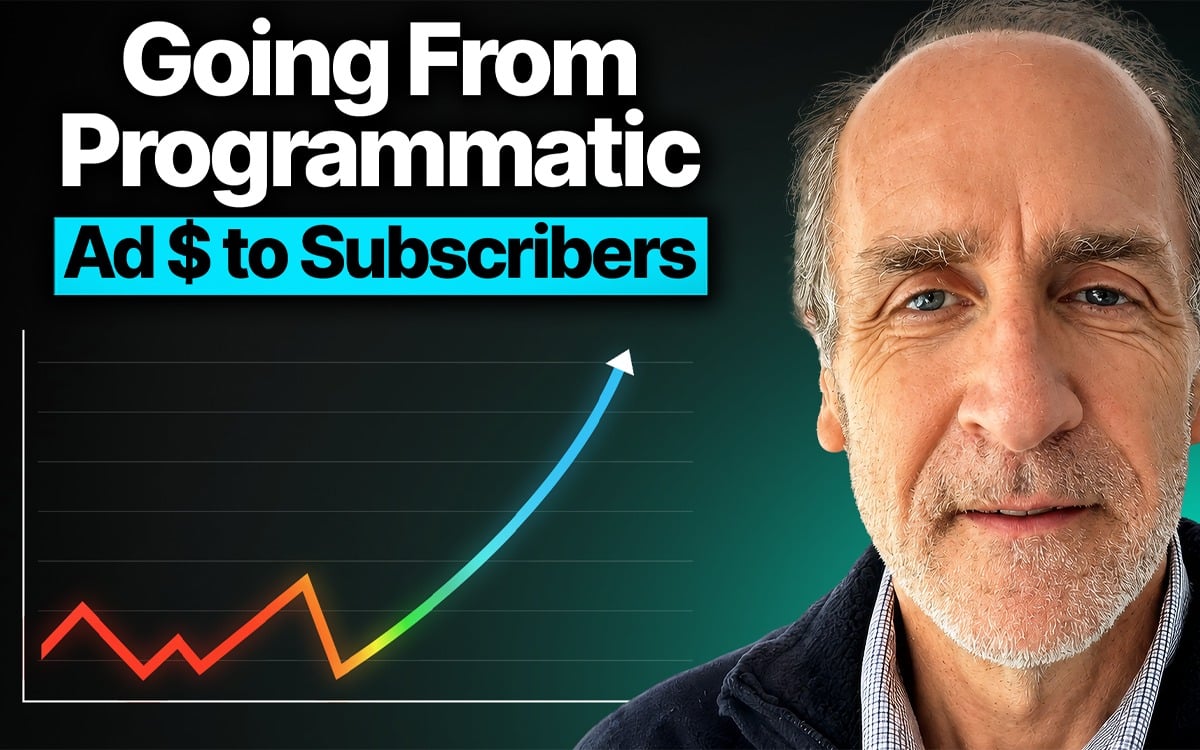
One of the most compelling aspects of the Political Wire model is the shift from the instability of programmatic advertising to the steady income of subscriptions. While Goddard continues to utilize platforms like Mediavine for his free-tier traffic, he emphasizes that advertising revenue is inherently volatile—susceptible to platform algorithm changes and market downturns.
Subscription revenue provides the "fiscal floor" that every publisher craves. By analyzing his growth, Goddard shared several key performance indicators:
- Pricing Elasticity: Despite multiple price increases, Goddard has received only a single customer complaint. This suggests that the audience perceives the value of the product to be significantly higher than the $80 annual entry fee.
- Retention Mechanics: By bundling disparate features—analysis, ad-free browsing, and interactive elements—Goddard makes it harder for a subscriber to justify canceling. A user might join for the analysis but stay for the convenience of an ad-free interface.
- The "Friends and Family" Multiplier: By allowing multiple users per account, Goddard has created a social barrier to cancellation. It is far harder for an individual to cancel a subscription when it impacts the experience of a spouse or colleague, thereby significantly lowering churn rates.
Official Insights: The Philosophy of the Founder
When asked about the "secret sauce" of his success, Goddard highlights the importance of the human element. In an age of AI-generated content and automated feeds, Political Wire remains a personal product.
"Trust is part of the product," Goddard noted. His subscribers aren’t just paying for links; they are paying for his specific editorial judgment and the intellectual labor he provides. This personal connection extends to the customer support experience. Goddard remains personally involved in the day-to-day operations, responding to members and engaging with his community.
Interestingly, Goddard has even embraced the technology that many in the industry fear. He frequently uses AI tools like ChatGPT and Claude to "audit" his site’s conversion pages. By treating these tools as low-cost, on-demand consultants, he can gain an objective perspective on his site’s layout, messaging, and call-to-action efficacy, allowing him to iterate his subscription pitch with data-driven precision.
Implications for the Publishing Industry
The success of Political Wire offers a blueprint for publishers who feel trapped by the limitations of the ad-only model. The broader implications for the industry include:
- The Hybrid Model is King: Publishers do not need to choose between ads and subscriptions. Instead, they should treat the free site as a massive, low-friction entry point for audience discovery, while the paid tier serves as a loyalty program for the most dedicated 5–10% of the audience.
- Pricing is Often Too Low: Many creators suffer from a "fear of pricing." Goddard’s experience suggests that audiences are often willing to pay more than publishers assume, provided the perceived value is clear and consistent.
- Bundling Reduces Churn: In a subscription economy, the "one-trick pony" model is dangerous. By adding community features, quizzes, and exclusive content, publishers can create a "stickiness" that is far more resilient to market shifts.
- Behavioral Economics in Content: Understanding that political cycles influence subscriber sentiment is critical. Publishers must build their business models to account for these psychological "dips" in interest, ensuring that the value proposition remains strong even when the news cycle feels exhausting.
Conclusion: The Path Forward
Taegan Goddard’s career serves as a masterclass in patience and iterative growth. By focusing on high-frequency, high-value editorial work, he has managed to insulate himself from the "death by a thousand pageviews" cycle that has claimed so many other digital outlets.
For the modern publisher, the lesson is clear: the most sustainable business is not one that simply scales to millions of fleeting visitors, but one that identifies the most loyal segment of the audience and delivers a product they cannot live without. Whether it is through a private podcast, an ad-free experience, or a daily digest, the goal is to transform a passive reader into a committed member.
As Goddard’s experience proves, when you provide consistent, high-quality judgment, the audience does not just read your work—they invest in it. In a world of infinite, free content, that relationship is the most valuable commodity of all.