By Sharon Atefi
Published by Foundr
Main Facts: Redefining the Inbox Experience
In the modern landscape of digital commerce, the standard playbook for email marketing has relied on a predictable formula: capture an email address, deploy a welcome series, trigger browse and cart abandonment flows, and push promotional discounts until a transaction occurs. While this infrastructure remains essential for driving immediate revenue, industry experts argue that it represents an incomplete strategy.
The brands achieving long-term resilience are shifting their primary objective. Rather than viewing email solely as a transactional conversion funnel, visionary founders are utilizing the inbox as a direct, algorithm-free channel to cultivate genuine communities. By treating subscribers as active participants rather than passive recipients, these businesses foster high levels of brand loyalty, organic word-of-mouth advocacy, and sustained customer retention that can withstand increased competition and shifting consumer habits.
Chronology: The Evolution of Digital Marketing Channels
To understand the current pivot toward community-centric email marketing, it is helpful to trace how digital outreach has evolved over the past two decades:
- The Early 2000s (The Wild West of Email): Email marketing emerged as a high-volume, blunt-instrument tool characterized by blast newsletters and basic promotional campaigns.
- The 2010s (The Rise of Social Media Algorithms): As social media platforms gained dominance, brands poured millions into building audiences on Facebook, Instagram, and Twitter. However, subsequent algorithm changes restricted organic reach, forcing brands to pay for access to their own followers.
- The Late 2010s (Automated Funnels): Ecommerce platforms matured, introducing sophisticated behavioral triggers (cart abandonment, post-purchase sequences) that hyper-optimized the path to purchase but often depersonalized the brand-consumer dynamic.
- The 2020s and Beyond (The Community Imperative): Faced with ad-fatigue, rising customer acquisition costs (CAC), and privacy regulations that limit third-party tracking, forward-thinking brands are returning to the owned media channel of the inbox—not just to sell, but to build deep, human connections.
Supporting Data & Industry Insights: The Shift from Transactional to Relational Metrics
Traditional email marketing dashboards focus almost exclusively on metrics tied directly to immediate sales: Open Rate, Click-Through Rate (CTR), and Return on Ad Spend (ROAS). However, brands shifting toward community-building are incorporating a broader set of key performance indicators (KPIs) to measure engagement and relational health:
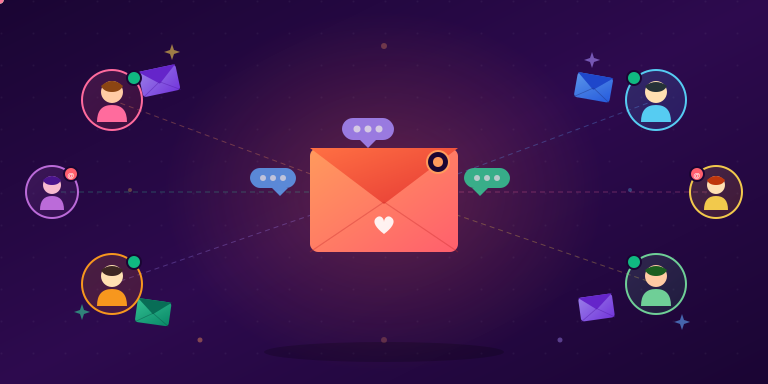
- Reply Rates: A rising reply rate indicates that a brand’s emails are no longer perceived as one-way marketing blasts, but as an open line of communication between real people.
- Forward Rates: When subscribers forward emails to peers, it serves as a powerful proxy for trust and organic brand advocacy.
- Referral-Driven List Growth: Tracking how many new subscribers enter the ecosystem via peer recommendations highlights the flywheel effect of a strong community.
- Unsubscribe Patterns: Analyzing churn provides critical qualitative feedback. While promotional emails often see spikes in unsubscriptions, content-led, relationship-building emails typically maintain lower, more stable baseline retention rates.
Official Perspectives & Expert Strategies
Industry leaders emphasize that building a community via email does not require massive marketing budgets or complex loyalty portals. Instead, it relies on deliberate strategic shifts in content creation and audience engagement.
1. Shifting from a List to a Community
There is a fundamental psychological difference between a "list" and a "community." A list is merely a collection of contact data harvested over time. A community is a collective of individuals who share a common identity, a set of values, and a feeling of belonging. To bridge this gap, brands must offer value that extends far beyond transactional incentives.
2. Making Subscribers Feel Like Insiders
Exclusive access is a primary driver of community cohesion. This does not mean gating content behind expensive membership tiers; rather, it involves changing how product development and company milestones are communicated.
- Sharing the Process: Instead of merely announcing a new product launch, successful founders share the engineering hurdles, the failed prototypes, and the rationale behind specific design choices.
- Founder-Led Narratives: Plain-text, unformatted emails written directly by the founder often outperform highly designed, image-heavy templates because they establish an authentic human voice.
3. Cultivating Two-Way Dialogue
Most corporate email programs operate on a strict broadcast model. Cultivating community requires active listening. Founders who end their emails with genuine, open-ended questions—such as asking what challenges their audience is facing or what products they would like to see next—foster micro-interactions that build immense goodwill. Responding personally to even a fraction of these replies transforms casual buyers into vocal brand evangelists.
4. Establishing a Recognizable Voice
Identity binds a community together. If an email could have been generated by any competitor in the same market sector, it fails to build loyalty. Distinctive brand voices are rooted in clear foundational beliefs: What does the brand stand against? What principles does it refuse to compromise? When these values consistently color every communication, subscribers develop a sense of genuine familiarity and trust.
Implications for Modern Founders and Marketers
The implications of this shift toward community-driven email marketing are profound for ecommerce businesses, particularly in an era where paid acquisition costs continue to climb.
By treating the inbox as a sanctuary of direct, algorithm-free communication, brands insulate themselves against the volatility of third-party social media algorithms. Customers who feel emotionally invested in a brand’s journey are significantly less likely to defect when cheaper alternatives appear in their social feeds. Furthermore, these engaged subscribers act as an organic focus group, providing real-time qualitative feedback, user-generated content, and invaluable word-of-mouth marketing.
Ultimately, successful email programs are no longer defined solely by who has the most sophisticated automation suite or the highest send frequency. They are defined by those founders who successfully make their subscribers feel like valued participants in a shared mission.
For founders looking to streamline their transactional infrastructure while doubling down on community relationships, platforms like Omnisend offer advanced segmentation and automation tools designed to balance revenue generation with genuine engagement. Foundr readers can access an exclusive 50% discount on their first three months by using the code FOUNDR50 upon signup.