By Contently Editorial Desk
Updated for the Zero-Click Marketing Era
Main Facts: The Death of the Ten Blue Links and the Birth of the Two Audiences
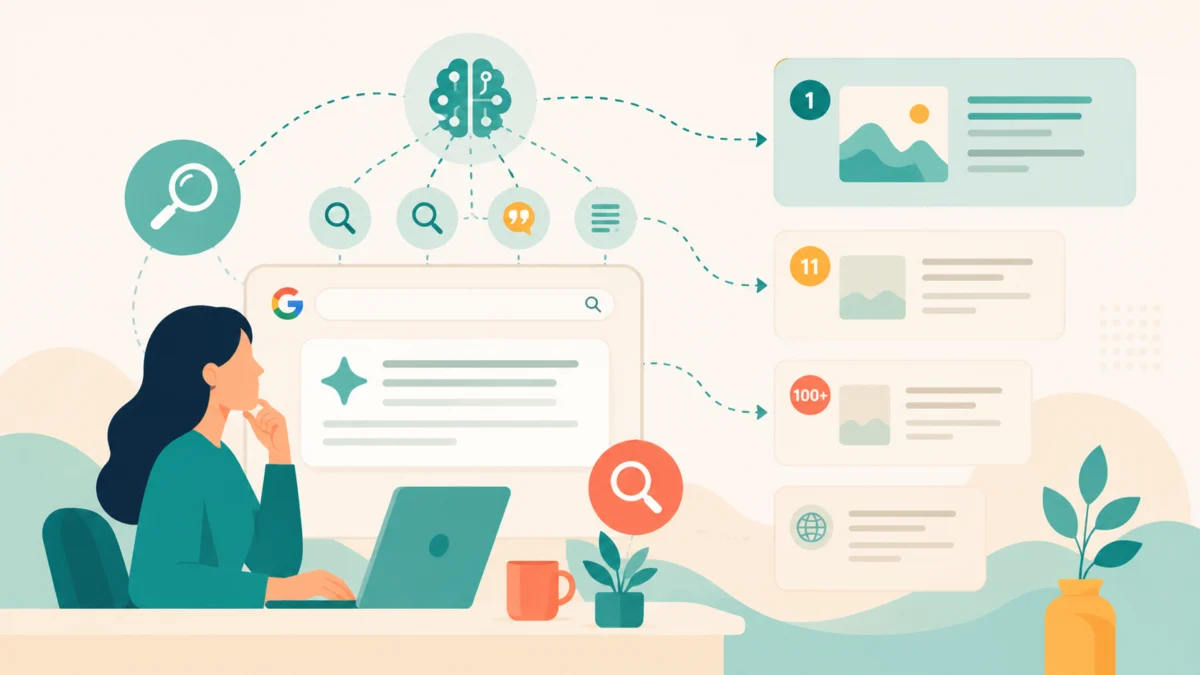
The digital search landscape has fundamentally fractured. When a modern consumer queries a search engine with a complex intent or a recurring buyer question, the days of navigating through traditional "ten blue links" are rapidly fading into digital history. Today, that query is intercepted by an AI Overview, a synthesized paragraph powered by Large Language Models (LLMs), or a conversational response generated by platforms like ChatGPT and Perplexity.
If a brand manages to secure a mention in these automated summaries, it is typically reduced to a single, flattened sentence stripped of its original cadence, style, and rhetorical nuance. The headline crafted meticulously by a managing editor over the course of hours is bypassed entirely. The nuanced point of view that once served as a primary market differentiator is smoothed out by algorithmic consensus, reading less like a bespoke insight and more like the product of an anonymous corporate committee.
This structural shift has created a profound new reality for content marketers and brand strategists: while human beings still consume and act upon content, machines increasingly decide what they read first.
Consequently, modern marketing requires a dual-track approach. Brands must speak simultaneously to two radically different audiences:
- Human customers, who possess distinct motivations, mercurial emotions, and a deep-seated preference for authentic narrative; and
- Robotic algorithms, which extract, compress, paraphrase, and rank ideas without emotional resonance.
The defining challenge for brands moving forward is balancing these competing priorities without turning their content into sterile, algorithmic "slop." The marketers who thrive in this new era will not be those who abandon storytelling for data dumps, but those whose creative ideas successfully survive technological translation.
Chronology: How the Search Paradigm Shifted From Keywords to Parsers
To understand how marketing arrived at this juncture, it is helpful to trace the evolution of search over the past decade:
- The Keyword Era (Pre-2018): Search engines relied heavily on exact-match keywords, meta-tags, and backlink volume. Content was optimized primarily to trick or satisfy algorithmic crawlers, often at the expense of human readability.
- The Semantic & Intent Era (2018–2023): Search engines evolved via updates like Google’s BERT and MUM to understand natural language, context, and user intent. Content strategies pivoted toward comprehensive topic modeling, "skyscraper" articles, and answering specific user questions (FAQs).
- The Generative AI & Zero-Click Era (2024–Present): The proliferation of generative AI search features, conversational chat assistants, and Retrieval-Augmented Generation (RAG) models fundamentally altered the user journey. Instead of driving traffic directly to publisher sites, engines now synthesize answers directly on the search engine results page (SERP). Users get their answers instantly, plunging marketers into a "zero-click" environment where brand visibility must be measured through citation, entity association, and brand recall rather than raw click-through rates.
Supporting Data: What Humans Want vs. What Machines Demand
Navigating this new era requires empirical backing. Consumer research and SEO metrics reveal a fascinating dichotomy in how content is evaluated on the web today.
The Human Preference for Authenticity
Despite the ubiquity of generative text generation tools, audiences remain deeply attached to human-created works. According to research from Ipsos, audiences retain a strong, measurable preference for content crafted by humans over machine-generated output.
- Emotional Connection: Humans are moved by vulnerability, humor, shared struggles, and cultural context. Algorithms can summarize information, but they cannot feel it.
- The "AI-Ism" Fatigue: As automated content floods the internet, readers have developed acute radar for mechanical phrasing, predictable transitions ("In conclusion," "Delve into"), and hollow corporate jargon.
The Machine’s Need for Structural Clarity
Conversely, LLMs and AI search engines process information through tokenization, entity mapping, and vector embeddings. They do not care about lyrical prose or poetic license; they care about semantic clarity, verifiable claims, and structured data.
- Entity Recognition: AI models prioritize content where claims, evidence, and context are explicitly linked to recognized entities (people, places, products, and organizations).
- Information Density: Models look for definitive statements backed by transparent data receipts rather than meandering narrative setups.
- Content Freshness: Recent data from SEO platforms like Ahrefs indicates that AI assistants heavily favor fresh, recently updated content when compiling citations, rewarding brands that maintain living knowledge bases.
Official Responses & Industry Perspectives: Adapting to the Zero-Click Reality
Industry leaders and compliance experts are rapidly adjusting their frameworks to address the realities of AI-driven visibility.
Chief Marketing Officers and digital strategists are shifting performance metrics away from traditional organic traffic spikes. Because AI summaries act as a barrier between the publisher and the reader, visibility no longer correlates directly with clicks. Instead, industry analysts emphasize share of model—how frequently a brand is cited when an LLM answers queries within its vertical—as the gold standard for digital authority.
Furthermore, regulated industries face unique hurdles. For brands operating in financial, legal, or medical sectors (requiring credentialed review by CFAs, MDs, JDs, or FINRA-registered professionals), the stakes are even higher. If an AI model misinterprets or flattens a compliance-vetted claim, the liability can be immense. Therefore, industry consensus dictates that human-in-the-loop validation is no longer just a quality control measure—it is a legal and strategic necessity.
Implications: Five Strategies for Mastering the Dual-Audience Playbook
To succeed in a landscape dominated by zero-click AI summaries, brands must construct content designed to perform double duty: captivating human readers while feeding clean signals to algorithmic parsers.
Here are five actionable strategies for mastering this dual-pronged approach:
1. Lead with a Scene; Label with Structure
Open every piece of content with a human-centric hook—a vivid visual, a compelling conflict, or a relatable question that draws the reader in. Simultaneously, deploy rigorous structural scaffolding (clear H2/H3 subheadings, schema markup, and bulleted executive summaries) underneath that narrative. Humans remember stories; machines remember structure.
2. Make Every Claim Quotable and Parsable
When introducing an insight, back it with hard data, name your sources explicitly, and phrase the takeaway concisely. Think of this as writing for citation: craft a sentence that resonates emotionally with a human reader while standing firmly on its own as a self-contained fact that an AI Overview can easily extract.
3. Design Visuals That Speak in Two Languages
For human viewers, visual assets—such as infographics, custom illustrations, or product demo videos—must tell a story complete with emotional context and aesthetic appeal. For machines, those same assets must be supported by descriptive file names, thorough alt text, robust metadata, and precise transcripts.
4. Leverage Video to Teach Twice
In video and short-form content, the first three seconds serve as your human headline. To satisfy algorithms, naturally incorporate primary keywords into your voiceovers, provide accurate closed captions with consistent terminology, and upload structured, keyword-rich descriptions. This ensures visibility in platform recommendation engines while keeping human viewers engaged to the end.
5. Maintain Brand Consistency Across All Touchpoints
Algorithmic models learn through repetition and entity alignment; human buyers learn through consistency and tone. Use uniform product names, standardized taglines, and consistent phrasing across all digital touchpoints—from your blog copy to your YouTube metadata—so both audiences instantly recognize and recall your brand.
Conclusion: Thriving in the Era of People and Parsers
The evolution from human-only optimization to a hybrid model of "people and parsers" marks one of the most significant transitions in the history of digital marketing. This shift does not require brands to strip the soul, creativity, or emotion from their storytelling. Rather, it demands that marketers become bilingual—fluent in the art of human connection and the science of machine readability.
The brands that master this delicate balance will not merely survive the zero-click era; they will own it, ensuring their stories are not only seen by human eyes, but proudly cited by the machines shaping the future of information.
Frequently Asked Questions (FAQs)
What does it mean to create "machine-readable" content?
Machine-readable content is organized so that AI systems, search engines, and conversational assistants can effortlessly parse, interpret, and summarize it. This involves utilizing clear hierarchical headers, standardized terminology, proper schema markup, and unambiguous factual claims so that core ideas can be extracted without losing their contextual meaning.
Should marketers still care about SEO if AI Overviews and chatbots dominate search?
Yes, but the definition of SEO has fundamentally evolved from "ranking for keywords" to "structuring for understanding." While legacy keyword-stuffing tactics are obsolete, semantic clarity, technical schema, entity alignment, and first-party topical authority are more critical than ever to secure AI citations.
Does this shift change how we approach video and visual content?
Significantly. Every visual asset must now serve a dual purpose. It must engage human viewers through emotional resonance and pacing, while providing algorithms with the necessary metadata, descriptive titles, captions, and transcripts required to understand and index its context.