The evolution of digital communication has been marked by a transition from the stark, utilitarian text of the SMS era to the vibrant, expressive world of emojis, GIFs, and stickers. Yet, for all their utility, these tools often feel static—a flat representation of a human emotion. Today, a new startup called Pixi is betting that the next frontier of messaging is not just about sending a digital image, but about "living" a digital experience.
Pixi, a messaging-native application that launched on the Apple App Store this Wednesday, is attempting to redefine the social experience by integrating on-device artificial intelligence with augmented reality (AR). The result is a platform where interactive characters don’t just appear on a screen; they inhabit the user’s physical environment, responding to their surroundings, facial expressions, and even the presence of pets or objects in real time.
The Core Concept: Bringing Presence to the Digital Void
At its heart, Pixi is a response to a modern psychological phenomenon. Founder Mark Drummond, a veteran of both DreamWorks Animation and Apple, describes the current state of digital messaging as a "legacy" medium.
"The consumer problem we’re solving is thinking of a friend when they’re not present," Drummond explains. "Sometimes the psychology is called ‘pebbling’ or ‘creative gifting.’ You’re sharing tokens of affection—cards, e-cards, and gifts. That’s your dad’s, or in some cases, your granddad’s media. We can do better. We can do something that’s digitally native, and that uses everything we learned about AR on the iPhone."
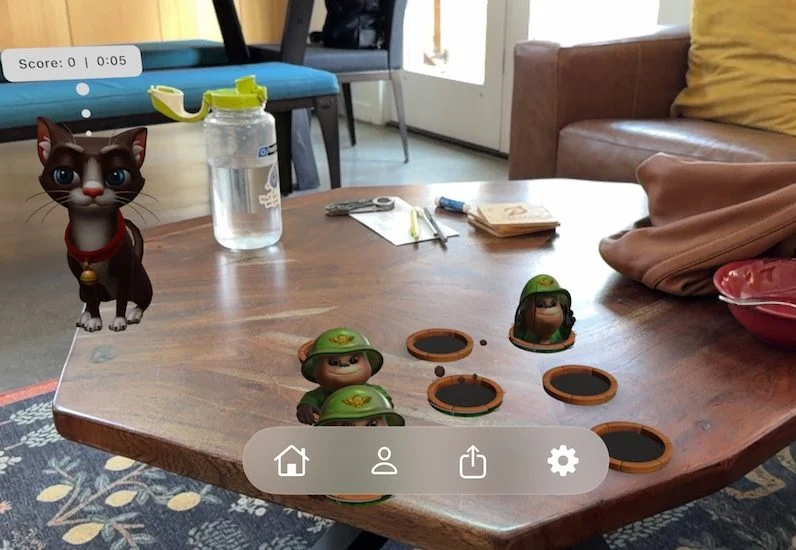
Unlike standard AR filters popularized by Snapchat or Instagram, which overlay digital masks on a user’s face, Pixi focuses on environmental interaction. When a user sends a Pixi character to a friend, that character isn’t just a video clip. Through the recipient’s iPhone camera, the character "enters" their room. If the recipient has a dog, the virtual cat character might react to its movement. If the user moves, a playful envelope character might chase them around the kitchen.
A Chronology of Innovation: From Animation to AI
The development of Pixi represents a collision of two major technological trends: the maturation of mobile AR hardware and the democratization of generative AI.
- Early Development: Leveraging the sophisticated LiDAR and camera systems found in modern iPhones, the Pixi team began building an engine capable of "semantic awareness." This allows the app to understand that a table is a table and a pet is a living entity, rather than just identifying colors or shapes.
- The Launch Phase: Following a period of stealth development, the company officially launched on the App Store on Wednesday. The initial rollout includes a set of base characters: a robot, a cat, and an animated envelope. These characters are equipped with logic-based behaviors that allow for rudimentary interaction, such as playing games of tic-tac-toe or whack-a-mole.
- The Demonstration: During a recent press demonstration, Drummond showcased the "cat" character. It performed a set of stand-up comedy routines on his desk. Most impressively, the character tracked Drummond’s face; when he offered a genuine smile, the character’s behavioral state shifted, demonstrating the app’s capacity for emotional feedback loops.
Technical Foundations and Data Privacy
One of the most common concerns regarding AI-driven cameras is the privacy of the visual data being processed. In an era where "cloud-based AI" is the norm, Pixi has taken a notably different approach.
According to the company, all visual and audio processing remains entirely on the device. By keeping the AI local, the app ensures that the video feed of a user’s private home environment is never uploaded to a server or stored in the cloud. This "edge-first" strategy not only protects privacy but also reduces latency, allowing the AR characters to respond in milliseconds—a necessity for the "real-time" feel that Pixi promises.
The app currently supports iPhone 11 models and newer, utilizing the proprietary ARKit frameworks that have been refined by Apple over the last half-decade. While the current focus is strictly on the iOS ecosystem, the roadmap includes an expansion to Android, as well as integration into third-party messaging giants like WhatsApp and Instagram.
The Future of the "Character Marketplace"
Pixi’s ambitions extend well beyond a handful of pre-made avatars. The company is actively building a marketplace designed to serve as a hub for studios, brands, and independent creators.

Imagine a movie studio releasing a new film and providing a Pixi character that can appear in a fan’s living room to "promote" the movie by interacting with the user. Or a consumer brand, such as M&Ms, launching a new flavor by allowing a virtual, anthropomorphic character to engage with customers in their own homes.
Drummond emphasizes that this is not a one-way street for brands. By allowing users to adopt these characters and create their own stories, the characters become "brand ambassadors." This, he argues, creates a deeper, more organic connection than a traditional advertisement ever could.
Furthermore, the company is looking toward the integration of intellectual property. Drummond mentioned the potential for characters like "Alice in Wonderland" to be introduced. These characters would not just be static models; they would be programmed to behave in an "Alice-consistent" manner, reacting to the user’s specific environment in ways that align with the character’s established personality.
The Vision: User-Generated Personas
The ultimate goal for the Pixi team is to hand the keys of creation to the user. By integrating generative AI, Pixi plans to allow users to "prompt" their own characters into existence.
"Part of our plan is to open up those generative AI capabilities to our users, so they can prompt their way to say something," says Drummond. "Like, ‘I want a blue blob that threatens my friend and growls at them and keeps chasing them on the phone.’"
This shift from "consumer of content" to "creator of experiences" aligns with the broader trend in the tech industry toward generative interfaces. If successful, this could turn Pixi from a simple messaging utility into a social playground where the only limitation is the user’s imagination.
Implications for the Social Media Landscape
Pixi’s launch arrives at a critical juncture for social media. Users are increasingly fatigued by the performative nature of Instagram and the chaotic, text-heavy nature of X (formerly Twitter). There is a growing desire for "low-stakes" social interaction—the kind of spontaneous, playful engagement that characterized the early, simpler days of digital messaging.
However, the path to mass adoption is not without challenges.
- Platform Friction: By requiring an app download, Pixi faces a hurdle that native stickers and GIFs do not. While the recipient doesn’t need to install the app to view the message, the "sender" still acts as the primary driver of adoption.
- The "Gimmick" Risk: As with many AR applications, there is the risk that the novelty wears off. To remain relevant, Pixi must prove that its characters offer sustained utility rather than just a one-time "wow" factor.
- Monetization vs. User Experience: While the app is currently free, the plan to allow brands to charge for characters could alienate users if not handled delicately. The company’s focus on "free-to-play" as a strategy for brand awareness is a smart hedge, but it remains to be seen if brands will prioritize brand-building over direct revenue.
Conclusion: A New Language of Connection
Pixi is not just another messaging app; it is an experiment in digital intimacy. By attempting to bridge the physical and digital worlds through AR and on-device AI, the company is asking a fundamental question: What happens when our digital messages are no longer bound by the flat constraints of a screen?
Whether this becomes the next evolution of human connection or remains a niche tool for tech enthusiasts will depend on how seamlessly the company can integrate its characters into the daily habits of its users. But for now, the "cat on the desk" is a compelling, if whimsical, starting point. As we move further into the age of spatial computing, Pixi suggests that the future of friendship might not just be found in our words, but in the characters we invite into our homes.