Most marketing organizations have successfully checked the first box in the digital transformation era: they have rolled out AI tools. From generative text models to predictive analytics platforms, the landscape of the modern marketing department is now saturated with advanced technology. Yet, according to industry experts, a critical disconnect remains. While access to technology has scaled, the actual integration of these tools into daily operations—what is known as "AI adaptation"—remains in its infancy.
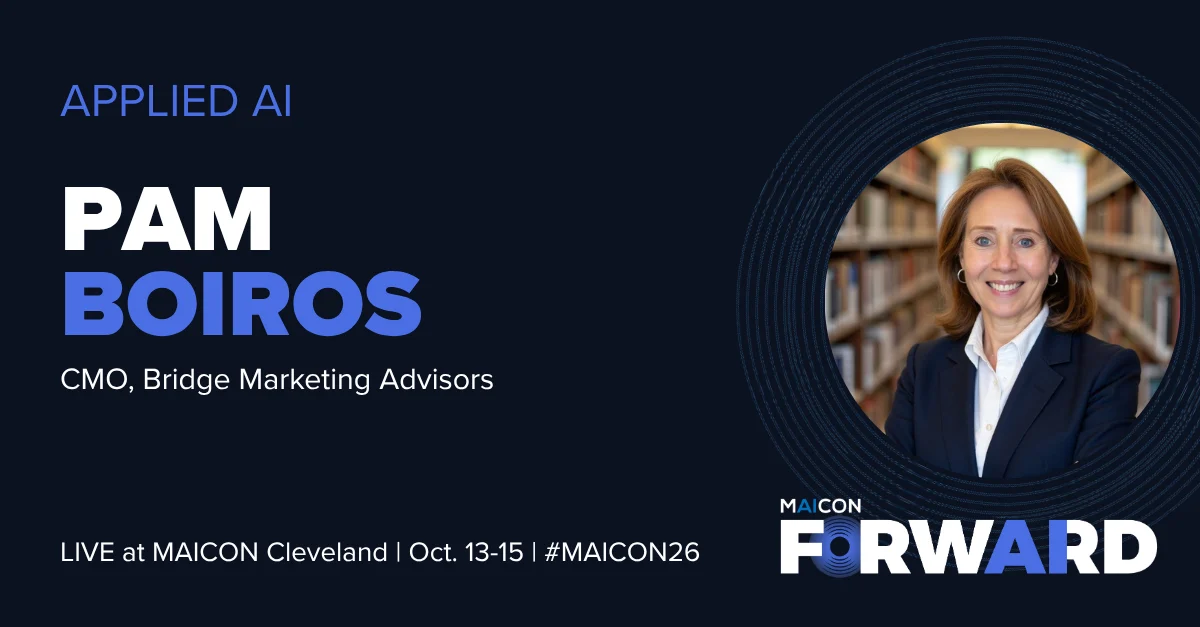
As the industry prepares for the Marketing Artificial Intelligence Conference (MAICON) 2026, the conversation is shifting from "What tools are we using?" to "How is AI fundamentally changing the way we work?" Leading this charge is Pam Boiros, a fractional Chief Marketing Officer at Bridge Marketing Advisors and a seasoned AI strategist. Her upcoming session, "AI Adaptation: The People Side of Scale," promises to provide a blueprint for leaders struggling to move beyond the initial honeymoon phase of AI implementation.
The Chasm Between Adoption and Adaptation
To understand the current state of the industry, one must first distinguish between two terms that are often used interchangeably but represent vastly different stages of maturity: adoption and adaptation.
Adoption is a logistical milestone. It involves procurement, license distribution, and perhaps a few introductory training sessions. In this phase, individual marketers may experiment with AI to draft an email or summarize a meeting. It is the phase of "individual productivity hacks."
Adaptation, however, is a structural evolution. Boiros defines the shift clearly: "You know you’ve moved from AI adoption to AI adaptation when AI stops feeling like a separate initiative and starts changing how the work itself gets done."
In an adapted environment, the focus shifts from the tool to the workflow. Teams begin to redesign their internal processes, carefully balancing the cognitive strengths of humans—judgment, empathy, and strategic creativity—with the computational speed and pattern recognition of AI. It is here that managers move away from being mere task-assigners to becoming coaches of AI-assisted output, setting rigorous quality standards and establishing clear, transparent guardrails that eliminate the "what-is-allowed" ambiguity that plagues many organizations.
The Evolution of Metrics: Measuring True Progress
One of the primary indicators that an organization has reached the adaptation stage is a complete overhaul of its success metrics. Leaders who remain stuck in the adoption phase often measure success by tool usage rates or the sheer volume of content produced.
In contrast, mature organizations ask deeper, more qualitative questions. Are we producing better work? Are our team members spending more of their time on high-value activities—such as building client relationships or driving creative strategy—rather than manual drafting? Most importantly, have we developed "repeatable ways of working" that are resilient enough to survive the rapid obsolescence of individual models? As AI technology evolves at a breakneck pace, the ability to build flexible, model-agnostic workflows is the ultimate competitive advantage.
The Cultural Bottleneck: Why Teams Underestimate the Human Element
Boiros has identified five core building blocks of AI adaptation, but she notes that one consistently sits at the bottom of the priority list for most leadership teams: culture.
"Culture shows up in what people actually feel safe and empowered to do every day," Boiros observes. In many corporate environments, the internal culture rewards "polished answers" and absolute certainty. AI, by its very nature, is a probabilistic tool that requires iterative experimentation—a process that is often messy and prone to failure.
When employees work in a culture that penalizes mistakes, they naturally gravitate toward caution. This leads to two distinct forms of stagnation:
- Overt Resistance: Employees avoid AI entirely, fearing that it threatens their job security or that they lack the time to master a complex new skill.
- Covert Siloing: Employees experiment with AI in secret, keeping their workflows to themselves rather than sharing successful strategies with the broader team.
The most successful teams are those that actively dismantle these barriers. They foster an environment where curiosity is a KPI and where sharing "what didn’t work" is considered just as valuable as celebrating a successful campaign. When leaders model this behavior—by using AI openly, discussing their own learning curves, and providing psychological safety for their teams—AI ceases to be a mysterious "black box" and becomes a collective organizational capability.
Anatomy of Resistance: Decoding the "I Don’t Have Time" Excuse
After three years of intensive research and training, Boiros has identified that the most common form of resistance—the "I don’t have time" or "this isn’t relevant to my job" narrative—is actually a thin veil for deep-seated fear.
Underneath the protestations about scheduling or tool complexity lies a fundamental anxiety about professional identity. Employees are often grappling with the fear that their hard-earned expertise is being devalued. They wonder if it is already too late to catch up or if their specific role will be rendered obsolete in the coming years.
Boiros argues that the traditional corporate response—throwing more training sessions at the problem—is largely ineffective. "What works better is creating space for people to learn without feeling like they’re taking on a second job," she suggests. Her methodology relies on "small wins." By integrating AI into the specific, painful parts of a marketer’s existing daily routine, leaders can prove the value of the technology without adding to the cognitive load. When an employee experiences a genuine efficiency gain on a real project, the dialogue shifts from defensive skepticism to proactive curiosity: "If this helped me here, where else could it help?"
Preparing for MAICON 2026: A Blueprint for Leaders
The upcoming session at MAICON 2026 is designed for leaders at all levels who feel the weight of responsibility for driving this transition. Boiros will focus on the tactical elements of institutionalizing AI, including:
- Building Confidence and Trust: Strategies for demystifying AI and ensuring that employees feel empowered rather than threatened.
- Workflow Transformation: Moving from scattered, individual experiments to institutionalized, repeatable processes.
- Sustainable Scaling: Reducing burnout by ensuring that AI is used to eliminate drudgery rather than merely accelerating the production of more "average" work.
- Governance and Guardrails: Establishing the framework that makes experimentation safe and compliant.
Attendees will leave the session with a practical, ready-to-use playbook. This is not a theoretical discourse; it is a tactical manual designed for those who need to lead their teams through the volatility of the current market.
The Future of Marketing Leadership
As we look toward 2026, it is clear that the divide in the marketing world will not be between those who have AI and those who do not—the barrier to entry for the software is simply too low. The real divide will be between organizations that have successfully adapted their culture, their workflows, and their leadership styles to work in harmony with intelligent systems, and those that have merely layered software on top of broken processes.
Pam Boiros brings to MAICON 2026 a unique blend of high-level strategic insight and "in the trenches" experience. Her work with organizations like Skillsoft and meQuilibrium, combined with her advocacy through Women Applying AI, provides her with a rare perspective on how to manage the human side of technological change.
For marketing leaders, the message is clear: the pilot phase is over. It is time to stop viewing AI as a productivity hack and start viewing it as a catalyst for a fundamental redesign of the marketing function. The goal is not just to do the same work faster, but to redefine what "the work" looks like in a world where human judgment and machine intelligence are inextricably linked.
For more information on the upcoming session and to join a global cohort of industry leaders, registration for MAICON 2026 is currently open.