NEW YORK — For the better part of the last decade, corporate boardrooms and marketing suites have relied on a familiar, albeit exhausted, lexicon when navigating turbulent economic waters. Whenever growth stalled, consumer sentiment shifted, or global disruption struck, executives reached for the corporate playbook and trotted out the usual buzzwords: pivot, reset, reevaluate, and restructure.
These terms, while signaling a proactive stance to shareholders and stakeholders, have increasingly become hollow euphemisms for knee-jerk reactions. They imply that a brand is a monolithic vehicle that can simply be jerked in a new direction, ignoring the complex, interconnected ecosystems that modern companies and consumers actually inhabit.
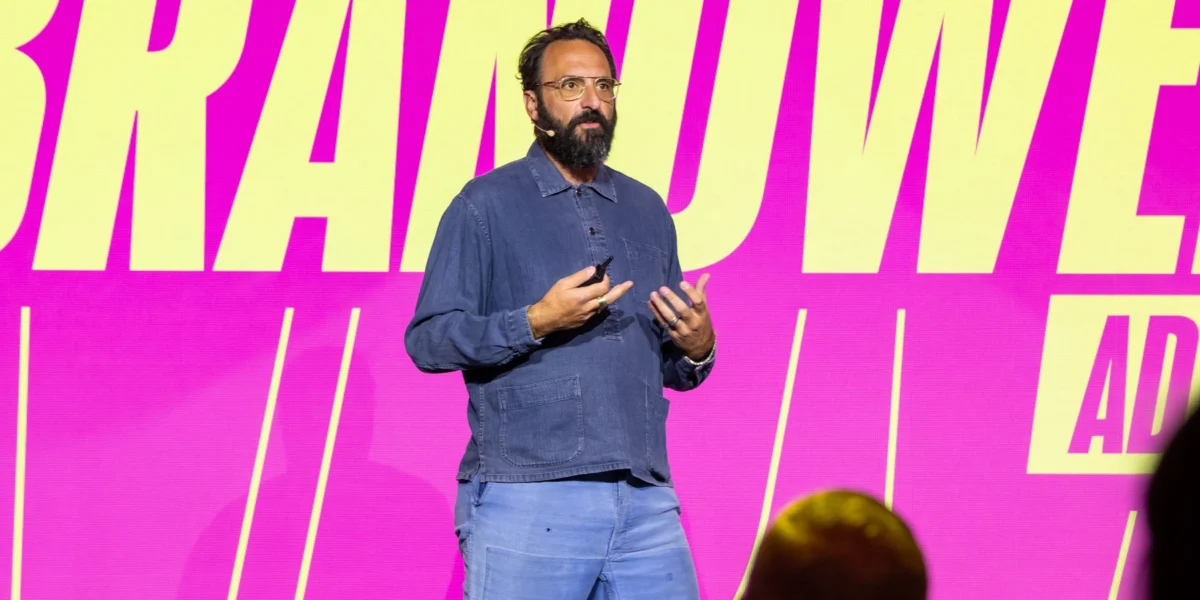
Enter Michael Ventura. An accomplished author, creative executive, and founder of the empathy-driven consultancy Sub Rosa, Ventura is challenging the corporate world to abandon linear problem-solving in favor of a more holistic, interconnected framework. Speaking on Thursday during the final day of Adweek’s prominent Brandweek conference, Ventura introduced industry leaders to a conceptual shift that is already generating significant buzz: “Constellation Thinking.”
As organizations face unprecedented inflection points—driven by artificial intelligence, shifting generational values, economic volatility, and cultural polarization—Ventura’s thesis suggests that the old ways of engineering corporate change are no longer fit for purpose. Instead of moving in straight lines or executing abrupt pivots, brands must learn to read the stars.
Main Facts: The Core of Constellation Thinking
At its foundational level, Constellation Thinking is a philosophical and operational framework designed to help organizations navigate ambiguity, identity crises, and strategic pivots without losing their core essence.
While traditional corporate strategy treats brand values, consumer perception, operational capabilities, and leadership philosophy as isolated metrics to be tweaked individually, Constellation Thinking views them as celestial bodies. Just as ancient stargazers connected seemingly unrelated points of light in the night sky to form meaningful pictures, Ventura argues that modern brands must synthesize their inner-self, outer-self, and every operational nuance in between into a cohesive, interconnected map.
Key takeaways from Ventura’s Brandweek address include:
- The Death of the One-Size-Fits-All Model: There is no universal template for brand purpose or corporate values. What works for a legacy financial institution will fail a direct-to-consumer digital native; therefore, frameworks must be as unique as the brand’s specific constellation of attributes.
- Holistic Integration: A brand’s internal culture (the inner-self) cannot be divorced from its public-facing marketing (the outer-self). True transformation requires alignment across every touchpoint.
- Navigating Inflection Points: When organizations reach a crossroads, Constellation Thinking provides a lens to see how pulling on one strategic lever impacts the entire organizational universe, preventing unintended consequences downstream.
This philosophy will be further codified in Ventura’s upcoming book, aptly titled Constellation Thinking, which is slated for publication by Authors Equity in 2027.
Chronology: The Evolution of Corporate Transformation Language
To understand why Ventura’s message resonated so deeply at Brandweek 2024, it is necessary to trace how corporate America has communicated change over the past twenty years. The terminology of transformation has evolved in tandem with economic eras, moving from rigid industrial efficiency to hyper-flexible digital agility, and now, toward existential sustainability.
The Early 2000s: The Era of Restructuring
Following the dot-com crash and the events of September 11, corporate communication was dominated by the language of efficiency. “Restructuring” and “Downsizing” were the preferred terms of CEOs. Change was viewed primarily through an administrative and financial lens—cost-cutting, asset reallocation, and supply chain tightening. Brands were treated as balance sheets first and cultural entities second.
The 2010s: The Age of the "Pivot"
With the rise of the Silicon Valley startup culture and the mobile revolution, the tech sector’s vernacular bled into traditional industries. The word “Pivot” became ubiquitous. Popularized by Eric Ries’s The Lean Startup, pivoting meant rapidly changing direction based on consumer feedback. While effective for early-stage startups, when legacy enterprises attempted to "pivot," the results were often chaotic, alienating long-term customers and confusing internal teams who could not keep pace with mercurial strategic shifts.
The Pandemic and Post-Pandemic Era: Resets and Reevaluations
The COVID-19 pandemic shattered business-as-usual operations, giving rise to terms like “Reset” and “Reevaluate.” Phrases such as "the great reset" suggested that the world could be turned off and rebooted like a malfunctioning computer. Brands rushed to draft superficial purpose-driven campaigns to meet the moment, leading to widespread consumer skepticism and accusations of corporate "woke-washing" or greenwashing.
The Present Day (2024 and Beyond): The Search for Constellation Thinking
As Ventura highlighted during his Brandweek keynote, today’s marketplace is too complex for simple resets. Consumers demand authenticity, employees demand alignment, and shareholders demand sustainable growth. Constellation Thinking represents the next evolutionary step in corporate communication and strategy—moving away from episodic, reactionary buzzwords and toward continuous, interconnected awareness.
Supporting Data: The Cost of Disconnected Brand Strategies
Ventura’s philosophical approach is backed by mounting data showing that consumers and employees are increasingly intolerant of fragmented brand identities. When a company’s internal operations do not match its external marketing—a failure of what Ventura terms the "inner-self" and "outer-self"—the financial and reputational toll can be severe.
- The Authenticity Gap: According to recent global studies by Edelman, nearly 65% of consumers buy on belief, meaning they select brands whose values align with their own. However, 71% of consumers also state that they do not trust brands to keep their societal promises. This "authenticity gap" is a direct result of brands treating purpose as an external marketing overlay rather than an integrated star in their operational constellation.
- Employee Disengagement: Gallup’s State of the Global Workplace reports consistently show that low employee engagement costs the global economy trillions of dollars annually. When leadership announces sudden "pivots" without clear communication or alignment with company culture, internal trust plummets. Constellation Thinking emphasizes that employees are foundational nodes in the brand’s constellation; ignoring their perspective guarantees strategic failure.
- The ROI of Alignment: Research from Harvard Business Review indicates that companies with high strategic alignment across culture, brand promise, and operational capabilities grow revenue 2.4 times faster than their misaligned peers. By viewing the organization as a constellation, leaders can identify friction points before they manifest as public relations crises or revenue dips.
Official Responses and Industry Reception
The reaction to Ventura’s Brandweek address has been overwhelmingly positive, striking a chord with brand custodians and marketing executives who are fatigued by short-termist thinking.
Speaking on condition of anonymity, a senior brand strategist for a Fortune 500 consumer goods company noted:
"We’ve spent the last three years ‘pivoting’ from supply chain issues to inflationary pressures to shifting consumer demographics. Every time we pivot, we drop something important. Ventura’s concept of constellation thinking gives us a permission structure to slow down, look at the big picture, and realize that we don’t have to break our identity to change our trajectory."
Industry analysts have also praised the timeliness of Ventura’s insights. As generative artificial intelligence automates much of the content creation and data analysis processes in marketing, human executives are being forced to elevate their roles from tactical execution to visionary stewardship.
"AI can help you find data points, but it cannot map the human constellation of your brand," said a prominent creative agency director attending the conference. "Michael’s framework reminds us that strategy is an art of synthesis, not just an algorithm of optimization."
Implications: What Constellation Thinking Means for the Future of Business
As brands look ahead to the remainder of the decade and anticipate the 2027 release of Ventura’s book, the implications of Constellation Thinking are profound for multiple facets of the corporate ecosystem.
1. The Redefinition of Leadership
Traditional leadership models often celebrate the "hero CEO" who makes decisive, unilateral pivots. Constellation Thinking democratizes strategy. It requires leaders to be systems thinkers—astronomers who map the relationships between departments, customer bases, cultural moments, and financial realities. Leaders must ask not just where the company is going, but how every part of the organization will move together.
2. Marketing as Architecture, Not Decoration
For too long, marketing has been treated as a coat of paint applied to a product at the end of the development cycle. In a constellation framework, marketing communications are inextricably linked to product design, human resources, supply chain ethics, and customer service. A brand cannot market sustainability if its supply chain contradicts it; the stars must align.
3. Navigating Future Disruption
Disruption is no longer an anomaly; it is the operating environment. Whether it is the integration of autonomous technologies, shifting geopolitical landscapes, or new consumer behaviors, future crises will test the resilience of brands. Organizations that adopt Constellation Thinking will be better equipped to absorb shocks. If one star in the constellation dims or shifts, the broader pattern remains legible, ensuring brand continuity and resilience.
Conclusion
Michael Ventura’s presentation at Brandweek served as a much-needed wake-up call for an industry addicted to quick fixes and tired jargon. By urging brands to retire words like pivot and reset in favor of a more interconnected, mindful approach, he has provided a roadmap for the future.
As companies prepare for the complex challenges of the late 2020s, the message is clear: survival and success will not belong to those who can react the fastest, but to those who can see the whole sky.