By the Enterprise Tech Desk
Published: March 2026
Main Facts: The Invisible Tax on Modern Digital Marketing
You have meticulously crafted every element of your latest promotional campaign. The subject line underwent five iterations to balance curiosity with clarity. The body copy sounds less like a sterile corporate broadcast and more like a dispatch from a trusted colleague. The audience segmentation is airtight, the automation triggers are locked in, and you hit "Send" with the quiet confidence of a founder who knows their product offers genuine value.
And then, your campaign vanishes into the digital void.
It did not bounce. It was not flagged because your offer lacked merit. Instead, it suffered a fate far more insidious: it landed quietly in the spam folder, out of sight and out of mind.
This is the brutal, unvarnished reality of email deliverability in the contemporary digital marketplace. For e-commerce founders, digital marketers, and direct-to-consumer (DTC) brands, deliverability has transformed from a back-end IT checklist item into an existential business metric. According to recent infrastructure audits across major email service providers (ESPs), up to 20% of legitimate commercial emails fail to reach the primary inbox.
If a brand is generating $100,000 a month through email channels—frequently the most profitable vertical in digital commerce—a 20% deliverability deficit represents an unacknowledged annual loss of nearly a quarter-million dollars. The crisis is compounded by the fact that this damage is entirely invisible. Traditional analytics dashboards will report that a message was "delivered" because it reached the receiving mail server, masking the reality that the message was subsequently routed to an obscure promotional tab or quarantined entirely by aggressive machine-learning algorithms.
Chronology: How We Got Here—From Keyword Scanners to Neural Filters
To understand why modern emails struggle to break through the noise, it is instructive to examine the chronological evolution of email filtering technology over the past two decades.
- Early 2000s (The Keyword Era): In the infancy of automated filtering, spam detection relied on crude, deterministic rules. Filters scanned incoming messages for obvious triggers—words like "free," "guarantee," or excessive use of exclamation points and uppercase letters. Marketers easily bypassed these systems by misspelling trigger words or utilizing obfuscation tactics.
- Late 2000s to 2010s (The Reputation Era): As spam volumes exploded, mailbox providers (MBPs) like Google, Microsoft, and Yahoo shifted focus from content to infrastructure. The concept of "Sender Reputation" was born. IP addresses and domains were tracked and graded based on historical complaints, authentication protocols, and volume consistency.
- 2020s to Present (The Behavioral & Neural Era): Today, spam filters operate via complex machine learning networks and neural algorithms. Modern filters do not merely scan text or check IP scores; they observe, in real time, how human recipients interact with a sender’s footprint. Did the user open the message? Did they immediately delete it without reading? Did they move it from the spam folder back to the primary inbox? These microscopic behavioral data points dictate deliverability status on a per-user, per-campaign basis.
Supporting Data & Technical Mechanics: Anatomy of Inbox Placement
Navigating this modern landscape requires a firm grasp of the mechanics that govern inbox placement. Deliverability is governed by three primary pillars: Sender Reputation, Domain Authentication, and List Hygiene.
1. Sender Reputation: The Credit Score of Your Domain
Think of sender reputation as a credit score issued by a consortium of the world’s largest internet service providers. Every time you dispatch a campaign, algorithms evaluate your engagement metrics against historical baselines.
High engagement—characterized by consistent opens, deep click-through rates, and direct replies—acts as collateral, building trust. Conversely, high bounce rates and spam complaint spikes act as defaults, rapidly tanking your domain standing. A damaged reputation results in throttling, where an ESP slows down your sending speed, or outright blocking.
2. Authentication: Your Digital Passport
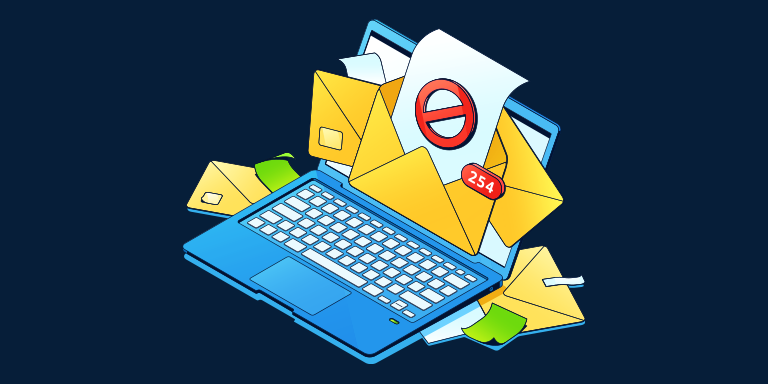
If reputation is your credit score, authentication is your government-issued ID. Without proper cryptographic validation, mailbox providers treat incoming mail from your domain as an untrusted foreign entity. Every brand must ensure three core technical protocols are rigidly configured:
- SPF (Sender Policy Framework): Publishes a list of IP addresses and servers authorized to send email on behalf of your domain.
- DKIM (DomainKeys Identified Mail): Adds a cryptographic digital signature to every outgoing message, proving to the receiving server that the email was genuinely sent by you and was not altered in transit.
- DMARC (Domain-based Message Authentication, Reporting, and Conformance): Unifies SPF and DKIM, giving domain owners the power to instruct mailbox providers on how to handle emails that fail authentication checks (e.g., quarantine or reject them outright).
A missing or misconfigured DKIM record remains one of the leading causes of legitimate business emails getting trapped in spam filters—a technical vulnerability that can typically be resolved by an IT administrator or platform onboarding team in less than 15 minutes.
3. List Hygiene and the Myth of List Size
In the early days of digital marketing, volume was king. Founders obsessed over growing raw list sizes, often conflating vanity metrics with commercial viability. In the era of algorithmic filtering, a bloated email list is an active liability.
Every email list naturally accumulates dead weight: abandoned email accounts that have converted into spam traps, legacy subscribers who have not engaged in years, and typo-ridden sign-ups captured at point-of-sale. These inactive records act as dead weight, pulling down engagement metrics and inflating hard-bounce rates.
Data shows that running targeted re-engagement campaigns for subscribers who have shown zero activity over a 90-to-180-day window—followed by systematic pruning of non-responders—dramatically improves overall inbox placement. Shrinking your list to protect your core sender health consistently outperforms maintaining a bloated audience that triggers algorithmic penalties.
Official Responses and Industry Standards
Major email infrastructure providers and enterprise marketing platforms have increasingly formalized their stances on deliverability enforcement. Industry leaders have tightened restrictions, making compliance non-negotiable for commercial senders.
In statements released across developer and administrator networks, providers like Google and Yahoo outlined strict thresholds for bulk senders. Under these operational guidelines, domains that maintain a spam complaint rate exceeding 0.3% face automated filtering penalties that can effectively sever their access to primary consumer inboxes.
Enterprise email platforms have responded by baking automated deliverability monitoring directly into their foundational architecture. Platforms such as Omnisend, for instance, have integrated automated authentication setup wizards, real-time list-health auditing tools, and intelligent sending algorithms designed to protect sender reputation by mitigating human error.
"Deliverability is no longer a set-it-and-forget-it administrative task," notes technical infrastructure documentation from leading ESPs. "It requires continuous, data-driven stewardship of your domain’s sending habits, audience engagement, and technical compliance."
Implications: Strategic Takeaways for E-Commerce Founders
For leadership teams operating in the direct-to-consumer and e-commerce spaces, the modern deliverability landscape demands an immediate operational shift.
- Treat Deliverability as a Revenue Driver: Stop viewing email infrastructure as an IT chore. Because email remains the highest-ROI channel for digital commerce, protecting inbox placement is synonymous with protecting quarterly revenue.
- Prioritize the Welcome Series: The foundational relationship between a brand and a new subscriber sets the engagement baseline for the entire lifecycle. Ensuring that your initial onboarding sequences generate high opens and active clicks establishes a positive sender reputation from day one.
- Audit Your Content and Code Habits: Modern spam filters analyze HTML structure alongside copy. Avoid relying on heavy image-to-text ratios, hidden tracking elements, or deceptive subject lines that promise what the copy does not deliver.
Deliverability is an ongoing practice, not a milestone. The brands that successfully navigate algorithmic filters are those that treat list hygiene, technical authentication, and subscriber engagement as perpetual operational priorities.
Special Partner Offer for Foundr Readers
To assist growing brands in building resilient, high-performing email programs, industry-leading platform Omnisend is offering Foundr readers 50% off their first three months. Use code FOUNDR50 during sign-up to access advanced deliverability monitoring, automated authentication tools, and enterprise-grade infrastructure designed to ensure your message reaches its intended audience.