As the conversation surrounding artificial intelligence reaches a saturation point, many web professionals find themselves suffering from a unique brand of industry fatigue. The market is saturated with pitches promising instant websites, automated content generation, and pixel-perfect designs created in mere seconds. Yet, for agency owners, this surface-level execution tells only half the story.
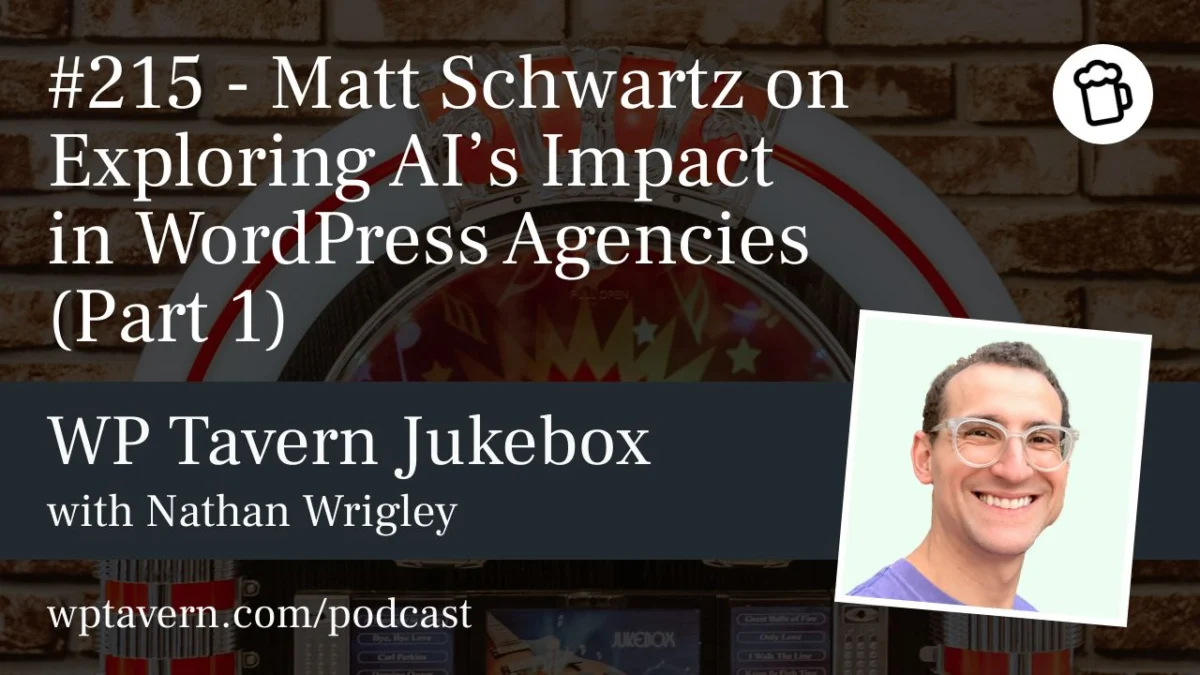
In a recent episode of the Jukebox Podcast from WP Tavern, host Nathan Wrigley sat down with Matt Schwartz, founder of Atlanta-based WordPress and WooCommerce agency Inspry and creator of the WordPress testing tool CheckView. Rather than treading over well-worn ground about how AI can generate a basic web page, Schwartz and Wrigley focused on a much more strategic, behind-the-scenes evolution: how AI is fundamentally reshaping the internal workflows, processes, and service offerings of WordPress agencies.
Main Facts
- The Shift in Agency Value: As execution tools become commoditized, the traditional brochure website business model is facing severe margin pressure. Agencies must pivot toward higher-level strategy and operational integration to survive.
- Process over Pixels: The true power of AI within a WordPress agency lies not in front-end design generation, but in streamlining internal Standard Operating Procedures (SOPs), automating client touchpoints, and scaling administrative operations.
- The AI Vision Document: Agency leaders are encouraged to implement strategic governance frameworks—termed "AI vision documents"—to establish clear internal guardrails regarding where, how, and when artificial intelligence is deployed.
- Evolution of Core Offerings: Forward-thinking agencies are transforming their acquired technical capabilities into brand-new service lines, helping clients optimize their business processes and data workflows.
Chronology of an Evolution: From Early Web Design to Agency Leadership
Schwartz’s journey into the WordPress ecosystem mirrors that of many veteran developers and agency owners. Beginning as a middle school hobbyist building HTML sites for clubs and template directories, his passion evolved through high school projects—including a paying gig for his mother’s dentist office—and eventually into Drupal and WordPress development while studying Information Systems at the University of Georgia.
When Schwartz founded Inspry in 2011, agency life meant building custom procedures entirely from scratch. Without formal corporate training, every email template, pricing model, and administrative workflow was forged through trial and error.
"It wasn’t until I actually started hiring people that I realized that was even really a thing," Schwartz noted, reflecting on the realization that agency processes needed to be formally defined and scaled.
Over the subsequent decade, Schwartz observed the incremental rise of SaaS platforms and page builders, noting that these tools improved efficiency step-by-step. However, the last three to four years have discarded incrementalism entirely. The rapid introduction of generative AI and intelligent agents has forced agency owners to reevaluate every facet of how they operate, moving from basic web builders to holistic problem-solvers.
Supporting Data: The Rising Floor and Commoditization of Execution
The economic reality of running a digital agency has shifted dramatically. Historically, clients paid a premium for technical execution—the setup of a content management system, the configuration of plugins, and the assembly of a brochure site. Today, those tasks are increasingly handled by automated tools or lightweight builders, raising the baseline expectations of consumers.
Key data points and economic shifts highlighted in the discussion include:
- Time Compression: Tasks that previously required days of administrative alignment—such as consolidating discovery call notes, analyzing support tickets, or drafting Statements of Work (SOWs)—can now be accomplished in minutes.
- Client Expectations: Because the general public is now widely exposed to AI capabilities, clients expect faster turnarounds and leaner budgets for foundational web assets.
- The Gap Widening: The disparity between agencies actively leveraging AI for internal efficiency and those ignoring it is widening rapidly, though unchecked adoption without guardrails introduces severe reputational and security risks.
Strategic Implementation: The AI Vision Document
To combat unstructured, chaotic AI adoption—often described colloquially as a "YOLO" approach—Schwartz advocates for the creation of an AI Vision Document. This internal playbook functions much like a company mission statement or core value charter, explicitly defining where AI is permitted, where it is restricted, and where human intervention remains mandatory.
Setting Internal Guardrails
An effective AI vision document examines every phase of the agency lifecycle:
- Sales & Discovery: Using AI to analyze past meeting transcripts, review client websites, and draft tailored proposals.
- Project Management: Connecting time-tracking data (such as Everhour) with AI models (like Claude) to analyze team bottlenecks, spot operational patterns, and forecast project timelines.
- Support Operations: Utilizing automation engines like n8n to ingest incoming help tickets, cross-reference server logs, and suggest initial resolutions for support teams—always keeping human review at the center of customer communications.
Implications for the WordPress Agency Ecosystem
The integration of artificial intelligence into agency operations carries profound implications for the future of WordPress service providers.
1. Execution is No Longer a Differentiator
As automated site builders and AI-assisted coding assistants become ubiquitous, building a standard WordPress site is no longer enough to secure a healthy agency margin. Agencies that rely solely on simple execution risk being priced out by automation. Success now requires shifting focus to high-level strategy, bespoke integrations, and deep understanding of client business goals.
2. WordPress as the Ultimate Infrastructure
The WordPress core team has quietly laid heavy groundwork to make the platform AI-ready. Through REST APIs, the upcoming Abilities API from Automattic, and third-party development tools, WordPress is positioning itself as the foundational layer or "scaffolding" for AI agents. Rather than forcing administrators to click through endless menus, future site management will increasingly rely on natural language commands interacting safely with WordPress infrastructure.
3. Ethical Considerations and the "Human in the Loop"
A critical theme of the discussion was the paradox of trust in artificial intelligence. As Schwartz pointed out, human developers who repeatedly make unverified mistakes face rapid dismissal, yet AI tools are frequently granted endless "second chances."
For support workflows and client-facing touchpoints, over-automation can easily cross the line into frustrating the customer base—the exact opposite of what an agency intends. Maintaining strict human review loops during critical agency moments is essential to preserving brand reputation and client trust.
Conclusion
The rapid pace of AI innovation does not mean agency owners must abandon traditional values or blindly chase every technological trend. Instead, as Matt Schwartz demonstrates, the most sustainable path forward involves looking inward at agency processes, establishing clear governance, and utilizing AI as a powerful force multiplier for behind-the-scenes operations.
This article is based on Part One of a two-part special edition of the Jukebox Podcast. Tune in next week for Part Two of Nathan Wrigley’s conversation with Matt Schwartz.