For two decades, the digital advertising landscape has been dominated by a single, obsessive pursuit: the "identity." Brands and agencies spent billions building intricate dossiers on consumers, stitching together third-party cookies, cross-device footprints, and historical purchase data to predict future behavior. Yet, as the digital ecosystem faces a privacy-first revolution and the deprecation of traditional tracking, industry leaders are realizing that knowing who a consumer is does not necessarily mean understanding what they need in a given heartbeat.
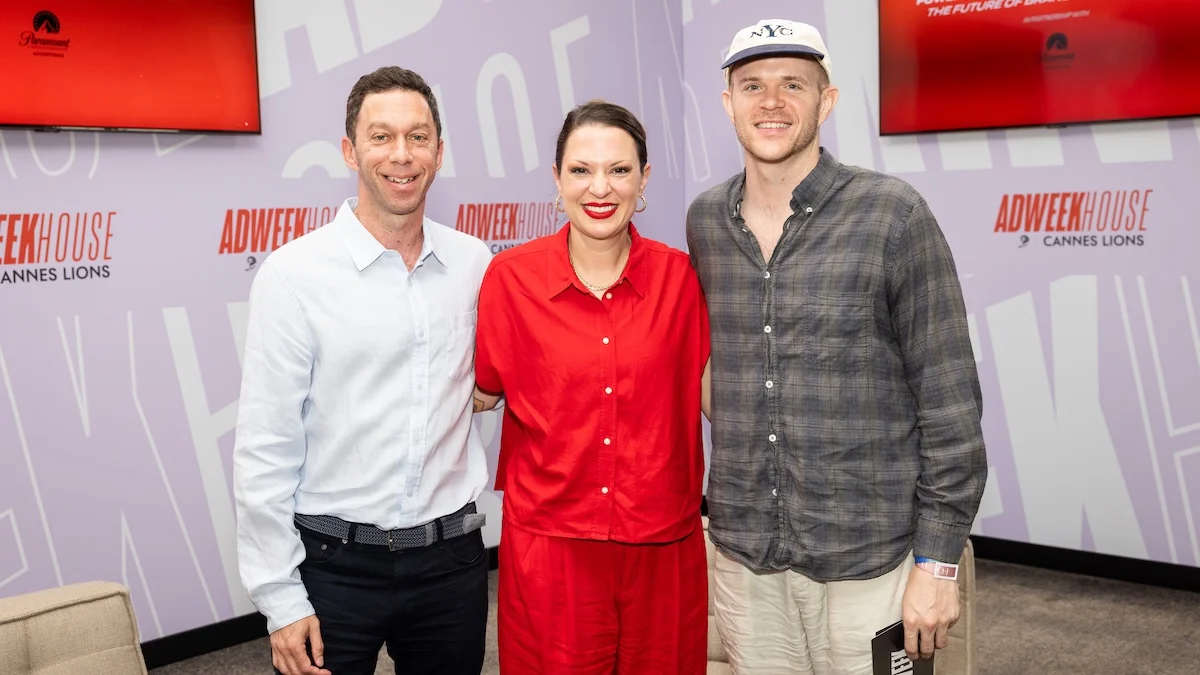
At a recent ADWEEK House panel at Cannes Lions, co-hosted with contextual intelligence leader Seedtag, a coalition of marketing heavyweights argued that the industry must pivot. The focus is shifting from static, identity-based profiling to the nuances of "real-time mindsets"—the fleeting emotions, immediate motivations, and environmental contexts that actually drive consumer decisions.
The Death of the Static Consumer Profile
The traditional marketing funnel was built on the assumption that a consumer’s past behavior is the best predictor of their future intent. If a user bought running shoes in March, they were tagged as a "fitness enthusiast" and served ads for athletic gear through July.
However, this approach ignores the volatile, emotional nature of human decision-making. During the Cannes Lions discussion, panelists emphasized that "identity" is a fixed point in a dynamic world. Modern consumers do not exist in a vacuum; they are shaped by their current environment, their mood, and the specific "occasion" of their day.
Brian Gleason, CEO of Seedtag, argued that in the race to become masters of data tracking, the industry inadvertently traded humanity for efficiency. "When you think back to the Mad Men era, there was a moment of inspiration where you felt something and connected with someone," Gleason noted. "We became highly effective at tracking people, but in the process, we lost sight of conversational tone, emotional modality, and the genuine context of the user experience."
The Gaming Frontier: Where Play Becomes a Language
Perhaps the most potent environment for capturing real-time intent is the gaming world. With the lines between entertainment, social media, and commerce blurring, gaming platforms are offering behavioral signals that static web browsing simply cannot replicate.
Andrea Hopelain, general manager and SVP of global marketing at Electronic Arts (EA), provided a masterclass in how these environments serve as emotional barometers. With the recent launch of EA Advertising, the company is positioning itself to bridge the gap between immersive gameplay and brand engagement.
"Play is a language," Hopelain explained. "When you are in a gaming environment, your actions—your successes, your frustrations, your choices—provide a deep, unfiltered clarity into your mood."
The implications for advertising are profound. Hopelain cited a hypothetical but highly actionable scenario: a player who has just "rage-quit" after losing four matches in a row. "You can infer that they may need something in that moment—perhaps a distraction, a snack, or a moment of relaxation. That is a real-time signal that traditional media cannot match." By reading the "language of play," brands can move away from intrusive banners and toward high-value, integrated experiences that feel like a natural part of the player’s journey rather than an interruption.
Occasion-Based Marketing: The DoorDash Strategy
If gaming offers a window into mood, the delivery economy offers a window into immediate, practical necessity. Peter Giordano, general manager of platform and growth services at DoorDash, detailed how the company has moved beyond basic demographic profiling to an "occasion-based" approach.
"Consumer profiles are fundamentally incomplete without situational triggers," Giordano stated. By analyzing the "why" behind the "what," DoorDash has uncovered patterns that defy traditional demographic stereotypes.
For instance, the company’s data shows that iced coffee consumption patterns are heavily skewed toward the afternoon, not the morning. Furthermore, these orders often act as a catalyst for other behaviors. An afternoon coffee order might be followed by a prompt for pet treats or a late-night weekend order that includes essential household items like toothbrushes.
"We are moving toward a model where we combine historical purchase data with real-time environmental signals," Giordano said. This shifts the focus from "Who is this person?" to "What is this person doing right now, and how can I make that moment better?"
The Technological Underpinnings: LLMs and Fine-Tuning
The transition to context-first marketing is being supercharged by advancements in Large Language Models (LLMs) and artificial intelligence. However, the panelists were quick to clarify that technology is a tool, not a replacement for strategy.
Gleason highlighted that while LLMs provide the raw processing power to interpret content across vast, complex channels, they are not a "set it and forget it" solution. "Custom fine-tuning is what creates the differentiation brands need," he noted.
The strategy involves using AI to understand the content a user is consuming—the sentiment of an article, the tone of a video, or the difficulty level of a game—and then aligning brand messaging to that specific wavelength. This is a far cry from the blunt-force targeting of the past. It is about matching the brand’s "voice" to the user’s current "environment."
Human Oversight and the "Sims" Success Story
Despite the excitement surrounding AI, the human element remains paramount. Hopelain pointed to a successful partnership between EA and luxury fashion house Coach, where millions of players utilized Coach handbags for their characters within The Sims.
This was not merely a vanity project; it provided Coach with unprecedented insights into real-world retail preferences. By observing how players integrated these items into their virtual lives, the brand gained a nuanced understanding of their consumers’ aesthetic values and status markers—data that a standard demographic survey could never capture.
"Technology helps with the execution," Hopelain said, "but human oversight is required to build a valuable experience. You cannot automate the empathy required to make a brand feel like a genuine participant in a consumer’s life."
Implications: A New Era of Personalization
The shift from identity to moment-based marketing has significant implications for the future of the advertising industry:
- The End of the "Cookie" Dependency: As third-party data becomes less reliable, brands that master contextual and situational data will be the ones that thrive.
- Increased Focus on Privacy: By focusing on the moment rather than the individual, brands can provide highly relevant advertising without needing to build invasive, long-term dossiers on their customers.
- The Rise of the "Moment-Based" Campaign: Agencies will need to restructure their planning cycles. Instead of massive, static calendar events, campaigns will become more fluid, capable of activating when specific signals—be it a game loss, a specific time of day, or a mood shift—are detected.
- A Shift in Value Proposition: The ultimate goal is to move advertising away from "noise" and toward "utility." If an ad provides a distinct benefit or enhances the user’s current experience, it ceases to be an annoyance and starts to become an essential part of the digital ecosystem.
Conclusion: Toward a More Meaningful Connection
The Cannes Lions panel made one thing abundantly clear: the "identity" era of advertising was a necessary stepping stone, but it was also a restrictive one. By obsessing over the "who," the industry lost the ability to appreciate the "when" and the "where."
As we look toward 2026 and beyond, the most successful brands will be those that treat the consumer not as a static profile to be mined for data, but as a dynamic individual moving through a series of unique, fleeting moments. By leveraging the power of gaming, the precision of occasion-based delivery, and the nuanced capabilities of fine-tuned AI, marketers have the opportunity to bring the "magic" back to advertising—creating connections that are not only effective but genuinely meaningful.
The future of branding is no longer about predicting what a person will buy tomorrow based on what they bought yesterday. It is about understanding what they need, right now, and having the creativity and the context to be there to provide it.