By: Global Business & Technology Desk
Published: October 24, 2024
Main Facts
The retail media landscape is undergoing a seismic transformation, shifting rapidly from a niche digital advertising channel into an omnipresent, AI-driven ecosystem. In what may prove to be the defining strategic maneuver of the fourth quarter, ecommerce titan Amazon has forged a landmark partnership with artificial intelligence pioneer OpenAI. This collaboration officially integrates Amazon’s robust advertising infrastructure into ChatGPT’s burgeoning advertising framework, opening up unprecedented inventory for brands looking to capture high-intent consumers inside generative AI environments.
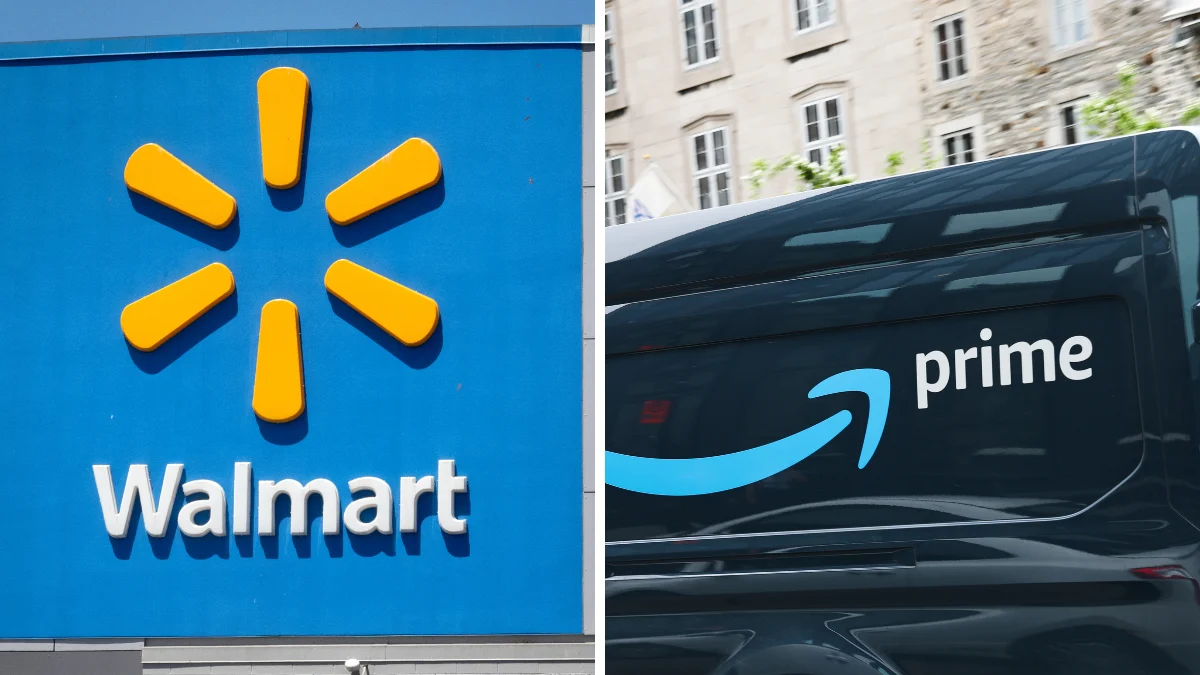
Simultaneously, the broader retail media sector is experiencing a period of aggressive expansion. Legacy retail giants like Walmart are scaling their omnichannel advertising ambitions, while physical brick-and-mortar storefronts are rapidly digitizing through the deployment of advanced in-store digital screens.
Under the terms of the Amazon-OpenAI agreement, advertisers can now purchase ad inventory within ChatGPT’s U.S. user interface utilizing Amazon’s sophisticated demand-side platform (DSP). While OpenAI retains ultimate algorithmic control over ad delivery and placement, Amazon Ads sales representatives are actively assisting brands with strategic bidding maneuvers and the implementation of "context hints." These contextual markers help ensure that promotional content aligns seamlessly with conversational AI outputs.
This development signals a profound blurring of the lines between search engine marketing, social commerce, and generative artificial intelligence. As consumers increasingly turn to conversational agents for product discovery and shopping recommendations, retail media networks (RMNs) are racing to follow them, ensuring their sponsored content appears at the exact moment of consumer decision-making.
Chronology of the Shift
To understand how the retail media ecosystem arrived at this intersection of AI and commerce, it is necessary to trace the rapid evolution of digital advertising over the past several years:
- 2020–2022: The Rise of RMNs. Fueled by signal loss from third-party cookie deprecation and Apple’s App Tracking Transparency framework, brands rushed to capitalize on first-party retailer data. Retailers discovered that their digital shelves were prime real estate, transforming grocers and big-box stores into high-margin media companies.
- Late 2022: OpenAI launches ChatGPT, igniting a global generative AI boom. Within months, millions of consumers begin utilizing conversational interfaces for complex queries, bypassing traditional search engines.
- 2023: Retail media networks begin moving beyond native website banners. Walmart Connect, Target Roundel, and Amazon Ads aggressively expand their footprints into connected TV (CTV) and physical store displays, seeking to unify online and offline attribution.
- Mid-2024: Advertisers demand greater reach as traditional social and search platforms saturate. Generative AI interfaces emerge as the next frontier for digital advertising capture, prompting major tech players to explore monetization strategies for LLM (Large Language Model) interactions.
- Current Week: Amazon and OpenAI announce their historic integration. Simultaneously, Walmart announces enhanced ad capabilities, and physical retailers accelerate the rollout of programmatic in-store digital display networks, cementing a multi-channel, AI-augmented retail media landscape.
Supporting Data and Market Metrics
The convergence of retail media and artificial intelligence is not merely a creative experiment; it is backed by staggering financial projections and shifting consumer habits.
- Market Valuation: According to industry forecasts, global retail media spending is projected to surpass $140 billion by the end of 2025, representing one of the fastest-growing sectors in the entire digital marketing economy.
- The ChatGPT Audience: ChatGPT commands hundreds of millions of weekly active users globally, with a disproportionately high concentration of digital-native consumers who utilize the platform for research, brainstorming, and purchasing recommendations.
- Amazon’s Ad Dominance: Amazon Ads continues to be a powerhouse, generating tens of billions in annual revenue. By extending its DSP capabilities into OpenAI’s ecosystem, Amazon is effectively exporting its targeting prowess outside of its proprietary walled garden.
- In-Store Digitization: Data from retail technology analysts indicates that over 65% of major brick-and-mortar retailers are actively upgrading their physical stores with programmatic digital signage, aiming to replicate online retail media metrics (such as impressions and foot-traffic attribution) in physical aisles.
Official Responses and Industry Perspectives
The announcement of the Amazon-OpenAI partnership and the broader expansion of retail media have elicited reactions from executives across the technology, retail, and advertising spectrums.
Speaking on background, a senior Amazon Ads executive noted that the integration is designed to meet brands wherever the modern consumer is making purchasing decisions. "Consumers do not stay in one digital channel; their journeys weave through search, social, streaming, and now, conversational AI," the executive stated. "Our goal is to provide advertisers with unified control, allowing them to leverage our robust demand-side platform to reach audiences seamlessly, regardless of the underlying user interface."
OpenAI representatives have emphasized that user trust and conversational relevance remain paramount as the platform introduces commercial elements. In a statement regarding ad integration, the company highlighted that ad delivery systems are carefully architected to maintain the integrity of AI responses. "While we are enabling brands to connect with our user base through strategic partnerships like our work with Amazon, our priority is ensuring that advertisements add value to the user experience rather than detract from it," an OpenAI spokesperson indicated.
Meanwhile, independent media buyers and agency leaders have expressed cautious optimism. Sarah Jenkins, chief digital officer at a major global media holding company, remarked on the strategic implications: "For years, walled gardens kept their data locked tight. Amazon opening up its DSP to power ads inside ChatGPT is a watershed moment. It proves that the future of retail media is interoperable, contextual, and deeply intertwined with AI. However, brands will need to navigate new complexities regarding bidding transparency and audience overlap."
Implications for Marketers and the Future of Brands
The rapid scaling of retail media into AI chat interfaces and digitized physical stores carries profound implications for brand strategists, marketing budgets, and consumer experiences.
1. The Redefinition of "Search" and Discovery
For decades, search engine optimization (SEO) and paid search (SEM) were the undisputed champions of capturing bottom-funnel intent. With generative AI engines like ChatGPT acting as holistic research assistants, consumers are no longer simply typing keywords into a search bar; they are asking complex, multi-layered questions (e.g., "What is the best ergonomic office setup for a remote copywriter with lower back pain, available under $500?").
Ads delivered via Amazon’s DSP within these environments must be hyper-contextual. Brands can no longer rely solely on broad keyword targeting; they must optimize their product listings and ad creative to align with conversational context and AI-driven intent modeling.
2. Walled Gardens Expand Their Reach
By bridging Amazon’s programmatic infrastructure with OpenAI’s generative interface, the boundaries of traditional walled gardens are expanding. While this offers advertisers unprecedented scale, it also consolidates more power and data visibility into the hands of a few dominant tech platforms. Marketers will need to balance their investments between these emerging AI channels and independent retail media networks to avoid over-reliance on a singular ecosystem.
3. Omnichannel Continuity: From Chat to Cart
The integration bridges the gap between digital inspiration and immediate transaction. When a user receives a product recommendation within an AI chat interface, backed by an Amazon-powered ad, the friction to complete the purchase is reduced to a single click. This creates a hyper-compressed consumer journey where awareness, consideration, and conversion happen almost simultaneously.
4. The Renaissance of Physical Retail
While digital and AI innovations dominate headlines, the simultaneous expansion of in-store retail media screens proves that physical retail remains a potent advertising medium. Retailers are turning their physical aisles into digital data-rich environments, allowing brands to target shoppers at the exact shelf-edge where the vast majority of fast-moving consumer goods (FMCG) purchases are decided.
Conclusion
As the industry prepares for landmark gatherings like Brandweek, the message is clear: the future of brands is no longer decided by static banner ads or traditional media planning alone. It is being forged at the intersection of retail data, programmatic reach, and artificial intelligence. Advertisers who adapt quickly to these multi-channel, AI-augmented environments will capture the next wave of consumer loyalty, while those who hesitate risk being left behind in a rapidly evolving digital marketplace.