By the Smashing Editorial Team
Published in UX Strategy & Design
Quick Summary
Throughout a customer journey—particularly in complex business-to-business (B2B) environments—critical interactions occur primarily between two human beings rather than a human and a digital interface. In this comprehensive analysis, UX veteran Paul Boag explores why organizations cannot genuinely improve user experience (UX) by focusing solely on digital screens, arguing that holistic journey design must encompass offline touchpoints, human communications, and operational gaps.
Main Facts: Redefining the Boundaries of UX Design
The debate over nomenclature in the digital product industry has raged for over a decade, but a fundamental misunderstanding persists: the conflation of User Interface (UI) design and User Experience (UX) design.
UI designers are artisans of the screen. They dictate visual hierarchy, color theory, typography, spacing, and interactive component states. They build the digital skin of an application or website. UX designers, conversely, are architects of the overarching journey. Their scope is the totality of the user’s perception, friction points, emotional states, and practical successes as they interact with a brand across multiple channels over time.
nowhere is the limitation of a screen-only focus more glaring than in business-to-business (B2B) environments. Unlike direct-to-consumer (B2C) transactions, which are frequently transactional, impulsive, and short-cycle, B2B journeys are characterized by:

- Extended sales cycles spanning weeks, months, or even quarters.
- Multiple stakeholders, decision-makers, and influencers within a single buying committee.
- High financial stakes, complex legal contracts, and rigorous procurement vetting.
- A hybrid ecosystem blending asynchronous digital content, automated marketing emails, direct sales calls, onboarding webinars, and human-led customer support.
When an organization limits its UX talent to wireframing landing pages and designing buttons, it squanders the strategic potential of the discipline. True user experience encompasses every touchpoint—digital and physical, automated and human.
Chronology: Anatomy of an Extended B2B Journey
To understand why a holistic approach is mandatory, one must trace the chronological evolution of a typical enterprise client relationship.
Take, for instance, the lifecycle of securing a high-value enterprise consulting contract. The timeline often unfolds across several distinct phases:
Phase 1: Discovery and Passive Research
Months before a formal project budget is approved, a prospective client experiences a pain point. They turn to organic search, industry publications, or conference presentations. They encounter educational content—such as articles, podcasts, or whitepapers—that frames their problem. At this stage, a hard sales pitch fails. The appropriate touchpoint is thought leadership, with a low-friction call-to-action (CTA) like a newsletter subscription.
Phase 2: Active Evaluation and Content Consumption
Weeks later, budget discussions gain traction. The prospect returns to the vendor’s ecosystem, downloading case studies or testing self-service calculators. If the digital interface deploys an aggressive, premature tactic—such as blocking content with a forced lead-generation modal before the user understands the value proposition—trust is immediately eroded.
Phase 3: Human Outreach and Qualification
The prospect fills out an inquiry form. Suddenly, the medium shifts from human-to-interface to human-to-human. A business development representative reaches out. If the sales approach is overly aggressive or misaligned with the prospect’s current readiness, the conversion drops. Conversely, if nurtured properly, the lead transitions to scoping workshops, Zoom demonstrations, and legal reviews.
Phase 4: Contracting, Onboarding, and Delivery
Contracts are signed via digital signature software. Project management tools are provisioned. Kickoff meetings are held. Throughout this multi-month sequence, the client switches devices, interacts with different departments (sales, legal, finance, delivery), and experiences inevitable waiting periods.
A UI designer impacts a fraction of this timeline. A holistic UX designer evaluates every single transition, identifying where leads grow cold and where friction destroys momentum.
Supporting Data and Operational Challenges: Mapping and the "Gaps"
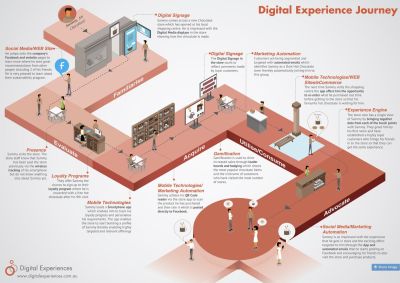
Because B2B journeys are sprawling and fragmented, industry practitioners rely heavily on Customer Journey Mapping. Journey maps serve as diagnostic blueprints, illuminating how disparate touchpoints interact and where system failures occur.
The Danger of the "Gap"
User experience is defined not merely by the touchpoints themselves, but by the gaps between them. These gaps materialize when:

- Time passes: Extended waiting periods between initial inquiry and follow-up erode enthusiasm.
- Channels shift: A user moves from reading a whitepaper on a desktop to speaking with a sales representative on the phone, only to find the representative has no context of what they downloaded.
- Devices change: A potential client fills out half of a mobile qualification form, switches to a laptop, and discovers all entered data has been wiped out, forcing them to start over.
- Business silos collide: A customer is transferred between departments, forced to repeat their verification details multiple times because internal CRM systems do not communicate.
Industry solutions like Customer Relationship Management (CRM) platforms and sales pipeline software (e.g., Gong.io) attempt to bridge these chasms. However, technological implementation alone cannot solve structural deficiencies in UX strategy.
Case Studies in Friction Reduction
Consider standard e-commerce or SaaS onboarding models. A classic UX failure is the immediate presentation of an intrusive email-signup discount overlay upon landing on a site for the very first time. Because the user has not yet evaluated the catalog, the incentive holds zero psychological value, driving up bounce rates. Moving that prompt to a post-browsing state or targeting returning visitors dramatically alters conversion metrics.
Similarly, financial institutions have begun eliminating unnecessary verification steps when users transition from mobile apps to telephone support, recognizing that pre-authenticated app sessions render verbal security interrogation redundant. These are classic examples of cross-system gap-plugging.
Official Perspectives and Industry Insights
As the boundaries between UX, Customer Experience (CX), and Service Design continue to blur, industry leaders are weighing in on where a designer’s true responsibilities lie.
Paul Boag, a prominent digital strategist and author, notes the frequent mischaracterization of design roles:

"If you have been hired as a UX designer and yet spend all of your time creating wireframes for websites, apps, and other interfaces, I would suggest your organization or clients are failing to utilize you to the full."
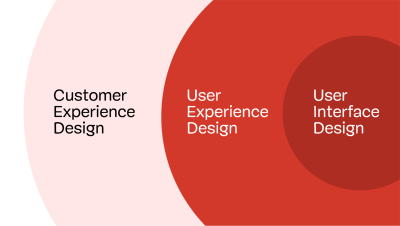
Boag argues that user experience design functions as a specialized discipline nested within the broader umbrella of Customer Experience (CX)—much like User Interface design operates as a specialization within UX. While strict purists may argue that human-to-human interactions cross the threshold into CX, Boag insists that digital practitioners cannot afford to wash their hands of human communication vectors.
Enterprise operations routinely fail because digital systems and human workflows operate in silos. Sales teams often rely on rigid, automated email templates that read as impersonal, overly transactional, or insensitive to a client’s emotional state. When a software interface promises effortless automation, but the subsequent human interaction feels cold and bureaucratic, the entire brand impression shatters.
Implications for Organizations and Practitioners
The recognition that UX extends far beyond the browser carries profound strategic implications for both corporate leadership and design professionals.
1. For Business Leadership
Companies must stop treating UX designers as production-line pixel-pushers whose sole output is Figma files. To extract maximum ROI from design talent, leadership must empower UX professionals to:
- Audit internal business processes, sales workflows, and customer support handoffs.
- Collaborate directly with sales, marketing, and customer success departments.
- Access qualitative and quantitative data regarding customer churn across non-digital channels.
2. For UX Practitioners
Designers must proactively break out of the professional boxes constructed by restrictive organizational structures. Expanding one’s scope involves:
- Championing Journey Mapping: Insisting on mapping the end-to-end ecosystem before committing to screen-level wireframes.
- Analyzing Cross-Channel Handoffs: Documenting what happens when a user transitions from digital self-service to human assistance.
- Advising on Human Communications: Providing guidance, templates, and workshops to help sales and support teams communicate with empathy and clarity across digital communication channels (email, chat, video calls).
Conclusion
Ultimately, an organization cannot optimize a user’s experience if it refuses to look beyond the glowing rectangle of the user interface. Whether dealing with a multi-million-dollar B2B procurement cycle or a consumer onboarding sequence, the holistic journey is the product. Designers who embrace this end-to-end reality will elevate their strategic value, while those restricted to the screen will find their influence rapidly diminishing.