In an era increasingly dominated by closed ecosystems, algorithmic feeds, and the growing specter of digital isolation, the WordPress community stands as a unique anomaly. It is a sprawling, decentralized, and profoundly human network that powers nearly half of the internet. Yet, for many, the true value of the project lies not in the software itself, but in the social fabric that surrounds it.
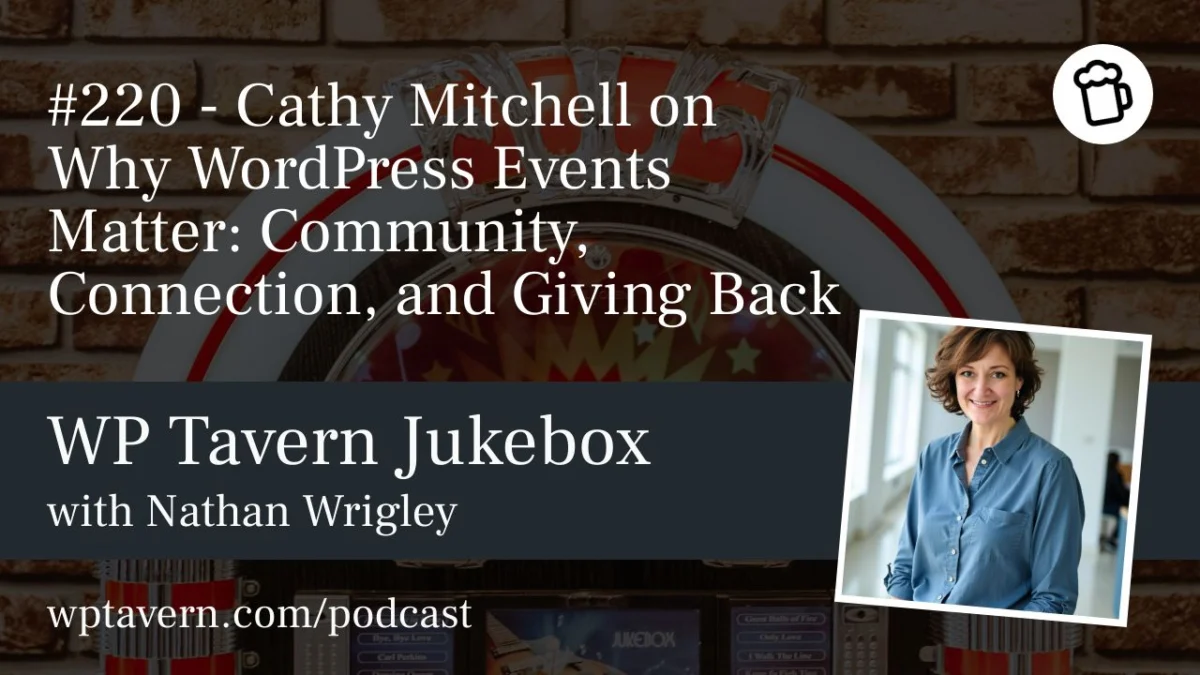
Recently, Cathy Mitchell, a veteran of the WordPress ecosystem and the lead organizer for the upcoming 2026 WordCamp Canada, sat down with Nathan Wrigley on the Jukebox podcast to discuss why this community remains a vital, albeit evolving, pillar of the modern digital experience. Their conversation peeled back the layers of what it means to volunteer, why corporate entities still find value in open-source contributions, and how a sense of service is becoming an antidote to the modern epidemic of loneliness.
The Evolution of a WordPress Journey
Cathy Mitchell’s path into the WordPress ecosystem is representative of the "accidental" trajectory many contributors take. Beginning in 2007 as a personal project during her maternity leave, Mitchell’s foray into web development quickly outgrew the boundaries of a hobby. By 2008, she launched WPBarista, formalizing her role as a professional within the space.
For years, Mitchell operated with a sharp, business-oriented focus. Like many entrepreneurs, her engagement with the community was initially driven by utility and necessity. "If I can’t see an ROI financially from what I’m doing, I don’t have time for it," Mitchell admitted. However, as her children grew and she transitioned into the "empty nester" phase of her life, her perspective on her professional environment began to shift.
Her entry into the organizational side of the community—specifically through her work with WordCamp Canada—was a revelation. Unlike the rigid, hierarchical structures of traditional corporate environments, Mitchell found the WordPress community to be remarkably porous and welcoming. It was a culture of "yes," where new contributors are not forced to "sweep the floors" for years before being trusted with meaningful responsibilities. Instead, the community operates on a model of radical inclusion, inviting anyone with the willingness to serve to step into leadership roles.
A Chronology of Community and Contribution
The history of WordPress is, in many ways, the history of its community gatherings. From the early, scrappy forums where legends of the industry answered "ridiculous" questions from beginners, to the modern, polished, and globally attended WordCamps, the trajectory has been one of exponential expansion.
The Era of Rapid Growth
For the better part of a decade, WordPress enjoyed a "stratospheric" rise in market share. During this period, the project felt unstoppable. Companies invested in the ecosystem with little need for rigorous justification; the "rising tide" of the software’s popularity carried all boats. It was a time of optimism, where the primary challenge was managing growth rather than justifying it.
The Pandemic and Post-COVID Shifts
The arrival of the global pandemic forced a reevaluation of how the community interacted. As physical events were paused, the reliance on digital communication tools—such as Slack and virtual meetups—became absolute. This period highlighted the importance of proximity and shared experience, even as digital tools attempted to bridge the physical gap.
The Current Landscape
Today, the community is navigating a more complex environment. Economic uncertainty, the rise of AI, and increased competition have made the "easy growth" of the past decade a memory. Organizations and individual contributors alike are now facing a period of "leveling off," where the focus is shifting toward sustainability, the importance of open-source integrity, and the long-term goal of engaging the next generation.
Supporting Data: The Loneliness Epidemic
A critical theme in the discussion was the intersection of technology, service, and mental well-being. Mitchell referenced the 2023 report from the U.S. Surgeon General, Dr. Vivek Murthy, which officially declared a "loneliness epidemic."
The data is sobering:
- Health Impact: The health consequences of chronic loneliness are reportedly equivalent to smoking 15 cigarettes a day.
- Demographic Reach: Younger generations are disproportionately affected, with 79% of 18-to-24-year-olds reporting feelings of loneliness.
- The Service Antidote: Research suggests that two of the most significant indicators of human happiness are consistent interaction with other people and the act of giving—whether in time or resources—without expectation of a return.
In this context, volunteering for an event like WordCamp is not merely a professional development opportunity; it is a vital social intervention. By pulling together to achieve a shared, altruistic goal, participants find a sense of belonging that digital-only consumption often fails to provide.
Corporate Sponsorship and the "Perfect Storm"
The discussion also addressed the changing nature of sponsorship. In the past, companies sponsored events as a default expression of being "part of the ecosystem." Today, the calculus is more rigorous.
Mitchell noted that while many companies are tightening their belts, there remains a strategic incentive to contribute. Companies that actively sponsor and participate in open-source projects often find it easier to hire and vet talent. The community acts as a natural filter for competence and cultural fit. However, she acknowledged that we are in a "perfect storm": higher costs of operation, increased market competition, and more stringent requirements from the WordPress trademark team regarding how and where the brand can be utilized.
Despite these challenges, the consensus is that the health of the individual business is inextricably linked to the health of the broader WordPress ecosystem. If open-source infrastructure thrives, the businesses built upon it—and the people who work for them—remain viable.
Implications for the Future: Engaging the Next Generation
The most pressing question raised by both Mitchell and Wrigley is how to ensure the longevity of the project. The answer, they suggest, lies in a deliberate focus on the next generation.
Bridging the Educational Gap
There is a growing movement to integrate WordPress and open-source contributions into academic curricula. Through initiatives like "Campus Connect," students can earn academic credit for their contributions to the project. This is not just a way to build a resume; it is a way to indoctrinate young people into the philosophy of open, collaborative, and ethical technology development.
The Role of Leadership
Mitchell expressed a nuanced view of the project’s leadership. While acknowledging the controversies that often surround WordPress, she emphasized that the culture at the ground level—the volunteer-driven, community-led, and event-focused culture—is fundamentally distinct from the top-down directives of a standard corporation. "Somehow," she observed, "he [Matt Mullenweg] put something in place that became very, very popular. The culture at the WordCamp level… has been unbelievably positive."
The Call to Action
The future of WordPress will not be determined solely by market share or code commits, but by the "harbour walls" built today to protect the community for tomorrow. By fostering an environment where young people feel welcome, where introverts find a place to belong, and where service is valued above profit, the WordPress community aims to remain a lighthouse for the open web.
Conclusion
As the 2026 WordCamp Canada approaches, Mitchell’s vision is clear: the conference is more than just a gathering of developers and designers. It is an opportunity to practice the values that make the internet a better place—openness, camaraderie, and the pursuit of something greater than oneself.
Whether one is a seasoned agency owner looking to give back, or a newcomer wondering if they have a place in the tech world, the message is the same: the WordPress community is not just a software ecosystem; it is a social refuge. In an age of digital fragmentation, that sense of connection is the most valuable asset of all.