Main Facts: The Evolution of Website Portability and Migration
In the ever-expanding universe of digital content management systems, the ability to effortlessly move a website from one platform to another has historically been a pipe dream. Proprietary website builders—such as Wix, Squarespace, and Weebly—have long relied on closed-ecosystem business models that trap user data and visual design assets behind walled gardens.
However, a paradigm shift is underway within the WordPress ecosystem, spearheaded by Automattic and driven by ambitious open-source tooling. At the heart of this movement are two groundbreaking initiatives: the Data Liberation Project and the Static Site Importer.
Together, these technologies are automating what was once a laborious, manual, and expensive enterprise. The Data Liberation Project empowers users to generate fully portable copies of any URL on the internet, independent of its underlying database. Meanwhile, the Static Site Importer takes those raw HTML, CSS, and JavaScript assets and materializes them into fully editable, native WordPress block themes—complete with Gutenberg-native paragraphs, images, headers, footers, and complex structural elements.
The ultimate goal of this technological push is profound: to remove the hurdles that prevent users from true ownership and control of their digital content, transforming WordPress into the ultimate universal destination for the web.
Chronology: From Blogging Aspirations to Automattic Engineering
The Early Days and Technical Awakening
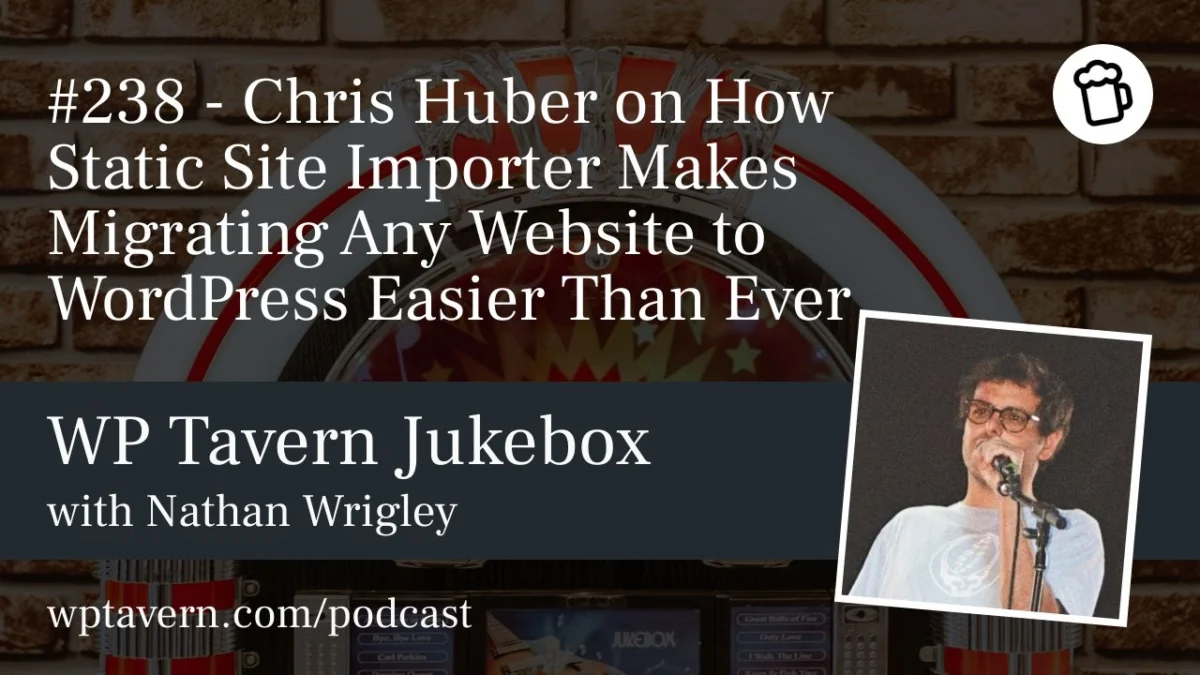
The narrative behind this technological leap is rooted in the personal journey of Chris Huber, a software engineer at Automattic. Huber’s engagement with the digital landscape began in college back in 2011 as a writer and blogger. At the time, his early web experiments were not built on WordPress.
It was not until 2018 that Huber migrated his personal portal, extrachill.com, to WordPress. This migration catalyzed a deep-dive exploration of the platform’s core architecture. Huber began developing custom plugins and experimenting with AI integration early on, eventually transforming his personal site into a complex WordPress multi-site application powered by roughly 60 custom plugins.
Huber’s aggressive experimentation and unconventional engineering choices eventually caught the attention of veteran figures in the WordPress community via social media. This exposure ultimately led to his recruitment by Automattic as a software engineer, tasking him with shaping the future of the WordPress experience.
The Acceleration of the Data Liberation Project
Long before Huber joined Automattic, the Data Liberation Project was established to tackle the friction of migrating away from rival CMS platforms like Drupal and Joomla. Traditionally, migrating these sites required complex database mapping, custom script writing, and tedious manual redesigns.
In recent months, the scope of Data Liberation has broadened. Rather than focusing strictly on rival database-driven platforms, the project now encompasses turning any URL into a downloadable, portable clone. By leveraging an advanced Data Liberation Agent, users can feed any website URL into the system, loading it in a headless browser to capture a pixel-perfect visual copy—animations, layout styles, and assets included—without needing direct database access.
The Birth and Refinement of the Static Site Importer
Following the establishment of the Data Liberation workflow, Huber began developing the Static Site Importer, an open-source WordPress plugin hosted on GitHub (automattic/static-site-importer).
Rather than relying purely on human intervention, Huber employed a unique AI orchestration workflow to build and refine the importer tool itself. By feeding URLs into the system and running automated loops using headless browsers like Playwright, Huber programmed AI agents to evaluate the resulting Gutenberg block structures from the perspective of a non-technical user, automatically opening and resolving pull requests. This iterative feedback loop has allowed the tool to rapidly evolve, elevating its parsing accuracy with every automated release.
Supporting Data: Mechanics, Architecture, and Capabilities
To understand the technological weight of the Static Site Importer, one must examine its inner workings. The project utilizes a PHP package embedded within the plugin known as the Block Engine.
How the Pipeline Operates
- The Ingestion Phase: A target URL is submitted via the command-line interface (CLI) or API (such as through WordPress Studio or custom workflows).
- The Data Liberation Phase: The Data Liberation Agent crawls the source website, extracting a clean, static mirror of its layout and frontend assets.
- The Parsing and Mapping Phase: The Static Site Importer acts as a sorting funnel. It analyzes the HTML elements and maps them directly to WordPress Core Gutenberg blocks (such as paragraph, image, and group blocks) rather than relying on brittle, AI-generated theme templates.
- The Materialization Phase: The tool generates an entire WordPress block theme from scratch, extracting repeating elements like headers and footers into proper template parts.
Current Success Rates and Edge Cases
The tool is remarkably effective for small- to mid-sized brochure websites. For a typical 10-to-15-page informational site featuring text, images, CSS, and basic forms, the Static Site Importer successfully delivers a clean, editable WordPress environment in more than half of all deployment attempts.
However, complex edge cases continue to challenge the pipeline:
- Large-Scale Portals: Attempting to ingest massive, multi-thousand-page proprietary platforms (such as the main Wix.com domain) currently results in long processing queues and incomplete parsing.
- Vector Graphics: Scalable Vector Graphics (SVGs) occasionally introduce rendering and management hurdles within WordPress.
- Advanced Functionality: Dynamic components like e-commerce catalogs, custom event calendars, and complex animations require specialized system wiring.
Despite these hurdles, the tool exhibits advanced problem-solving capabilities. When product listings are detected during an import, the engine pre-installs WooCommerce, automatically maps products to WooCommerce blocks, and imports catalogue data. Similarly, form inputs are routed through standardized providers like Jetpack Forms.
Official Responses and Ecosystem Perspectives
The reception of the Data Liberation and Static Site Importer initiatives within Automattic and the broader WordPress community has been overwhelmingly positive. What initially began as an economic dead end—where manual migrations of small websites were financially unviable for agency teams—has transformed into a scalable pipeline.
While enterprise-level migrations still benefit from dedicated manual oversight, the introduction of automated tooling allows teams to service clients who were previously told "no" due to budget constraints or platform lock-in.
Furthermore, the project challenges the long-standing critique that the Gutenberg block editor has a steep learning curve. By transforming static or AI-generated HTML pages directly into native WYSIWYG block structures, the tool turns WordPress’s core editing experience into a major competitive advantage. Users are no longer trapped in static code generated by external AI agents; instead, they gain the long-term maintainability of a true content management system.
Huber notes that the project has garnered substantial internal momentum at Automattic since its spotlight at WordCamp US. While currently distributed primarily via GitHub and integrated into development environments like WordPress Studio and WordPress.com pipelines, discussions regarding its long-term future point toward deeper integration into the core WordPress ecosystem.
Implications: The Future of Web Migration and Content Ownership
The maturation of the Static Site Importer and the Data Liberation Project carries profound implications for the global web development landscape:
1. Democratizing Content Portability
For decades, proprietary website builders have maintained market share by making departures difficult. By proving that any website can be systematically converted into an open-source format, Automattic is re-establishing the foundational ethos of the open web: true data ownership. Users are no longer held hostage by SaaS subscription models merely because leaving would require a complete rebuild.
2. Redefining the Role of AI in Web Development
While the tech industry has been swept up in conversational AI website builders—platforms where users chat with an agent to spin up static code—these tools often leave non-technical users stranded when it comes to ongoing content maintenance. Automattic’s approach leverages AI not to replace the CMS, but to feed the CMS. By automating the conversion of raw code into native blocks, the technology bridges the gap between rapid AI prototyping and sustainable content management.
3. Strengthening WordPress’s Market Position
As market share competition intensifies across the CMS landscape, having a robust, automated inbound migration pipeline acts as a powerful acquisition funnel. If website owners know they can migrate away from legacy or competing systems with a single command line instruction—retaining their design, structure, and editorial capabilities—WordPress becomes the undisputed path of least resistance for the future of the internet.
As development continues and the "floor" of automated migration is raised week by week, the barrier between closed-source silos and the open-source WordPress community is crumbling faster than ever before.