The WordPress ecosystem, long celebrated for its democratizing influence on the web, is currently undergoing a quiet but profound transformation. While much of the community’s attention is often consumed by the technical evolution of core software, block development, and plugin performance, a significant movement is gathering momentum in the background: the professionalization and scaling of WordPress education.
Led by a dedicated cohort of community organizers, this educational push is moving beyond casual tutorials. It is establishing formal pipelines that connect students—from primary school children to university researchers—directly to the WordPress project. Through a trio of interconnected initiatives—the WordPress Credits Program, Campus Connect, and Student Clubs—the project is creating a sustainable roadmap for the next generation of contributors, developers, and digital creators.
The Triad of Learning: Defining the Initiatives
To understand the current landscape of WordPress education, one must distinguish between the three primary pillars that have recently been formalized and turbocharged.
1. The WordPress Credits Program
The Credits Program is a sophisticated, high-level internship initiative managed by the WordPress Foundation. It serves as a formal bridge between higher education and the open-source world. Students enrolled in participating universities can complete 50- or 150-hour tracks, which are often integrated directly into their academic curriculum.
Unlike informal training, this program is rigorous. Students are paired with vetted mentors from the WordPress community who guide them through the "make.wordpress.org" contribution process. Upon completion, students receive an official certificate signed by the Foundation’s leadership, and their contributions are permanently documented on their WordPress.org profiles, creating a tangible portfolio for future employers.
2. WordPress Campus Connect
If the Credits Program is the formal academic wing, Campus Connect is the community’s "boots on the ground" outreach arm. Since becoming an official WordPress event series in May 2025, it has evolved into a highly flexible model. These events are designed to be low-barrier entry points that can take place in universities, high schools, or even local public libraries.
Campus Connect focuses on exposure and immediate hands-on experience. Whether it is a single-day workshop or a multi-day series, the primary objective is to demonstrate that WordPress is a viable career path for marketers, designers, and developers alike.
3. Student Clubs
Completing the ecosystem are the Student Clubs. While Campus Connect introduces students to the platform, Student Clubs ensure that the momentum does not fade once the organizers leave the room. These are peer-led, in-campus groups that operate similarly to local WordPress Meetups. By encouraging students to lead sessions for their peers—and even for incoming junior students—the project fosters leadership skills and creates a self-sustaining learning environment.
Chronology of Growth: From Experimentation to Global Scale
The journey of these programs has been one of organic, rapid acceleration. What began as a localized experiment—most notably the initial partnership with the University of Pisa—has now ballooned into a global movement.
- September 2025: The foundational landscape of education was discussed in a wide-ranging podcast episode (WP Tavern Episode 183), which highlighted the confusion surrounding overlapping initiatives and the need for a unified strategy.
- Late 2025 – Early 2026: The programs saw a massive surge in interest. Facilitators began to standardize documentation, moving away from ad-hoc teaching toward structured "Meetup Activity Libraries" that provide slide decks and facilitation guides for volunteers.
- Present Day: The scope has reached an international scale, with recent expansions into Africa (Uganda) and Japan, proving that the model is culturally adaptable and highly replicable.
Supporting Data: By the Numbers
The efficacy of these initiatives is becoming increasingly clear through their metrics. As of mid-2026, the data indicates a project that is scaling efficiently:
- Campus Connect reach: Since its official inception in May 2025, the program has successfully executed 42 distinct events across 71 participating institutions, engaging over 5,500 students.
- Credits Program capacity: Currently, 450 students are enrolled globally, with 75 confirmed graduates who have successfully navigated the 50- or 150-hour contribution tracks.
- Event Saturation: In regional hubs like Ajmer, India, demand for WordPress-related events has surged so significantly that community organizers have reported "sold-out" ticket scenarios within 24 hours, with students accounting for nearly 50% of the attendees.
Official Perspectives: The Value of Mentorship and Sustainability
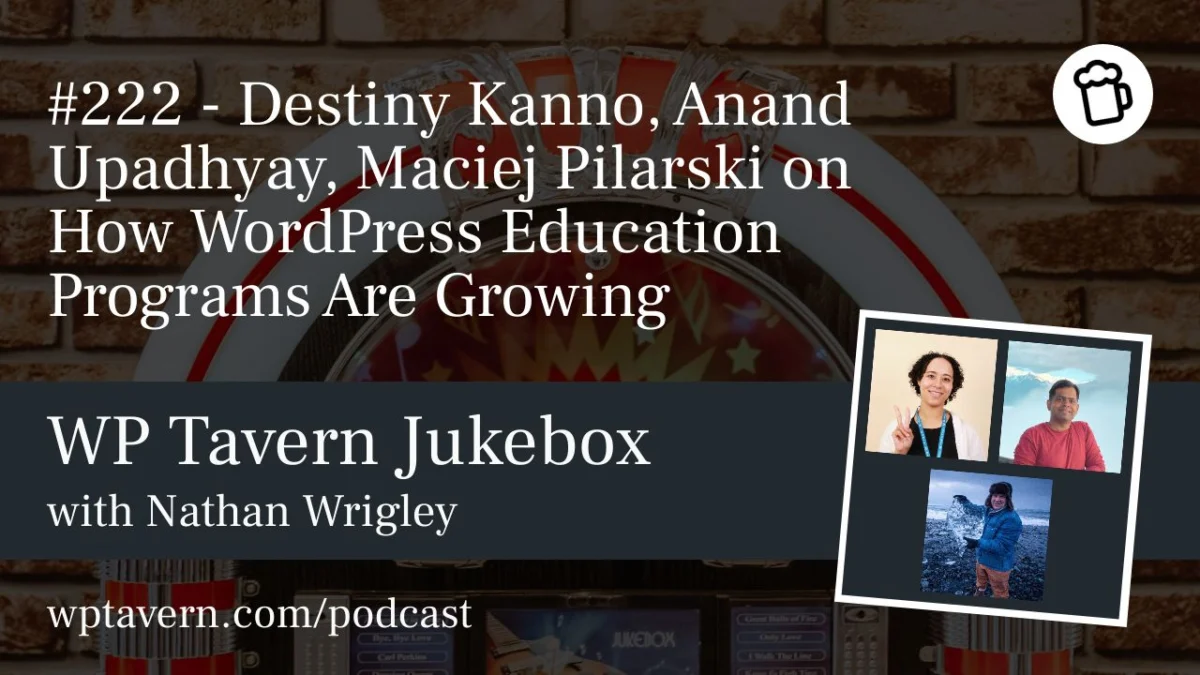
The leadership behind these initiatives—Destiny Kanno, Anand Upadhyay, and Maciej Pilarski—emphasize that the goal is not merely to increase the user base, but to ensure the long-term health of the open-source project.
"We aren’t just looking for numbers," says Maciej Pilarski, an administrator for the Credits Program. "We are building the next generation of contributors. We know the current demographic of the community is aging. By bringing in these students, we are ensuring that the project remains fresh, current, and aligned with the values of the next generation of digital natives."
Anand Upadhyay, founder of WPVibes and a key figure in the Student Clubs movement, highlights the "virtuous cycle" these programs create. "When we go to a campus for a second or third time, we no longer need to explain what WordPress is. The Student Clubs have already laid that groundwork. The ecosystem is now self-sustaining."
Destiny Kanno, an education program manager sponsored by Automattic, points to the role of institutional support. "The biggest success is when an institution asks us, ‘How do we do this ourselves?’ When faculty and educators start leading these sessions, we know we have achieved true sustainability."
The Implications: Why This Matters for the Future of WordPress
The professionalization of WordPress education carries deep implications for the future of the platform. By integrating with academic credit systems and establishing formal club structures, the community is moving beyond the "hobbyist" label.
1. The Scaffolding of Open Source Ethics
A critical component of these programs is the emphasis on open-source philosophy. Students aren’t just learning how to click buttons in the dashboard; they are learning about distributed teams, cross-timezone collaboration, and the moral imperative of keeping the web open. This creates a workforce that is not only technically proficient but ideologically aligned with the WordPress mission.
2. Bridging the Generational Gap
Typical tech conferences and WordCamps have historically suffered from an aging demographic. These educational programs serve as a deliberate correction. By reaching students while they are still in school, the community is lowering the barrier to entry and ensuring that the future of the web isn’t monopolized by proprietary, closed-source ecosystems.
3. Adapting to New Tech Frontiers
The educational initiatives are also proving to be highly adaptable. The recent inclusion of AI-focused credentials demonstrates that the WordPress educational track is not static. It is evolving to meet the demands of the modern web, ensuring that students are learning skills that are immediately applicable in the current job market.
Conclusion: A Call to Action
The message from the community leadership is clear: the era of "passive observation" is over. Whether it is through volunteering as a mentor for the Credits Program, hosting a Campus Connect event, or helping to facilitate a local Student Club, there is a role for every community member to play.
As the project continues to "join hands" across borders, it is becoming evident that the most meaningful contribution one can make to WordPress is not necessarily a line of code, but the time spent educating the person who will write the code of the future. The infrastructure is in place, the demand is record-breaking, and the path for involvement has never been clearer. For those looking to shape the next decade of the open web, the classroom is the new frontier.