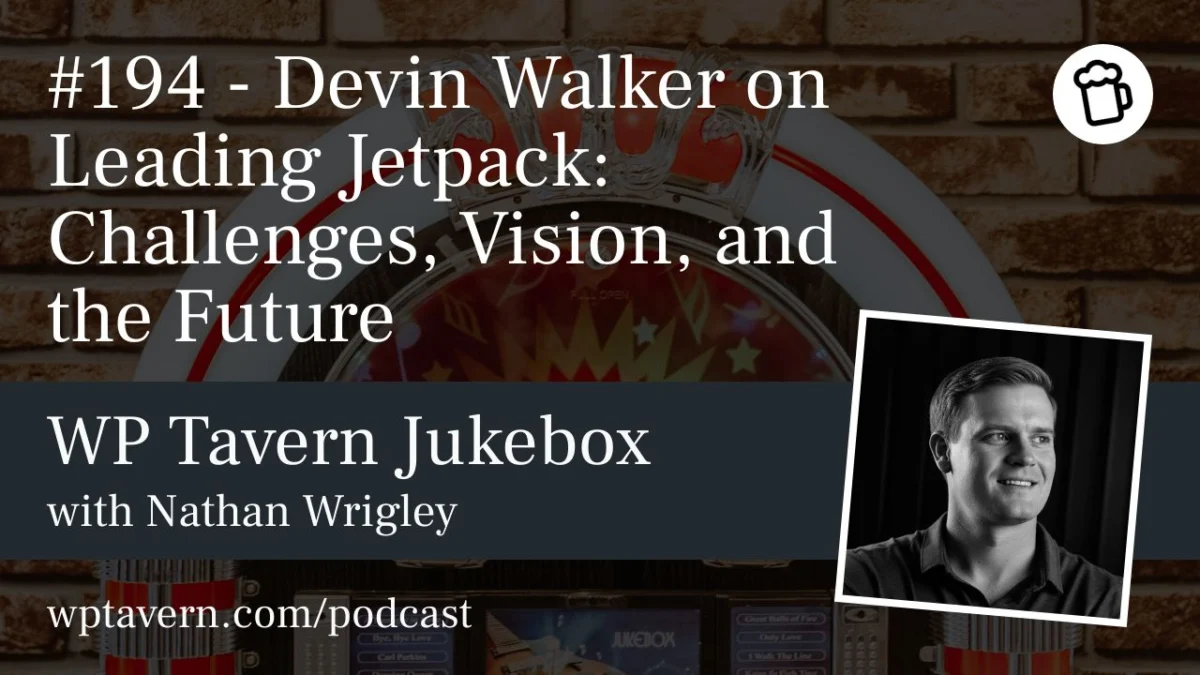
The WordPress ecosystem is currently witnessing a pivotal shift in the leadership of one of its most ubiquitous—and divisive—tools. Automattic, the company behind WordPress.com and the Jetpack suite, has appointed industry veteran Devin Walker as the new Head of Jetpack. Walker, a long-time contributor to the WordPress community and co-founder of the successful GiveWP plugin, faces the monumental task of streamlining a product that powers millions of websites while navigating the complexities of a rapidly evolving digital landscape dominated by AI and integrated service ecosystems.
Main Facts: A New Chapter for Jetpack
Jetpack has long been the "Swiss Army knife" of the WordPress world. From security and backups to performance optimization, site statistics, and contact forms, it attempts to bridge the gap between self-hosted WordPress sites and the cloud-powered capabilities of WordPress.com. However, its sheer breadth has historically invited criticism, with many users labeling it a "jack of all trades, master of none."
Devin Walker’s appointment marks a transition toward a more focused, user-centric product strategy. His role—officially titled "Artistic Director of Jetpack"—essentially places him as the primary product owner. Walker brings a wealth of experience from his tenure at GiveWP, which he scaled for seven years before its acquisition by Liquid Web. His background in development, design, and marketing provides a well-rounded perspective that Automattic is betting on to revitalize Jetpack’s reputation and utility.
Chronology: From Community Roots to Automattic
Walker’s career trajectory reflects the evolution of the WordPress market itself. Having spent 16 years in the ecosystem, his reputation was cemented during his seven-year run with GiveWP, where he and co-founder Matt Cromwell built a dominant force in the donation plugin space. After the acquisition of GiveWP, Walker gained further experience working with prominent brands such as iThemes, Kadence, LearnDash, and The Events Calendar.
In August 2025, Walker stepped away from his previous roles, initially intending to return to building independent products. However, a call from Matt Mullenweg, the CEO of Automattic, pivoted his career path. After two weeks of deliberation, Walker decided to join Automattic, viewing the role not just as a job, but as an opportunity to influence the trajectory of a massive, essential piece of the WordPress infrastructure. He noted that the decision was driven by the potential for high-impact work that he simply could not achieve on his own as an independent developer.
The "Jack of All Trades" Dilemma
A recurring theme in the discussion regarding Jetpack is its perceived lack of focus. Over the years, as the plugin expanded its feature set, it became increasingly complex. Walker acknowledges this, citing personal experiences where he struggled to navigate the plugin’s interface to perform relatively simple tasks, such as managing a donation form.
The Pivot Toward Simplification
Walker’s current mandate is to move away from feature bloat and toward "finesse." He argues that the product does not need to add hundreds of new, disparate features. Instead, the focus must shift to polishing the existing toolkit.
"We don’t really need to build much more new things," Walker stated. "We need to focus and improve what’s already there." This involves a "Jobs to Be Done" framework, where the product team puts themselves in the shoes of a novice user to identify and remove unnecessary friction. The goal is to transform Jetpack from a fragmented collection of tools into a coherent, seamless experience that provides value without overwhelming the user.
Organizational Changes: Moving Beyond Silos
The internal structure at Automattic has also undergone significant changes, moving from a rigid functional organization to a more fluid, matrix-based model. This shift allows for greater collaboration between teams working on Jetpack, WooCommerce, and WordPress.com.
Under this new structure, engineering resources are no longer locked into permanent silos. Instead, the company can deploy specialized teams to "sprint" on specific high-priority features—such as the recent overhaul of Jetpack Forms—before moving on to the next challenge. This liquidity allows Automattic to respond more effectively to market demands, ensuring that Jetpack remains a foundational component of the WordPress experience.
The AI Frontier: A New Era for Site Building
Perhaps the most significant development on the horizon is the integration of Artificial Intelligence. While Jetpack currently offers basic AI capabilities, such as automated content excerpts and featured image generation, Walker hints at a much more aggressive strategy.
Beyond Content Creation
Walker envisions AI as the "glue" that will bind Jetpack’s disparate services together. He is working closely with Automattic’s AI engineering team to move beyond simple text generation. The future of Jetpack, according to Walker, will include:
- Intelligent Block Building: Utilizing technology similar to Automattic’s "Telex" project, which would allow users to generate custom blocks on the fly using simple prompts.
- Proactive Site Management: AI tools that exist within the WordPress admin to suggest optimizations, solve technical hurdles, and manage site configurations.
- Visitor Engagement: Tools that adapt to user behavior to improve conversion, newsletter sign-ups, and customer support.
This vision aligns with the broader goal of making WordPress an "operating system for the web," where the barrier to entry for non-technical users is drastically lowered.
Implications for the User Base
With an install base of approximately 4 million, Jetpack is one of the most significant plugins in the WordPress directory. This scale creates a paradox: the need for rapid innovation is constantly checked by the need for extreme stability.
Balancing Innovation and Reliability
Walker is acutely aware that "breaking things" is not an option for such a large user base. The challenge is to introduce modern features and interface improvements while maintaining backward compatibility and performance. He aims to improve the product’s public perception by:
- Improving User Support: Addressing the primary cause of negative reviews through better documentation and clearer pathways for assistance.
- Marketing and Transparency: Acknowledging that the marketing around Jetpack has been stagnant, Walker intends to "pull back the curtain" on internal developments, sharing the impressive work currently buried in internal project logs (P2s) with the wider public.
- UI Consolidation: Reducing the number of confusing toggles and menus to create a more intuitive dashboard.
Conclusion: The 12-Month Outlook
Devin Walker’s tenure as the Head of Jetpack is framed by a clear objective: to restore confidence in the brand by focusing on quality over quantity. By leveraging AI to unify the user experience and adopting a more transparent, marketing-forward approach, Walker hopes to transform Jetpack from a misunderstood, monolithic plugin into a polished, indispensable tool for WordPress creators.
The industry will be watching closely. Whether this "new chapter" for Jetpack results in a more cohesive, user-friendly, and powerful suite of services remains to be seen. However, by inviting community feedback and setting a clear roadmap for the next 12 months, Walker has initiated a level of engagement that has been largely missing in recent years. For the millions of users currently relying on Jetpack, the promise of a more refined and intelligent toolset is a development worth monitoring. As Walker himself suggested, the true test will be in the progress made by this time next year—a milestone that promises to define the future of one of the web’s most influential plugins.