Products & Markets
By Andrew Bonar | October 20, 2026, at 8:29 AM BST | 7-minute read
Main Facts
In a significant development for global email security and brand identity standards, cloud-native email security provider EasyDMARC has announced a strategic partnership with GMO GlobalSign, a globally trusted Certificate Authority. This collaboration effectively brings DMARC (Domain-based Message Authentication, Reporting, and Conformance) management and mark certificates for BIMI (Brand Indicators for Message Identification) together under a single, cohesive operational umbrella.
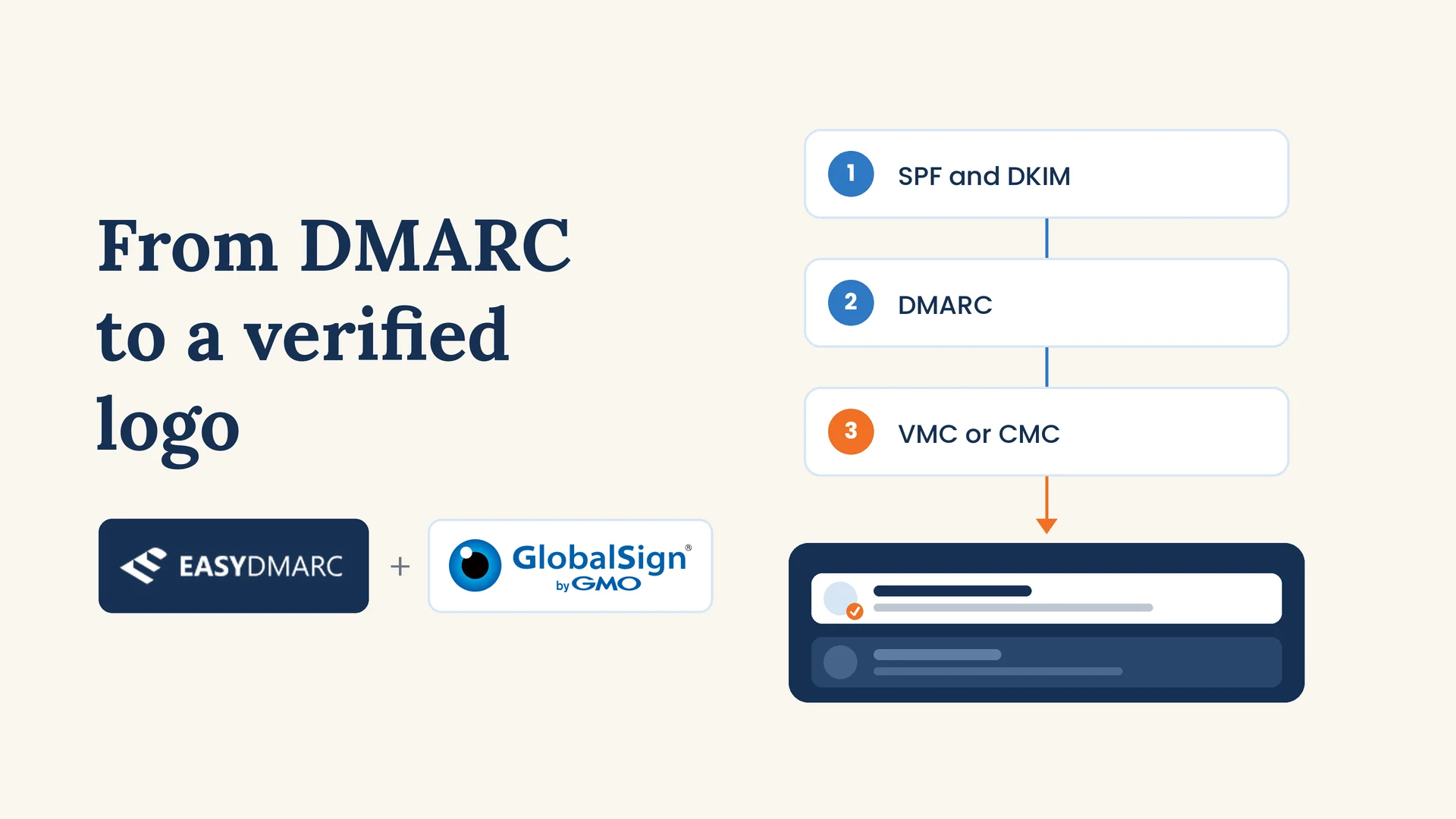
For organizations navigating the increasingly complex landscape of email delivery and spoofing prevention, the partnership offers a streamlined pathway from technical email authentication to visual brand verification in the inbox. Companies utilizing EasyDMARC to orchestrate their Sender Policy Framework (SPF), DomainKeys Identified Mail (DKIM), and DMARC protocols can now seamlessly obtain either a Verified Mark Certificate (VMC) or a Common Mark Certificate (CMC) directly through GlobalSign’s robust cryptographic infrastructure.
The ultimate value proposition of this integration is the ability for legitimate senders to display their verified corporate logos natively within supported mailbox providers (MBPs) via the BIMI standard. Previously, organizations often had to navigate disjointed workflows—managing their DNS authentication protocols with one vendor while procuring and validating their cryptographic mark certificates through another.
Crucially, this partnership is not limited by geography. It is immediately available to GlobalSign’s vast enterprise customer base across the Americas, Europe, the Middle East, Africa (EMEA), and the Asia-Pacific (APAC) region. While EasyDMARC currently handles these certificate requests through a direct coordination model with customers, both companies have confirmed that a deeper, fully automated API integration within the EasyDMARC platform is actively under development to further simplify the user experience.
Chronology: The Road to Unified Email Trust
To understand the significance of the EasyDMARC and GMO GlobalSign partnership, it is helpful to examine the historical trajectory of email authentication and how the industry arrived at the intersection of security and visual branding.
Phase 1: The Foundation of Protocols (SPF and DKIM)
For decades, Simple Mail Transfer Protocol (SMTP)—the foundational architecture of email—lacked inherent sender verification capabilities, making email spoofing trivial for malicious actors. In the late 2000s, the introduction of SPF (RFC 7208) and DKIM (RFC 6376) provided the initial building blocks. SPF allowed domain owners to publish a list of authorized IP addresses permitted to send email on their behalf, while DKIM introduced cryptographic signatures embedded in message headers to guarantee that an email had not been tampered with in transit.
Phase 2: The Rise of DMARC Enforcement
While SPF and DKIM were effective, they lacked a policy framework to tell receiving mail servers what to do when authentication failed. Enter DMARC (RFC 7489), which launched in 2015 to bridge this gap. DMARC allowed organizations to set clear policies—monitoring, quarantine, or reject—for unauthenticated messages, while providing detailed reporting feedback via DMARC XML reports. However, achieving DMARC enforcement historically required deep technical expertise, creating an adoption barrier for small and medium-sized enterprises (SMEs). This friction birthed specialized platforms like EasyDMARC, which automated infrastructure discovery and record management.
Phase 3: Visualizing Trust with BIMI and VMCs
As mailbox providers like Gmail, Yahoo, and Apple Mail began cracking down on unauthenticated traffic, the email ecosystem needed a way to reward compliant senders visually. The BIMI working group was formed to leverage existing DMARC investments. By publishing a BIMI DNS record, a domain at strict DMARC enforcement (p=quarantine or p=reject) could display its official logo next to incoming messages.
However, mailbox providers required cryptographic proof that the logo belonged to the sender and was legally protected. This led to the creation of the Verified Mark Certificate (VMC), issued strictly by WebTrust-audited Certificate Authorities like GMO GlobalSign.
Phase 4: Integration and Convergence (2026)
For years, managing the technical backend of DMARC and the legal/cryptographic requirements of VMCs remained separate operational silos. The 2026 announcement by EasyDMARC and GMO GlobalSign represents the logical next step in this evolution: the convergence of email infrastructure management and brand identity certification into a unified workflow.
Supporting Data and Ecosystem Metrics
The partnership between EasyDMARC and GMO GlobalSign does not exist in a vacuum; it is underpinned by massive user bases, global reach, and a rapidly expanding market for email security and brand verification.
- EasyDMARC’s Global Footprint: EasyDMARC’s cloud-native platform is currently deployed by more than 90,000 organizations spanning over 130 countries. The company has established itself as a cornerstone provider for SMEs, enterprises, and Managed Service Providers (MSPs) seeking to achieve and maintain strict DMARC enforcement.
- GMO GlobalSign’s Enterprise Infrastructure: As a subsidiary of the Tokyo-headquartered GMO Internet Group, GlobalSign brings decades of Public Key Infrastructure (PKI) expertise to the table. GlobalSign is one of the world’s most established digital certificate authorities, providing identity services to millions of enterprises, web servers, and IoT devices globally.
- The Mechanics of BIMI Prerequisites: A fundamental rule of the BIMI standard is that a domain must be operating at strict DMARC enforcement (
p=quarantineorp=reject) before mailbox providers will render a logo. EasyDMARC’s platform specializes in this exact preliminary phase: discovering every shadow IT service, third-party marketing tool, and transactional platform sending emails on behalf of a domain, rectifying authentication gaps, and tracking progress until 100% enforcement is reached. Once that threshold is cleared, GlobalSign’s VMC or CMC acts as the digital passport required to unlock the visual logo display in the inbox.
Official Responses and Executive Insights
Leadership from both organizations emphasized that the partnership addresses a critical gap in modern cybersecurity: the fragmentation of email trust mechanisms.
Gerasim Hovhannisyan, CEO and Co-Founder of EasyDMARC, highlighted the holistic nature of modern digital communication security:
"Email trust isn’t built by a single protocol or certificate. It starts with understanding your entire email infrastructure—from domains and DNS to every service sending on your behalf—and ensuring every legitimate message reaches the inbox securely."
Hovhannisyan’s comments underline EasyDMARC’s philosophy that certificates alone are insufficient if the underlying infrastructure suffers from misconfigurations or unmitigated spoofing vulnerabilities.
Echoing this sentiment, Mike Boyle, Vice President of Business Units at GMO GlobalSign, focused on the risk-mitigation properties of combining cryptographic identity with email authentication policies:
"One of the most effective methods of mitigating this risk is the combination of identity-based digital certificates with DMARC."
Boyle’s statement points to the broader enterprise cybersecurity strategy: shifting from passive defense to active identity verification, making it exponentially harder for Business Email Compromise (BEC) actors and phishers to impersonate trusted corporate brands.
Industry Implications: Why This Partnership Matters
The collaboration between EasyDMARC and GMO GlobalSign carries profound implications for the email marketing, cybersecurity, and corporate branding sectors.
1. Lowering the Barrier to Entry for BIMI
While BIMI has been available for several years, its adoption rate has historically been hampered by administrative friction. Organizations had to coordinate between their IT/DNS administrators (to fix DMARC), trademark lawyers (to ensure logo trademark compliance for VMCs), and Certificate Authorities. By bridging EasyDMARC’s automated DMARC dashboard with GlobalSign’s certificate issuance pipeline, the administrative overhead is drastically reduced. This is expected to accelerate BIMI adoption among mid-market companies that previously found the process too cumbersome.
2. Combating the Scourge of Business Email Compromise (BEC)
Phishing and BEC attacks cost organizations billions of dollars annually. Threat actors frequently rely on domain spoofing and look-alike domains to deceive employees, partners, and customers. When organizations achieve full DMARC enforcement and pair it with a verified BIMI logo, they create a powerful visual cue for recipients. If an email lacks the verified corporate logo or fails DMARC checks, mailbox providers instantly flag or filter it, starving cybercriminals of their primary vector of attack.
3. The Future of API-Driven Compliance
As EasyDMARC rolls out its upcoming native API integration with GlobalSign, the industry is witnessing a broader shift toward automated compliance. In the near future, managing digital identities and email security parameters will no longer require manual ticket-swapping between departments. Instead, platforms will offer "one-click" transitions from DNS verification to cryptographic certificate issuance—a blueprint that other security vendors will likely be forced to follow to remain competitive.
Summary
The alliance between EasyDMARC and GMO GlobalSign marks a maturation point in the email security sector. By uniting the technical rigor of DMARC enforcement with the visual authority of Verified Mark Certificates, the partnership provides organizations with a streamlined, end-to-end solution for protecting their domain reputations and asserting their brand identities in an increasingly hostile digital inbox.
(Disclosure: EasyDMARC provides DMARC protection and email security infrastructure for a number of properties within the emailexpert network.)