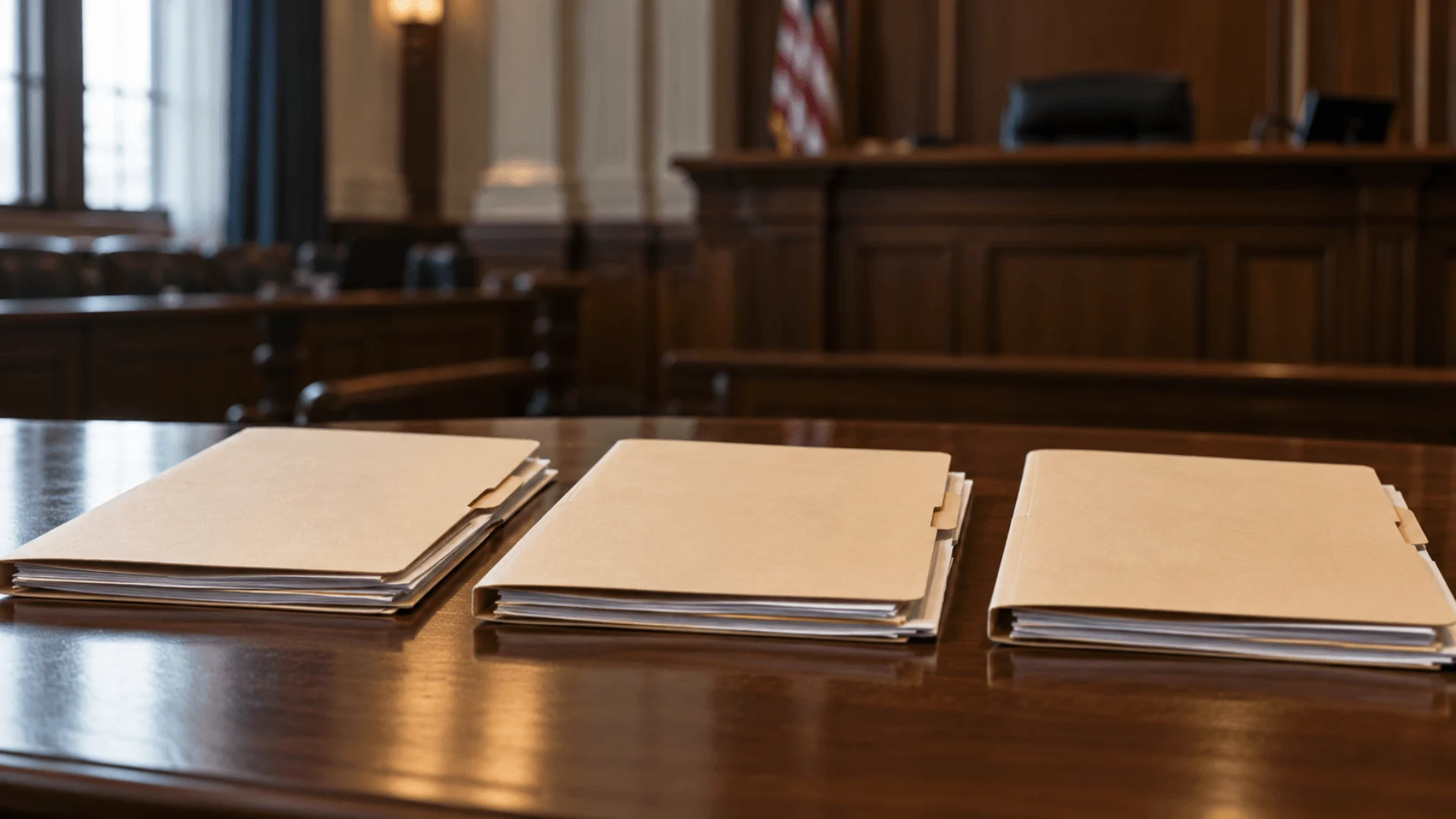
SEATTLE — In a series of pivotal procedural decisions that highlight the ongoing friction between state consumer protection statutes and federal jurisdictional thresholds, a US district judge has ordered three high-profile class-action lawsuits against major retail brands to be sent back to state court.
On September 18, US District Judge Barbara J. Rothstein of the US District Court for the Western District of Washington remanded three separate lawsuits filed under Washington’s strict Commercial Electronic Mail Act (CEMA) to the King County Superior Court. The targeted retailers—PacSun, Tommy Bahama, and Bebe Stores—now find themselves forced to litigate their marketing practices in a venue where state-level legal definitions heavily favor the plaintiffs.
The ruling marks the latest chapter in a surging wave of litigation targeting corporate email marketing campaigns. Specifically, the lawsuits challenge the use of promotional subject lines that allegedly manufacture a false sense of urgency regarding the expiration dates or availability of retail sales.
While the federal court sidestepped the core question of whether the retailers’ marketing tactics actually violated the law, the decision to remand underscores a profound constitutional paradox: retailers desperate to stay in federal court were forced to argue that their own promotional emails caused tangible harm to consumers, a strategy that ultimately failed.
Main Facts: The Core Dispute and the CEMA Controversy
At the heart of these lawsuits is Washington’s Commercial Electronic Mail Act (CEMA), a robust statute designed to protect state residents from deceptive, misleading, or unsolicited commercial electronic mail. Over the past two years, CEMA has become a magnet for class-action attorneys targeting national retailers over common marketing tropes—most notably, subject lines proclaiming that a sale "Ends Tonight!" or that a special discount is about to expire, when consumers allege the promotions either continued or immediately rolled over into identical new offers.
The consolidated legal action involves three prominent retail brands:
- PacSun (Pacific Sunwear of California, LLC): Facing allegations that its promotional email campaigns used deceptive time-sensitive hooks to drive consumer traffic and sales.
- Tommy Bahama (Tommy Bahama Group, Inc.): Facing similar scrutiny over urgency-driven subject lines, a case that has also drawn the direct intervention of the State of Washington as a plaintiff.
- Bebe Stores, LLC: Facing class-action claims regarding promotional deadlines, with the State of Washington likewise stepping in to protect consumer interests.
Each of these lawsuits originated in Washington state courts before being aggressively removed to federal court by the respective retailers. Removal is a common defense strategy; corporate legal teams frequently prefer federal dockets, believing they offer a more predictable application of constitutional standing doctrines and a more favorable environment for dismissing class actions before trial.
However, Judge Rothstein raised the question of federal subject-matter jurisdiction sua sponte—meaning she initiated the inquiry independently, without waiting for the plaintiffs to challenge the removal.
The crux of the jurisdictional hurdle lies in Article III of the US Constitution. Federal courts are courts of limited jurisdiction and cannot hear a case unless the plaintiff demonstrates a "concrete injury-in-fact." Under Washington state law, however, the threshold is significantly lower. In the landmark ruling Brown v. Old Navy, the Washington Supreme Court held that the mere receipt of a commercial email that violates CEMA constitutes a complete, actionable injury under state law.
Judge Rothstein determined that this statutory state-law definition falls short of the stringent, constitutional injury requirements mandated in federal courts. Characterizing the plaintiffs’ grievances regarding misleading promotional deadlines as a "technical or procedural violation," she ruled that federal courts lack the constitutional authority to adjudicate the disputes.
Chronology: How the Cases Unfolded
To understand how these retail giants found themselves navigating a procedural labyrinth, it is necessary to trace the timeline of the litigation, removal, and ultimate remand.
- Initial State Filings: The class actions against PacSun, Tommy Bahama, and Bebe Stores were initially filed by consumers in Washington state courts, invoking CEMA and seeking statutory damages.
- Removal to Federal Court: Seeking to escape state-level jurisdictions where Brown v. Old Navy heavily weights the legal scales in favor of plaintiffs, the retail defendants removed the cases to the US District Court for the Western District of Washington.
- State Intervention: Recognizing the broader implications for consumer protection within the state, the Washington Attorney General’s office intervened as a plaintiff in both the Tommy Bahama and Bebe Stores litigation.
- Jurisdictional Review: Judge Rothstein initiated an independent review of the court’s subject-matter jurisdiction under Article III, pressing both sides to establish whether a concrete injury existed under federal standards.
- The PacSun Argument and Rejection: PacSun attempted to establish federal standing by arguing that receiving its marketing emails caused "intrusion, distraction, and cost," drawing parallels to actionable nuisances and lost productivity. Judge Rothstein swiftly rejected the argument, noting that a legal nuisance requires unsolicited contact, and PacSun’s plaintiffs had willingly provided their email addresses to the brand.
- Motions for a Stay: Anticipating an unfavorable outcome, all three retailers formally requested that Judge Rothstein stay their proceedings pending the US Court of Appeals for the Ninth Circuit’s decision in Montes v. Penney Opco—an appeal addressing whether CEMA plaintiffs possess federal standing. Judge Rothstein denied the requests.
- The September 18 Remand Order: Judge Rothstein formally ordered all three class actions remanded back to the King County Superior Court, with the transfers set to take effect on October 5.
Supporting Data and Precedent: The Evolving Landscape of Email Litigation
The mass remand of the PacSun, Tommy Bahama, and Bebe Stores cases is not an isolated incident. It represents a growing trend within the Western District of Washington, where federal judges are systematically returning CEMA class actions to state courts for lack of Article III standing. Similar remand orders have recently been issued in high-profile cases involving major consumer brands such as Papa John’s and True Religion.
This judicial trend creates a sharp jurisdictional dichotomy:
| Legal Arena | Governing Standard | Standing Requirement | Impact on Litigants |
|---|---|---|---|
| Federal Court (US District Court) | Article III, US Constitution | Requires a "concrete, particularized injury-in-fact." State statutory violations alone are insufficient. | Retailers often seek federal venue to dismiss cases early, but face dead ends when they cannot prove their own emails caused real-world damage. |
| State Court (King County Superior Court) | Washington CEMA & Brown v. Old Navy | The receipt of a non-compliant commercial email is the injury. | Plaintiffs enjoy a clear path to trial or settlement without proving tangible economic loss or nuisance. |
Compounding the pressure on retailers is the staggering financial exposure tied to CEMA violations. Under the statute, statutory damages can range anywhere from $100 to $500 per unlawful email sent to Washington residents. When multiplied across massive marketing databases containing hundreds of thousands—or even millions—of subscribers, potential corporate liabilities quickly scale into tens or hundreds of millions of dollars.
This financial sword of Damocles has driven several major corporations to seek massive settlements rather than risk a catastrophic jury verdict in state court. A prime example is Costco, which made headlines by agreeing to a staggering $14 million settlement over urgency-driven email subject lines—while remarkably negotiating terms where it agreed to alter none of its underlying marketing practices.
Other national brands, including Macy’s, have similarly found themselves fighting uphill legal battles, failing in bids to dismiss CEMA claims as state courts and legislatures grapple with the fallout of the digital marketing era.
Official Responses and Strategic Legal Maneuvers
The legal wrangling surrounding the remands exposed deep irony in the defense strategies deployed by the retail defendants. To maintain their preferred footing in federal court, the retailers were forced to adopt a counterintuitive legal posture: arguing that their own commercial communications were genuinely intrusive nuisances.
In its filings, PacSun attempted to bridge the Article III standing gap by asserting that the influx of marketing emails imposed real-world burdens on consumers, citing "intrusion, distraction, and cost" akin to a traditional common-law nuisance.
Judge Rothstein dismantled this argument with surgical precision. She pointed out a fatal flaw in the retailer’s logic: a legal claim of nuisance inherently requires unsolicited contact. Because the PacSun plaintiffs had voluntarily signed up for the brand’s mailing lists and provided their email addresses, they could not reasonably claim that receiving promotional messages constituted an actionable, intrusive nuisance.
In a twist of alignment, the plaintiffs in the Tommy Bahama and Bebe Stores cases actually joined forces with the retailers, arguing alongside corporate counsel that federal standing did exist. Both sides preferred the federal forum for differing strategic reasons. However, this unusual coalition of adversaries-turned-allies failed to sway the bench. Judge Rothstein ruled that mutual agreement between litigants cannot manufacture constitutional jurisdiction where none legally exists.
Furthermore, the retailers desperately sought to stall the proceedings by pointing to the upcoming Ninth Circuit decision in Montes v. Penney Opco. They argued that federal appellate guidance on CEMA standing was imminent and that waiting for the Ninth Circuit’s ruling would prevent judicial waste.
Judge Rothstein flatly rejected this argument. In her memorandum, she emphasized a fundamental principle of American jurisprudence: federal rules regarding constitutional standing are entirely irrelevant to cases being adjudicated under state law in state courts. Once a case is remanded for lack of federal jurisdiction, the federal judiciary’s involvement ceases, and state-level procedural rules take absolute precedence.
Implications: What This Means for Retailers and Marketers
The decision by Judge Rothstein carries profound implications not only for PacSun, Tommy Bahama, and Bebe Stores, but for the entire retail and digital marketing sectors operating within the Pacific Northwest.
1. The Death of the Federal Escape Hatch
For national brands targeted by Washington consumers, removing CEMA class actions to federal court has long been a favored tactic to leverage strict Article III standing requirements and secure early dismissals. Judge Rothstein’s ruling—echoed by other judges in the Western District of Washington—effectively closes this escape hatch. Retailers facing CEMA claims must now resign themselves to fighting these battles in state courts, where the legal climate is substantially more hostile to corporate defendants.
2. The Power of Brown v. Old Navy
By deferring to the precedent established in Brown v. Old Navy, Washington courts have affirmed that state legislatures possess the sovereign authority to define statutory harms. Because the receipt of a non-compliant email satisfies the injury requirement under state law, plaintiffs no longer need to prove that they suffered financial loss, emotional distress, or wasted time. This drastically lowers the barrier to entry for class-action lawsuits, making settlement an increasingly attractive risk-mitigation tool for corporate boards.
3. A Reckoning for Promotional Copywriting
The wave of CEMA litigation serves as a high-stakes wake-up call for retail copywriters and digital marketing agencies. The industry-standard practice of utilizing aggressive, urgency-driven subject lines—such as "Flash Sale Ends Tonight!" or "Last Chance Before Prices Go Up!"—is now a major legal liability if the underlying promotion is continuously extended, renewed, or perpetually available. Brands are being forced to audit their automated email marketing platforms to ensure strict alignment between promotional claims and actual inventory or sale expiration schedules.
4. Increased State Enforcement
The active intervention of the Washington State Attorney General’s office in cases like Tommy Bahama and Bebe Stores signals that consumer protection authorities are treating deceptive email marketing as a priority enforcement area. When state regulators join private class actions, the financial and reputational stakes multiply exponentially, transforming routine marketing errors into high-visibility public relations crises.
As the remands take official effect on October 5, all eyes will turn to the King County Superior Court. There, unshielded by federal procedural protections, PacSun, Tommy Bahama, and Bebe Stores will have to defend their marketing subject lines against a state law that views an unauthorized click-bait promise not as a harmless marketing tactic, but as a direct violation of consumer trust and statutory law.