CUPERTINO, CALIFORNIA — Apple has officially released iOS 27, introducing a sweeping overhaul to the native Mail application that fundamentally shifts how users interact with transactional messages and promotional content. Released on Monday, September 14, 2026, the new software update brings long-awaited intelligence to Apple’s default email client, addressing decades of inbox clutter while simultaneously presenting new hurdles and opportunities for email marketers, retailers, and digital communicators.
At the core of the iOS 27 update is a reimagined search architecture powered by intent and relevance, alongside deep integrations with Apple’s expanding Siri AI suite. Together, these features make transactional emails—such as receipts, shipping confirmations, and flight tickets—dramatically easier to unearth, while giving users unprecedented, conversational power to purge unwanted marketing blasts with a single voice command or tap.
While the updates streamline the user experience, they introduce complex strategic considerations for brands navigating a shifting digital landscape defined by localized rollouts, hardware limitations, and evolving Apple ecosystem standards.
Main Facts: The Core Mechanics of iOS 27 Mail
The iOS 27 Mail update introduces two primary functional pillars: intent-based search ranking and Siri AI-driven mailbox management. Understanding how these features interact with existing email protocols is essential for anyone managing digital outreach.
Relevance and Intent-Based Search
Historically, searching for an email in Apple’s Mail app yielded a chronological list of results containing the search term, often burying crucial transactional messages beneath a mountain of promotional noise. iOS 27 replaces this with a ranking system driven by user intent and contextual relevance.
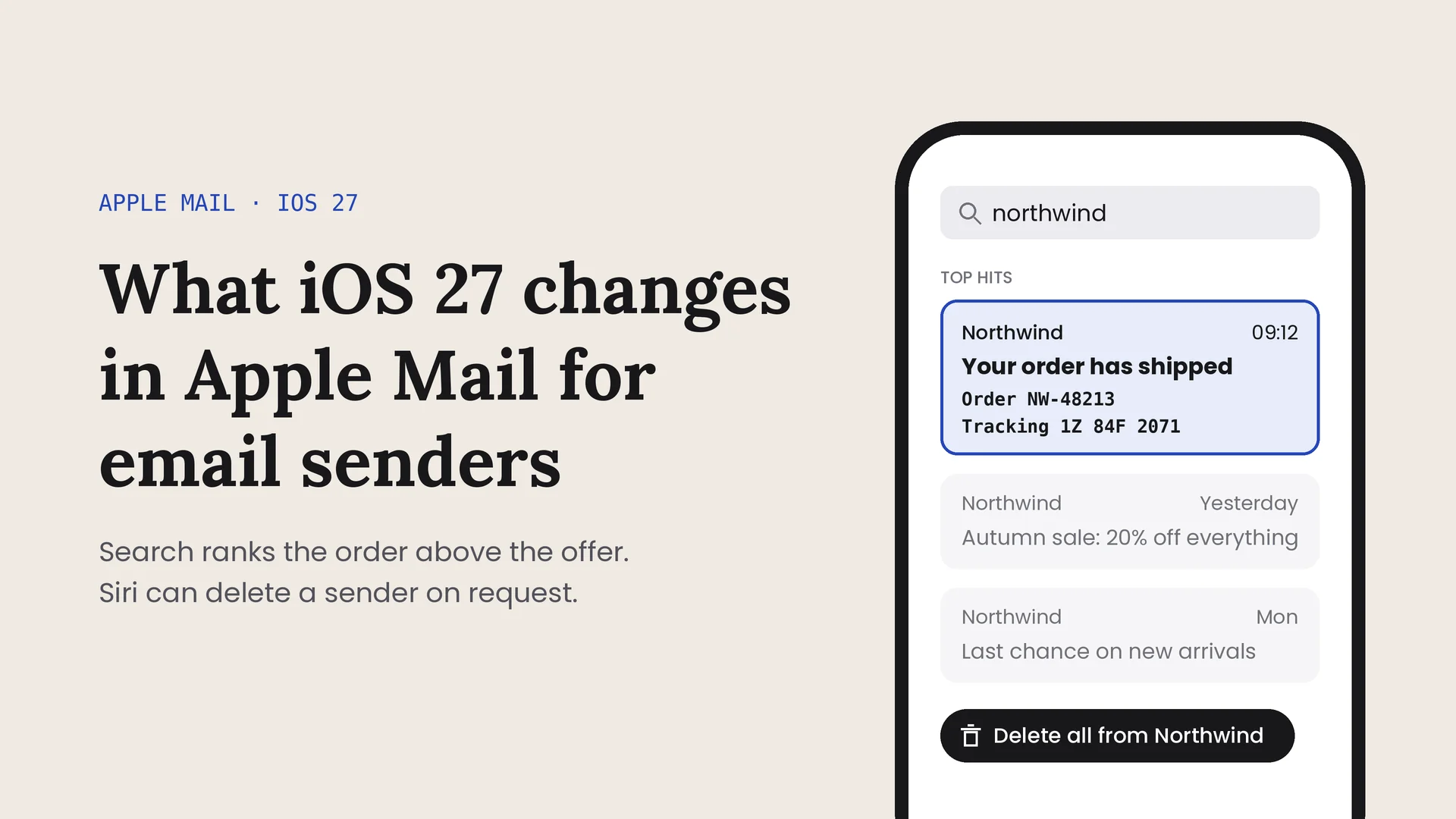
According to reports from MacRumors, entering the name of a major retailer no longer swamps the search view with the brand’s latest daily discount codes or seasonal lookbooks. Instead, the algorithm intelligently prioritizes the most functionally important communication—such as the user’s latest order confirmation or active shipment notification—placing it at the very top of the results page. Promotional emails from the retailer still exist and remain accessible, but they are systematically queued behind the receipt. This upgrade functions universally across every iPhone model capable of running iOS 27, requiring no special hardware or processing power.
Siri AI and Conversational Inbox Management
The more disruptive half of the iOS 27 update relies on Siri AI. By long-pressing an email, users can now invoke advanced generative and analytical capabilities directly within the interface. Rather than navigating menus or opening separate applications, users can ask Siri to summarize lengthy email threads, extract tracking numbers, or execute sweeping clean-up commands.
Most notably, users can now command Siri to "delete every email from [named sender]" or unsubscribe and purge historical messages from a specific brand. Early observations from beta testers, highlighted by 9to5Mac, revealed that consumers eagerly used these natural language commands to clear out persistent marketing campaigns they deemed spam. For brands, the barrier to permanent deletion has been reduced to a single conversational sentence.
The Continuity of Existing Protocols
Despite these major front-end shifts, the underlying plumbing of Apple’s ecosystem remains largely consistent. Features introduced in previous cycles—including Mail Privacy Protection (MPP), automatic categorization, system-level summaries, and Branded Mail—continue to function as before. Apple’s tracking pixels remain obscured, meaning open rates continue to serve as unreliable, noisy metrics for marketers attempting to gauge campaign success.
Chronology: The Road to iOS 27
The arrival of iOS 27 is the culmination of a multi-year strategy by Apple to inject machine learning and privacy-centric features into its software suite, punctuated by regulatory pressures and gradual beta testing cycles.
- June 2026 (Worldwide Developers Conference): Apple officially previews iOS 27, highlighting advanced artificial intelligence features integrated across the operating system. However, a shadow is cast over the rollout as Apple announces that due to the European Union’s Digital Markets Act (DMA), Siri AI features will be delayed indefinitely on iPhones and iPads within the EU.
- July 2026: Apple rolls out early developer and public betas of iOS 27. Tech publications like 9to5Mac begin testing the new Mail features, noting how effectively beta participants can use Siri AI to execute bulk-deletion commands against commercial mailing lists.
- September 1, 2026: Technical documentation is updated across Apple’s developer and business portals, outlining new requirements for live text order tracking and Branded Mail registration.
- September 14, 2026: Apple officially releases iOS 27 to the public. Concurrently, reports emerge detailing a waitlist system for certain Siri AI functionalities, alongside ongoing confirmation of the EU exclusion zone.
- September 15, 2026: Industry analysts and email marketing associations begin publishing initial advisories warning brands about the impact of intent-based search and frictionless unsubscribes.
Supporting Data, Reach, and Limitations
While the consumer-facing narrative surrounding iOS 27 suggests a complete reinvention of the inbox, a closer examination of deployment constraints reveals that its immediate impact is bounded by technical and geographic limitations.
Hardware and Regional Fragmentation
Not all iOS 27 users will experience the full force of Siri AI’s inbox-clearing capabilities. Reach is strictly limited by the following parameters:
- Hardware Requirements: Siri AI features demand advanced on-device processing power, restricting them to the iPhone 15 Pro, iPhone 15 Pro Max, and subsequent hardware iterations. Older devices receive the intent-based search updates but miss out on conversational management.
- Language and Regional Gates: The feature is currently restricted to English-language users.
- The European Union Exclusion: Due to ongoing compliance evaluations surrounding the Digital Markets Act (DMA), Siri AI is entirely unavailable on iPhones and iPads within the EU. Apple has not yet provided a timeline for when—or if—these features will clear regulatory hurdles in the bloc. Conversely, UK users receive full access.
- Adoption Friction: Siri AI is an opt-in beta feature, and depending on server loads and device registration, some users have encountered a system-wide waitlist to activate the capability.
Metric Impact and Engagement Realities
For data analysts, iOS 27 solidifies trends that have been developing since the introduction of Mail Privacy Protection. Because open rates remain statistically compromised by Apple’s proxy servers, marketers must rely entirely on downstream metrics—such as click-through rates, conversion attribution, and direct transactional engagement. With intent-based search pushing transactional emails to the fore, brands that successfully blend utility with their messaging will see higher visibility, while pure-play promotional newsletters risk getting lost in the secondary queue.
Official Responses and Industry Guidance
Apple has not released dedicated public statements addressing marketing strategies, but the company’s enterprise and business support documentation provides clear directives on how developers and merchants should structure their communications to remain compatible with iOS 27’s architecture.
Apple’s Official Directives for Brands
To ensure that transactional emails are correctly prioritized by the new intent-based search engine and rendered effectively within the interface, Apple urges businesses to adhere to specific technical standards:
- Live Text Integration: Brands must format order and tracking numbers using Apple’s specified live text guidelines. This ensures that the operating system can automatically recognize, extract, and surface tracking information without requiring the user to manually hunt through the message body.
- Branded Mail Registration: Companies are strongly encouraged to register their sending domains through Apple’s official Branded Mail portal. Proper domain authentication and branding ensure that receipts and notifications display authorized logos and verified sender information, building immediate trust in the newly organized search queue.
- Receipt Hygiene: Apple’s documentation emphasizes that receipts should look and function like traditional receipts. Blurring the lines between a transactional purchase confirmation and a promotional catalog can cause the algorithm to miscategorize the message, potentially relegating vital customer service data behind promotional filters.
- The Schema.org Question: Notably, Apple has published no official guidance regarding the adoption of schema.org markup for Mail within iOS 27. While schema markup remains critical for optimizing emails within Google’s Gmail ecosystem, Apple’s proprietary system relies on its own internal heuristics and direct developer frameworks. Marketers are advised to maintain schema markup for non-Apple clients but should not rely on it as a primary lever for iOS optimization.
Implications: Navigating the Post-iOS 27 Email Ecosystem
The release of iOS 27 marks a definitive maturation in how mobile operating systems handle digital communication. For consumers, the update is a welcome relief from inbox fatigue, offering a smarter, faster, and more controllable email environment. For the email marketing industry, however, it requires a strategic pivot.
1. The Death of the Blended Email Strategy
For years, many retailers utilized a "hybrid" email approach, sneaking promotional banners, cross-sell recommendations, and discount codes into the body of transactional order confirmations and shipping updates. In the era of iOS 27, this practice is fraught with risk. Because intent-based search prioritizes transactional utility, and because users can effortlessly purge senders whose transactional emails fail to meet expectations, blending heavy marketing into receipts invites swift consumer backlash. Brands must keep transactional emails strictly transactional, clean, and functionally focused.
2. The Rising Cost of Poor Targeting
With Siri AI allowing users to wipe out an entire sender’s mailing history with a single spoken command, the margin for error in promotional marketing has evaporated. Irrelevant, high-frequency, or poorly targeted email blasts no longer simply sit unread in an inbox—they serve as triggers for total removal from the ecosystem. Marketers must invest heavily in preference centers, hyper-segmentation, and rigorous list hygiene to ensure their campaigns provide undeniable value.
3. The Value of Branded Trust
As search results prioritize intent, the visual and programmatic markers of authenticity—such as verified sending domains and properly formatted Branded Mail—become paramount. Consumers searching for a retailer will look immediately at the top-ranked receipt. Brands that fail to adopt Apple’s recommended infrastructure risk looking unverified or suspicious in an environment that increasingly rewards clarity and provenance.
Summary
iOS 27 does not spell the end of email marketing, but it accelerates a long-overdue Darwinian selection process. Brands that respect the boundaries between transactional necessity and promotional outreach, leverage Apple’s technical standards, and respect the user’s desire for an organized inbox will thrive. Those that persist in treating the inbox as an unyielding megaphone will find themselves silenced—one simple Siri command at a time.