By [Author Name]
Published: October 2024
Main Facts
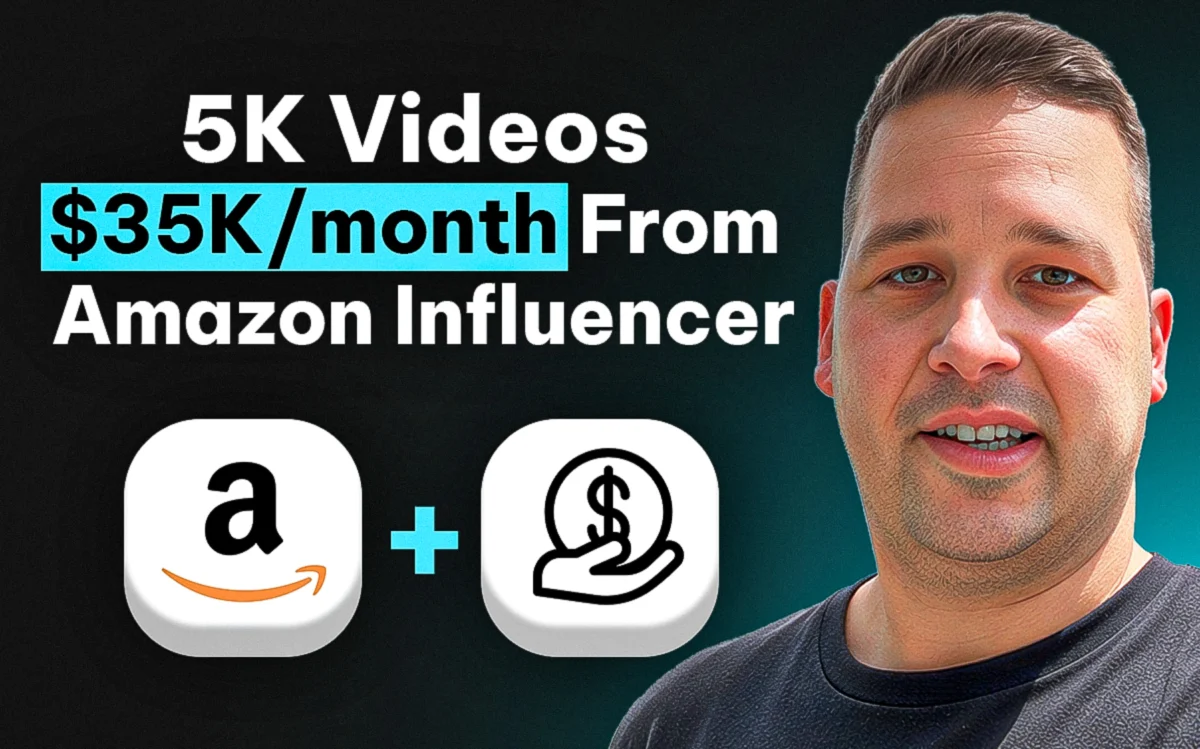
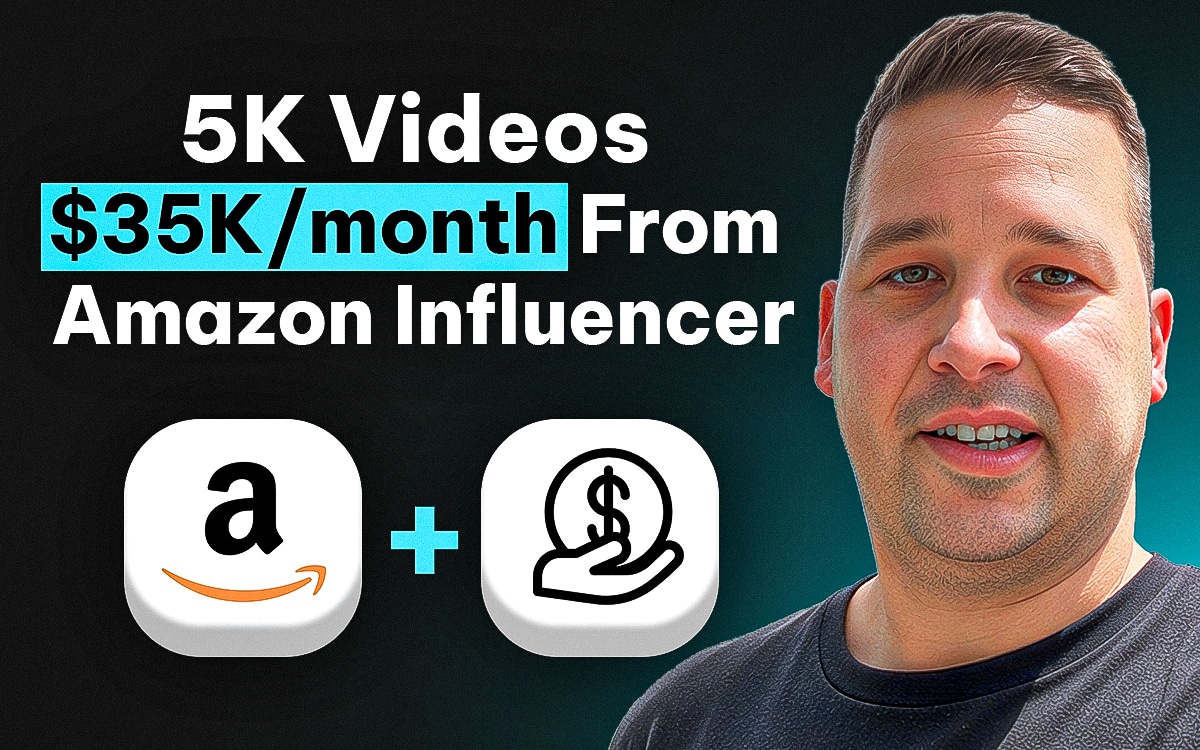
In the e-commerce space, few side hustles have seen the meteoric rise and subsequent professionalization of the Amazon Influencer Program. In a recent episode of the Niche Pursuits Podcast, host and guest dissected a masterclass in modern digital entrepreneurship: how Amazon influencer John Muscarello built a powerhouse operation generating between $25,000 and $30,000 per month.
Muscarello’s journey is defined by a massive scale-up followed by a strategic pivot. Today, his portfolio boasts nearly 5,000 product review videos hosted on Amazon and syndicated to YouTube. However, his current success does not stem from blind volume. Instead, it is anchored in advanced data-driven product research, a heavy reliance on Amazon’s "Creator Connections" tool—which accounts for roughly 80% of his income—and an operational workflow that treats video creation less like a creative hobby and more like a high-performance logistics pipeline.
By purchasing 70 to 100 products out-of-pocket every month and leveraging sophisticated tracking dashboards built with AI, Muscarello has transformed a simple commission-based side hustle into a sustainable, six-figure enterprise.
Chronology: The Road to E-Commerce Mastery
Muscarello’s path to generating tens of thousands of dollars a month on Amazon was far from linear. It required navigating years of trial and error across multiple online business models before finding his footing.
Early Hustles and the Furniture-Flipping Days (2017–2018)
Long before he recorded his first product review, Muscarello made a definitive psychological choice: he no longer wanted an employer dictating his earning potential. Around 2017 or 2018, he dove into the world of side hustles. His earliest venture was flipping furniture sourced locally on Facebook Marketplace, an endeavor that netted him roughly $20,000 in his first year. While profitable, the physical labor of picking up, restoring, and reselling bulky items proved difficult to scale sustainably.
Navigating the Complexities of Amazon FBA
Seeking a more scalable model, Muscarello transitioned into Amazon FBA (Fulfillment by Amazon) and online arbitrage. His entry into traditional e-commerce, however, was plagued by unfortunate timing. He signed the lease on a warehouse space on the exact day that COVID-19 disrupted global supply chains. Compounding matters, Amazon temporarily deprioritized non-essential items in its fulfillment centers, forcing Muscarello to drastically rethink his sourcing and fulfillment strategies.
Although online arbitrage offered a temporary foothold, he grew increasingly concerned about the long-term risks, account health suspensions, and margin compression inherent in the model.
The Turning Point: Discovering the Amazon Influencer Program
The pivot that changed his career trajectory occurred when Muscarello observed a peer generating approximately $10,000 per month simply by reviewing products through the Amazon Influencer Program. Intrigued by the low overhead compared to traditional retail arbitrage, Muscarello decided to test the waters with a strict, disciplined mindset.
Instead of dabbling, he made a binding personal commitment: he would publish 500 videos before judging whether the program was genuinely viable. His very first commission check was a humbling $27 cents. Yet, earning that micro-amount across his first 10 videos proved the fundamental concept worked. As his video library scaled past the hundreds, his monthly earnings steadily climbed through milestones of $500, $1,000, $1,500, and $3,000. By 2024, the writing was on the wall; he phased out online arbitrage entirely to dedicate his full operational focus to the Amazon Influencer Program.
Supporting Data & Economic Strategy
Muscarello’s current business model operates on cold, hard data. While his early phase required reviewing anything within arm’s reach—items in his house, his parents’ home, friends’ properties, and even Airbnbs—his current strategy is surgical.
The Power of Creator Connections
The cornerstone of Muscarello’s financial success is Amazon’s Creator Connections, which yields roughly 80% of his total revenue. Standard Amazon affiliate commissions typically range from 1% to 3% depending on the product category. In contrast, Creator Connections campaigns frequently offer commissions of 10% or higher.
To make this model work, Muscarello relies on a precise mathematical equation: based on his historical metrics, he generally needs between six and 10 sales of a specific product to fully recoup the out-of-pocket cost of purchasing it.
Advanced Product Research and Analytics
Rather than guessing what will sell, Muscarello utilizes a suite of professional tools to vet products before spending a dime:
- Viral Vue: Used to scan Amazon search results specifically for lucrative Creator Connections opportunities.
- Oink: Provides deep analytics and messaging functionality.
- Keepa: Leveraged for historical pricing and sales rank data—skills carried over from his days as an Amazon FBA seller. By examining data spanning hundreds of days, Muscarello can identify products with true staying power rather than short-lived seasonal fads.
Furthermore, he utilizes browser extensions directly on Amazon’s main interface to bundle campaign data, product imagery, sales history, and existing video competition into a single, streamlined research workflow.
Operational Workflow: Scaling to 150 Videos a Month
Maintaining a massive output of approximately 150 videos per month without burning out requires treating content creation like a manufacturing assembly line.
The AI-Assisted, Batch-Filming System
Muscarello separates his business operations into distinct phases: research, purchasing, scripting, and filming.
- Tracking via AI Dashboards: He developed a custom tracking dashboard using Claude to shepherd products through every phase of the pipeline.
- Lightweight Scripting: Before recording, he uses AI to distill raw Amazon product data into a concise, single-page outline. This prevents his videos from feeling overly scripted while ensuring he hits key product features.
- Batch Processing: A typical week involves bulk-purchasing 70 to 100 products a month, batch-filming reviews in dedicated sessions, and keeping post-production minimal. He avoids heavy editing, focusing instead on demonstrating real-world utility.
Identifying Competitive Gaps
Muscarello’s primary competitive advantage is his intimate knowledge of the competition. Having watched thousands of competing influencer videos, he can quickly spot flaws within the first 10 to 20 seconds. He actively hunts for videos where creators failed to demonstrate actual use—such as items still wrapped in factory plastic—or missed answering fundamental consumer questions. By addressing these unresolved buyer pain points, his unpolished, highly functional videos routinely outperform high-production-value competitors.
Official Responses and Industry Context
The e-commerce landscape is rarely static, and influencers must constantly adapt to platform policy shifts.
When Amazon rolled out sudden commission cuts in April, panic rippled through influencer forums and creator communities. Many feared the program was no longer lucrative. Muscarello, however, viewed the disruption through the lens of opportunity. By doubling down on Creator Connections and tightening his product selection criteria, he insulated his business from baseline commission fluctuations.
At the same time, creators face ongoing challenges regarding data transparency. Amazon has scaled back some of the granular reporting previously available to influencers—such as entering a specific ASIN (Amazon Standard Identification Number) into Creator Connections to view precise historical sales data. In response to this reduced visibility, Muscarello argues that front-end research has never been more critical. When back-end analytics are obscured, rigorous pre-purchase vetting acts as the ultimate safeguard for financial risk management.
Implications for Future Creators
Can newcomers still enter the Amazon Influencer Program and achieve financial freedom? Muscarello answers with a definitive yes, though with a major caveat: the "spray-and-pray" volume strategy of the past is no longer optimal.
If he were starting from scratch today, Muscarello advises aspiring creators to prioritize product research over video volume. By selecting high-demand items with favorable Creator Connections commissions and weak existing video competition, a new creator can produce significantly fewer videos while capturing a higher yield per upload.
Secondary Revenue Streams
While Amazon remains the primary engine of his wealth, Muscarello maintains strategic diversification:
- YouTube Syndication: Uploading his review library to a dedicated YouTube channel provides off-site visibility, catches brand partnership inquiries, and generates a modest $400 to $500 per month in higher-rate affiliate commissions.
- Brand Deals: Once eager to accept $5 or $10 sponsorships for experience, Muscarello is now highly selective. He routinely passes on low-value brand partnerships because the administrative overhead (emails, follow-ups, tracking) rarely justifies the microscopic commission potential unless paired with high-value product gifting, such as a $1,200 television.
- The Side Hustle Experiment Podcast: Alongside his e-commerce ventures, Muscarello co-hosts a podcast exploring digital side hustles. After interviewing over 100 businesses, he notes a recurring theme: shiny-object side hustles often hide grueling tradeoffs. Just as in furniture flipping or Amazon reselling, long-term success on Amazon relies entirely on mastering the underlying economics.
Final Thoughts
John Muscarello’s evolution—from a furniture flipper navigating pandemic-era supply chains to an analytical content producer generating $30,000 monthly—underscores a broader maturation of the creator economy. The era of casual product reviews is giving way to systematic e-commerce optimization. For creators willing to master the data, respect the math of Creator Connections, and focus relentlessly on consumer utility, the Amazon Influencer Program remains a remarkably viable path to financial independence.