In the high-octane world of Software-as-a-Service (SaaS), the prevailing narrative often centers on the "blitzscale" model: raise venture capital, burn through cash to acquire users, and aim for a billion-dollar exit. However, the true anatomy of a durable, profitable software business often looks quite different.
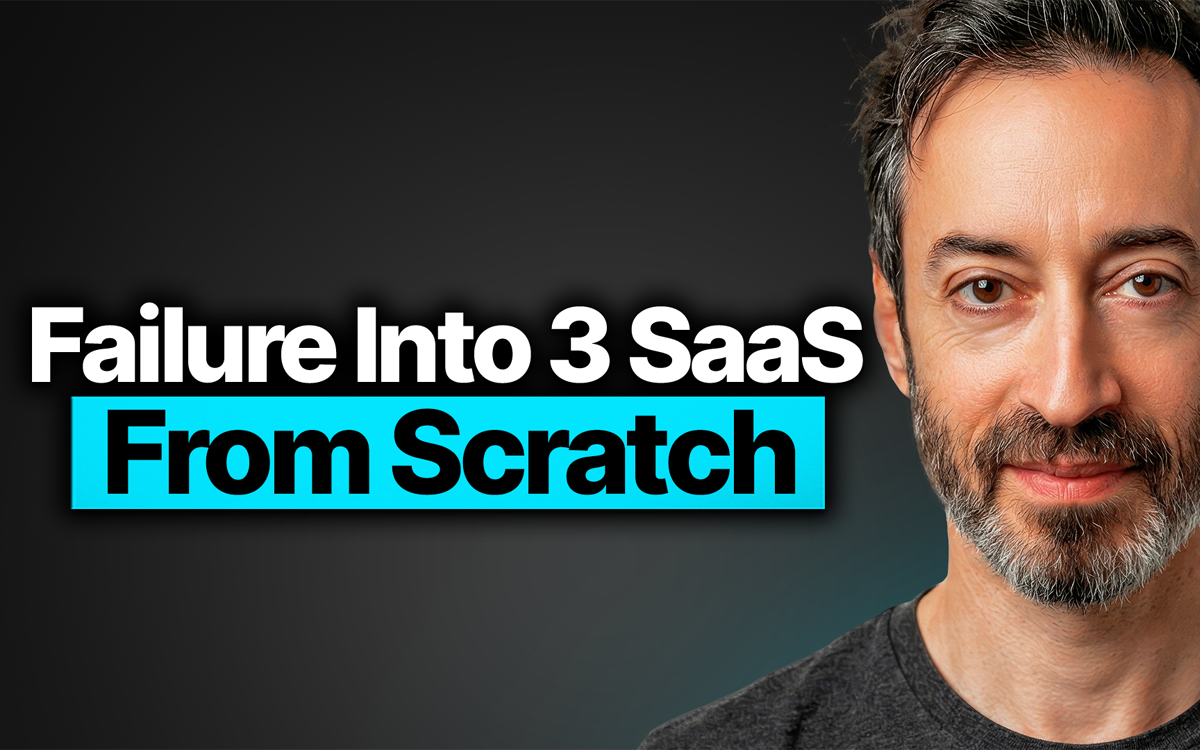
In this week’s episode of the Niche Pursuits podcast, entrepreneur François Mommens joins the show to unpack a more grounded, sustainable reality. Over the past 13 years, Mommens has navigated the volatile landscape of the SEO software market, evolving from a solitary developer behind a single backlink-tracking tool into the architect of a diversified portfolio of three distinct SaaS products: Linkody, IndexChecker, and LinkStorm. His story serves as a masterclass in organic growth, the power of patience, and the art of maintaining work-life balance while managing multiple revenue streams.
A Chronology of Persistence: The Founder’s Journey
Mommens’ path to becoming a multi-SaaS founder was not linear. Like many successful entrepreneurs, his current standing was built upon the foundation of an early, unsuccessful venture. This initial failure acted as a necessary education, teaching him the difference between building something that works and building something that people are willing to pay for.
Thirteen years ago, Mommens launched Linkody, a backlink-tracking solution. At the time, it was little more than a crude Minimum Viable Product (MVP) developed during evenings and weekends while he maintained a full-time job.
"The early product was far from polished," Mommens admits. Yet, the moment he saw strangers—people outside his immediate professional circle—willing to pay for his weekend project, he knew he had found product-market fit. He transitioned to full-time founder status, though he notes that growth was neither explosive nor overnight. It was steady, calculated, and deliberate.
By 2020, Linkody reached a maturity plateau. Faced with a saturated market featuring 40 to 50 aggressive competitors—including industry titans like Ahrefs and Semrush—Mommens realized he had to innovate. This led to a strategic pivot: diversifying his offerings. He launched IndexChecker, a tool designed to verify if backlinks are indexed by Google, and later LinkStorm, a comprehensive solution for managing internal site links.
Organic Growth as the Engine of Success
One of the most striking aspects of Mommens’ business model is his reliance on organic traffic. He reports that 100% of his customer acquisition comes from SEO and organic search. This is not a matter of luck, but of long-term commitment.
From the inception of Linkody, Mommens treated his own website as a product. He invested heavily in the foundational pillars of SEO: site structure, content, internal linking, and white-hat backlink building. While he did experiment with paid acquisition channels like Google and Facebook ads, he found the math simply did not yield a positive return on investment.
By focusing on the "boring" basics of SEO, Mommens managed to insulate his business from the volatility of ad-spend fluctuations. He argues that for many SaaS founders, the rush to pay for traffic is a distraction that masks an underlying failure to solve a core user problem.
The Evolution of Pricing Strategy
Pricing is perhaps the most misunderstood variable in the SaaS equation. Mommens’ approach evolved from "dirt cheap" to a mature, tiered model that reflects the value his tools provide to power users.
His biggest lesson in pricing came from an audacious experiment: he doubled his prices across all plans overnight. He expected a significant churn rate, but to his surprise, conversions remained largely unaffected. This realization fundamentally changed his perspective. Today, Linkody’s entry-level plan begins at $15 per month, while high-volume users who monitor thousands of links pay hundreds of dollars monthly.
This experience highlights a "fake truth" often peddled in founder circles: the idea that pricing is a static barrier. Mommens discovered that as his product’s utility grew, so did the customer’s price elasticity.
From Features to Standalone Businesses
A unique aspect of Mommens’ portfolio is how his products were born from the friction points of his existing tools.
IndexChecker originated as a secondary feature inside Linkody. Mommens realized that a backlink on a page that isn’t indexed by Google holds significantly less value. When he spun this feature into a standalone, free-to-use tool, it attracted massive traffic. However, he encountered a "traffic mismatch"—the visitors wanted a quick check, not a comprehensive subscription. By pivoting the free tool into a low-cost, paid standalone product, he successfully captured that niche demand without diluting the value proposition of Linkody.
LinkStorm, his latest venture, emerged from his own frustrations with content operations. He realized that internal linking—the process of connecting new content to old content—is a universal pain point for publishers. Unlike his earlier solo efforts, LinkStorm represents a shift in his operational style: he brought on a co-founder, Shyam Verma, a former employee whose ownership of the project made him a natural partner.
The Operational Reality: Managing Three SaaS Tools
Mommens is quick to push back against the "easy exit" fantasy of SaaS. He emphasizes that the work does not get easier after launch; it merely changes in nature. As a founder managing multiple products, he faces "decision fatigue" and "implementation fatigue"—the dual burden of deciding what to build and then doing the actual technical heavy lifting.
To manage three businesses without burning out, Mommens relies on:
- Rigorous Prioritization: Using tools like Workflowy to maintain a bird’s-eye view of all three products.
- Geographic Synergy: His team is based in India, providing him with a four-hour time zone overlap that allows for efficient handoffs.
- Work-Life Boundaries: Perhaps most importantly, Mommens refuses to sacrifice his personal life for the "hustle culture" myth. He works standard hours, acknowledging that the odds of a massive, life-changing exit are slim, and thus, sacrificing years of one’s life for a marginal increase in revenue is a bad trade.
Challenging the "Fake Truths" of Entrepreneurship
Throughout the podcast, Mommens repeatedly calls out "fake truths"—the conventional wisdom that often leads founders astray.
- The Myth of Clean Execution: Many believe hard work alone guarantees success. Mommens argues that luck and market timing remain the primary variables.
- The MVP Obsession: He warns against the rush to launch a "minimal" product. Without a distribution channel, an MVP is just a silent project in a noisy forest. If you can’t get the product in front of the right eyes, you can’t tell the difference between a bad idea and a good one.
- The AI Disruption: While he acknowledges that AI-driven search (like Google’s SGE) may change how users discover brands, he remains bullish on the core principles of SEO. He notes that AI has been a force multiplier for his own productivity, assisting with everything from documentation and coding to customer support.
Implications for the Future of SaaS
The trajectory of François Mommens’ career suggests a shift in the SaaS industry. As markets become increasingly crowded, the era of the "all-in-one" platform may be reaching its limit. Instead, there is a growing space for specialized, highly targeted tools that solve specific, acute problems for niche audiences.
For aspiring founders, the takeaway is clear: durability is not found in explosive growth or viral marketing, but in the slow, consistent accumulation of value. By staying close to the customer, resisting the siren call of paid ads, and maintaining a healthy perspective on the role of work in one’s life, Mommens has built something that many "unicorn" founders never achieve: a business that is both profitable and sustainable.
As the SEO landscape continues to shift under the influence of artificial intelligence, Mommens remains a beacon for the "indie hacker" philosophy—proving that you don’t need a massive team or a venture capital infusion to build a meaningful, enduring presence in the digital economy. Whether it is through optimizing internal links or verifying indexation, the future of SaaS belongs to those who solve real problems, one link at a time.