By [Your Name/Editorial Team]
Published in Tech & Entrepreneurship Insights
Main Facts: The Evolution of Tech Lockdown
In the fast-paced world of software-as-a-service (SaaS), founders often spend months crafting elaborate pitch decks, raising venture capital, and building complex products before validating market demand. Ben Bozzay took the exact opposite approach.
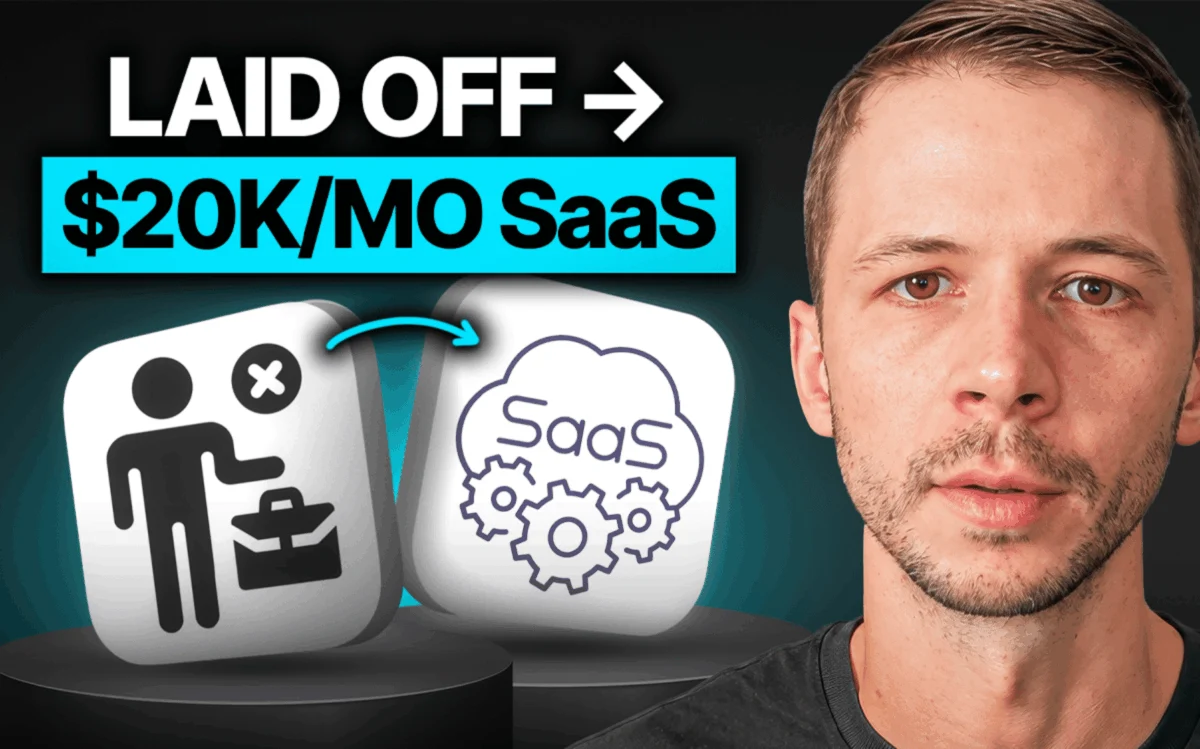
As featured in a recent episode of the Niche Pursuits podcast, Bozzay transformed a personal quest for digital discipline into Tech Lockdown, a thriving SaaS business currently generating $20,000 in Monthly Recurring Revenue (MRR). Operating primarily as a solo founder with the help of contract support, Bozzay has scaled the platform by applying enterprise-grade cybersecurity concepts to personal device management.
What began in 2020 as a collection of free blog posts on Medium has progressively evolved into a multi-tiered ecosystem consisting of high-value SEO-driven content, productized digital guides, DNS filtering software, and advanced mobile device management (MDM) solutions. Today, the platform stands as a masterclass in organic growth, bootstrapping, and iterative product development.
Chronology: From Lockdown Habit to Software Empire
1. The 2020 Origin Story
When the COVID-19 pandemic forced global lockdowns in March 2020, software engineer and marketer Ben Bozzay faced a challenge familiar to millions of remote workers: an inability to disconnect from the internet. Recognizing that his own digital habits were deteriorating, Bozzay set out to establish rigorous guardrails for his devices.
However, as a technical professional with a background in cybersecurity and engineering, standard consumer apps and basic website blockers proved useless. He knew how to bypass them. Instead of giving up, Bozzay began implementing enterprise-level network controls—the kind typically deployed by corporate IT departments to manage employee hardware—onto his personal machines.
2. Documenting the Experiment
Bozzay began sharing his work publicly through Medium posts, Reddit threads, and YouTube videos. He wasn’t attempting to build a business; he was simply documenting his journey toward a healthier digital workspace.
The response was immediate and overwhelming. Readers began flooding the comments and inbox with inquiries, desperate for help implementing similar controls. Bozzay quickly realized he had stumbled upon a unique gap in the market: everyday consumers lacked technical guides robust enough to stop determined users from bypassing restrictions.
3. Monetization Through Content (2021)
By 2021, Bozzay migrated his content to his own domain, Tech Lockdown. Armed with a deep understanding of search engine optimization (SEO) from his days running a marketing agency, he began capturing high-intent organic traffic.
Capitalizing on this momentum, he introduced his first paid tier: a gated membership offering comprehensive setup guides. Rather than selling software, he was selling productized consulting. Customers willingly paid for organized, step-by-step documentation that saved them hours of frustrating research.
4. The Transition to SaaS (2022)
While the paid content generated healthy initial revenue, Bozzay hit a natural ceiling. Once customers successfully configured their devices using his guides, their subscription needs dropped off.
Recognizing the necessity for recurring value, Bozzay introduced a DNS filtering product in 2022. This crucial pivot transformed Tech Lockdown from an informational blog into a hybrid SaaS platform, binding continuous software utility directly to his educational ecosystem.
5. The 2023 Layoff and Full-Time Leap
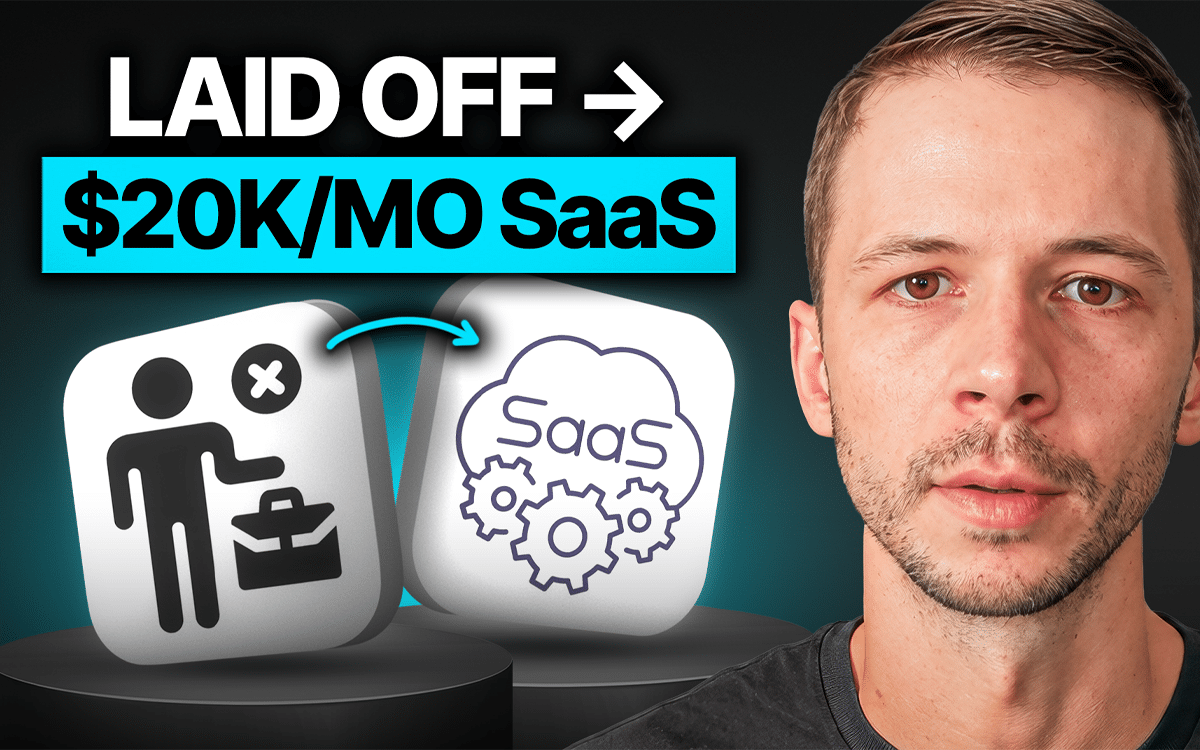
In 2023, corporate overhiring caught up to Bozzay’s day job, resulting in a sudden layoff. At that critical juncture, Tech Lockdown was generating fewer than 2,000 dollars a month in profit and supporting roughly 300 customers—barely enough to cover healthcare costs.
Faced with a lucrative corporate job offer that represented the safe financial choice, Bozzay chose to bet on himself. Encouraged by his wife, he committed to Tech Lockdown full-time, enduring months of stagnant revenue and intense workloads before the business finally gained compounding momentum.
Supporting Data and Business Metrics
Bozzay’s journey is underlined by impressive performance metrics across traffic, conversion, and product expansion:
- Revenue Milestone: Tech Lockdown recently crossed $20,000 in MRR, achieved entirely as a bootstrapped, solo-founded enterprise.
- Organic Reach: At its peak performance periods, the site has attracted roughly 70,000 organic visitors per month, proving the resilience of deep, highly specialized technical content against shifting search algorithms.
- Team Structure: Despite scaling to a five-figure monthly revenue run-rate, Bozzay maintains a lean operational footprint, relying solely on specialized contractors for customer support and leveraging AI tooling to multiply his output.
- Product Ecosystem: In addition to Tech Lockdown, Bozzay has introduced LivingRoom, a secondary app designed to increase screen activity visibility using AI content detection, catering to parents and accountability partners.
Strategic Deep Dive: How Tech Lockdown Won
Narrowing the Target Audience
Many digital wellness tools target parents managing children’s screen time. Bozzay deliberately targeted a more challenging demographic: adults attempting to restrict themselves.
While a parent can confiscate a child’s phone, an adult possesses full administrative privileges, root access, and the technical savvy to undo restrictions. By focusing on professionals, students, and adults struggling with compulsive digital habits, Bozzay carved out a distinct, highly motivated niche that traditional parental control software failed to serve.
The Power of High-Intent SEO
Rather than spreading himself thin across every social media platform, Bozzay doubled down on long-form, highly technical SEO. He deliberately targeted hyper-specific queries—such as preventing a Windows user from terminating a blocking application via Task Manager.
Even when traditional keyword research tools reported negligible search volume for these specific queries, Bozzay created the content anyway. This strategy allowed him to capture high-intent traffic that generic review sites completely ignored, building an interconnected content tree that signaled deep topical authority to search engines.
Implications for the SaaS and Indie Hacker Community
Bozzay’s journey offers several vital lessons for modern entrepreneurs, digital marketers, and software developers:
- Start with Documentation, Not Code: You do not need a fully realized product to start a business. Documenting a solution to a painful personal problem can validate market demand before writing a single line of application code.
- Value Generosity in Marketing: Giving away high-value information for free establishes unshakeable trust. Customers willingly pay for premium resources or software when they have already experienced tangible benefits from free content.
- Embrace Iterative Evolution: A successful SaaS business rarely emerges fully formed. By moving gradually from free content to paid guides, and finally to DNS filtering and MDM software, Bozzay allowed customer demand to dictate his product roadmap.
- Resilience Through Stagnation: Overnight success stories are a myth. The months following Bozzay’s transition to full-time entrepreneurship were characterized by flat growth and financial pressure. Long-term survival required patience, iterative product improvements, and unwavering family support.
Future Outlook
As Tech Lockdown moves into its next phase of growth, Bozzay is tackling one of the industry’s most persistent technical hurdles: developing a mobile device management (MDM) solution for iPhones that does not require a factory reset. Overcoming this friction point could dramatically lower acquisition barriers and accelerate subscriber growth.
Simultaneously, the continued scaling of his secondary project, LivingRoom, positions Bozzay to capture adjacent market share in digital accountability and family safety. For indie hackers and bootstrap founders watching from the sidelines, Tech Lockdown stands as an enduring testament to the power of deep focus, technical authority, and solving real-world problems one step at a time.