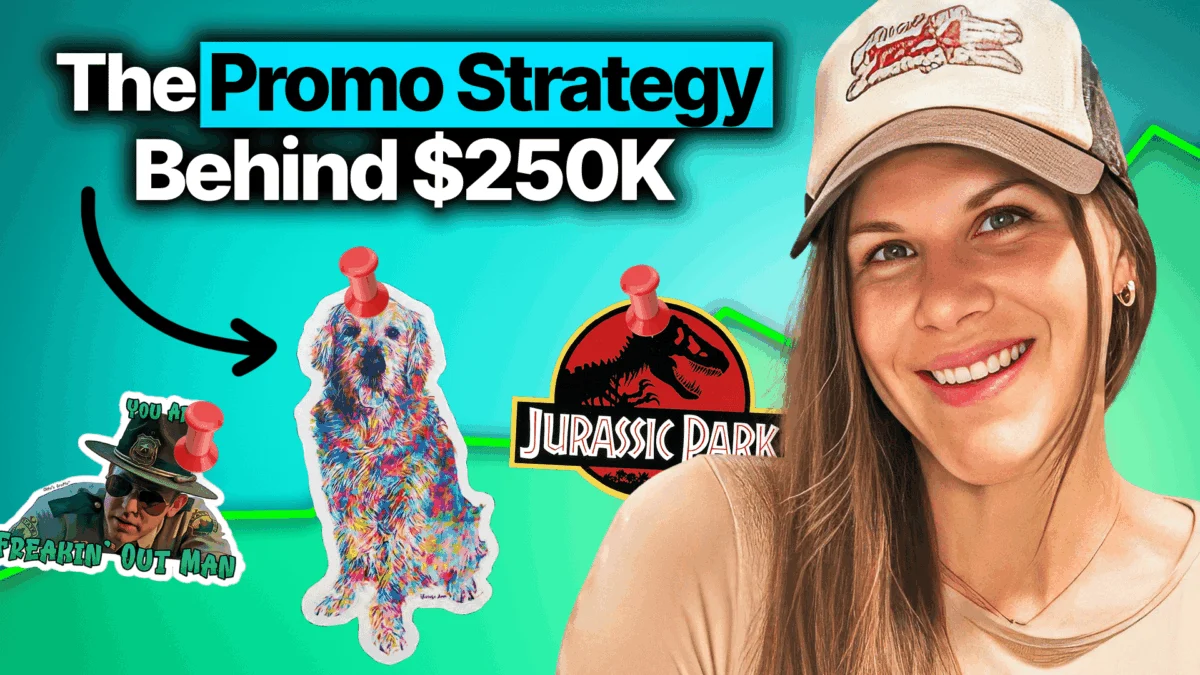
In the digital age, the barrier to entry for e-commerce is lower than ever, yet the path to sustainable, six-figure revenue remains notoriously difficult to navigate. For many, the dream of passive income is often derailed by platform volatility, rising advertising costs, and the grueling logistics of fulfillment. However, Therese Waechter, the entrepreneur behind the flourishing sticker brand Otto’s Grotto, has successfully charted a course through these challenges. In a recent episode of the Niche Pursuits Podcast, Waechter revealed how she transformed a modest side project into a $250,000-per-year powerhouse, providing a masterclass in platform diversification and operational agility.
The Chronology of an Accidental Empire
Waechter’s journey into the world of e-commerce was not marked by a grand, multi-year business plan. Instead, it was defined by "accidental beginnings." Originally navigating the complex waters of Amazon FBA (Fulfillment by Amazon) and general merchandise flipping, Waechter found her niche almost by chance. A single, high-performing design—initially intended as a companion piece for custom t-shirts—began to generate significant interest. Recognizing the demand, she pivoted her focus toward the sticker market.
This initial success was not without its trials. Early in her career, Waechter suffered a catastrophic setback when her primary sales channel, Facebook, shut down her business account without warning. This "sink or swim" moment forced her to reconsider her reliance on a single platform. She redirected her energy toward building a presence on more stable, long-term sales channels like Etsy and Amazon. This pivot proved to be the foundational strategy that would eventually stabilize her income and allow for scalable growth.
Operational Evolution: Bringing Production In-House
Scaling a physical product business often brings a dilemma: outsource production and sacrifice margins, or keep it in-house and sacrifice time. Waechter opted for a hybrid evolution. In the early stages of Otto’s Grotto, she made the strategic decision to bring printing, laminating, and cutting operations in-house.
By managing the manufacturing process herself, Waechter gained granular control over quality and, more importantly, improved her profit margins. The learning curve was steep, requiring investment in professional-grade equipment and the development of efficient workflows. However, this level of vertical integration provided a competitive edge. Being able to fulfill orders rapidly and maintain a high standard of quality allowed her to expand into wholesale, a segment of the business that requires consistent, reliable output.
The Four-Pillar Platform Strategy
Today, Otto’s Grotto operates as a sophisticated four-platform machine. Waechter’s success is rooted in the realization that each platform serves a distinct psychological and commercial purpose for the customer.
- Etsy: Serving as the creative heart of the business, Etsy is where Waechter tests new designs and builds a direct connection with consumers. Its search algorithm favors unique, handmade aesthetic, making it the perfect incubator for her designs.
- Amazon: Acting as a high-volume conversion engine, Amazon caters to the customer looking for speed and reliability. Her strategy here revolves around meticulous keyword optimization to capture the "intent-driven" shopper.
- Faire: This is the engine of her wholesale growth. By leveraging Faire, Waechter connects with boutiques and retailers looking for curated products, effectively scaling her reach beyond individual consumers.
- Shopify: Her independent website serves as the ultimate destination for brand loyalty. By driving traffic here, she avoids the commission fees associated with third-party platforms, effectively increasing her net margin on every sale.
The Technical Pivot: Outsourcing and Automation
As Otto’s Grotto matured into a $250,000-per-year business, the manual labor of printing and cutting began to stifle further growth. To reach the next level of profitability, Waechter has recently begun transitioning to a "trade printer" model. By outsourcing production to vetted professional printers, she is effectively moving toward a semi-passive income model.
This shift allows her to focus on high-level strategic tasks—such as design, marketing, and brand expansion—rather than the day-to-day logistics of fulfillment. This is a crucial phase for any e-commerce entrepreneur: the transition from "operator" to "business owner."
The Role of Innovation: AI and "Vibe Coding"
Perhaps the most contemporary aspect of Waechter’s business is her embrace of Artificial Intelligence. In a recent Business Insider feature, Waechter gained recognition for her expertise in "vibe coding"—a colloquial term for using tools like ChatGPT to replicate complex website features and troubleshoot technical issues without the need for a traditional developer.

While she cautions that AI can lead to "side quests"—distractions that take focus away from core business goals—she notes that when used correctly, AI acts as a force multiplier. From generating marketing copy to streamlining administrative workflows, AI has allowed her to increase her creative output while simultaneously reducing her manual workload.
Strategic Implications for Aspiring Entrepreneurs
The success of Otto’s Grotto offers several key takeaways for those looking to replicate her success in the competitive landscape of online retail:
Platform-Specific Optimization
Success is rarely "one size fits all." Waechter emphasizes the need to understand the search intent on each platform. For Amazon, the focus must be on high-intent keywords and aggressive inventory management. For Etsy, the emphasis should be on visual storytelling and community engagement. For wholesale platforms like Faire, the focus shifts to professional presentation, bulk pricing, and high-quality photography.
The Power of Earned Media
Beyond paid ads, Waechter attributes much of her brand authority to "earned media." By leveraging PR platforms like Qwoted and participating in collective media outreach, she has built a backlink profile and brand reputation that money cannot easily buy. This long-term SEO strategy ensures that Otto’s Grotto remains visible, even when ad spend is throttled.
Operational Resilience
The most vital lesson from Waechter’s journey is the importance of platform diversification. Because she was forced to diversify after her abrupt exit from Facebook, her business became more resilient. By selling across four channels, she effectively insulated her revenue stream against the inevitable algorithm changes or account freezes that plague single-platform sellers.
Looking Forward: The Path to Scale
Therese Waechter’s journey is a testament to the idea that a simple product, when executed with precision and a willingness to adapt, can become a significant financial asset. The evolution from a sticker side-hustle to a multi-platform brand was not a straight line; it was a series of iterative improvements, from bringing production in-house to eventually outsourcing for scale.
For those watching Otto’s Grotto, the future seems clear: continued expansion into wholesale, a sharper focus on brand-direct sales via Shopify, and the integration of emerging technologies to maintain a competitive advantage. Waechter’s story serves as a roadmap for the modern entrepreneur, proving that in the digital economy, the most successful businesses are those that are built to be agile, diversified, and—above all—constantly learning.
Whether you are a novice looking to launch your first design or a veteran seller looking to optimize your logistics, the Otto’s Grotto model offers a clear, actionable framework: Start small, validate your product, own your operations, and then, only when the foundation is secure, automate and scale for the long term.