By Tech & Digital Commerce Desk
Published: August 2026
Main Facts
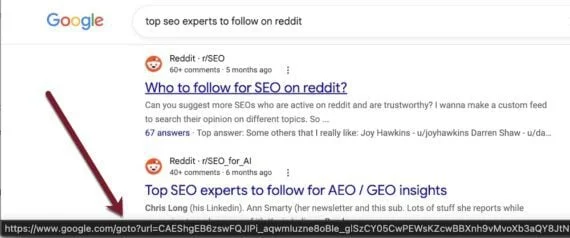
Google is aggressively escalating its ongoing war against automated web traffic, targeting the influx of bot-initiated search sessions, commercial rank-tracking tools, and generative artificial intelligence scraping agents. In its latest countermeasure, the search engine giant has begun rolling out a system of intermediate redirects—manifesting as google.com/goto links—in place of the traditional, direct organic URLs traditionally displayed on Search Engine Results Pages (SERPs).
Tested quietly since July, this structural change replaces direct destination URLs with Google-mediated redirect paths for logged-out users, a rollout slated for full deployment globally within a month. This architecture fundamentally alters how raw search engine data is harvested, read, and processed. By inserting an extra verification and click-tracking layer directly into the SERP interface, Google forces automated bots, third-party scrapers, and rank-monitoring systems to expend exponentially more computing resources to extract basic ranking data.
The move marks the latest chapter in a broader, aggressive campaign to protect server infrastructure and copyrighted index data from commercial exploiters. It directly impacts the digital marketing ecosystem, threatening the baseline accuracy of commercial rank trackers, skewing GenAI citation metrics, and introducing temporary volatility into Google Search Console reporting.
Chronology of Google’s Anti-Bot Measures
To understand the weight of the google.com/goto rollout, industry observers must view it as part of an escalating, multi-year technological arms race between Google’s anti-abuse engineering teams and the developers of automated search parsers.
- Late 2024 to Early 2025 (The Rise of GenAI Crawlers): As generative AI ecosystems exploded, consumer-facing conversational engines began querying Google in real-time to fetch up-to-date answers for human prompts. This resulted in an unprecedented surge in server load, prompting Google to rethink how open its public-facing SERPs should remain to programmatic requests.
- August 2025 (The Death of the 100-Result Parameter): In a major shot across the bow of rank-tracking infrastructure, Google deprecated the legacy
&num=100URL parameter. Historically, SEO platforms and enterprise trackers relied on this parameter to render 100 organic search results on a single HTML page, minimizing server requests. By forcing the SERP pagination back down to standard defaults, Google instantly forced trackers to crawl ten times as many pages, massively increasing operational costs for third-party tools. - July 2026 (The Quiet Testing Phase): Google initiates underground, widespread A/B testing of the
google.com/gotoURL architecture. During this period, sharp-eyed SEOs and tracking engineers notice that organic search listings are no longer exposing clean, direct destination links in the underlying HTML for unauthenticated sessions. - December 2025 (The Legal Front Opens): Shifting the battlefield from code to the courtroom, Google files a high-profile lawsuit in U.S. District Court against SerpAPI—a prominent scraping utility leveraged by conversational platforms like ChatGPT to programmatic fetch real-time SERP data. Google alleges violations of the Digital Millennium Copyright Act (DMCA) and unauthorized circumvention of access controls.
- July 2026 (Judicial Dismissal and Re-filing): The presiding federal judge initially dismisses Google’s lawsuit against SerpAPI. Undeterred, Google’s legal team files an amended complaint shortly thereafter, proving that the company is willing to pursue both technical and legal deterrents simultaneously.
- August 2026 (The
google.com/gotoDeployment): Following successful trials, Google confirms a broad deployment timeline. Within a single month, nearly all logged-out users globally will encountergoogle.com/gotolinks, fundamentally altering SERP scraping dynamics overnight.
Supporting Data and Technical Mechanics
The technical mechanics of the google.com/goto update are designed to break naive scraping scripts. In standard SERP layouts, an organic search result anchors an <a> tag whose href attribute directly points to the destination website’s URL (e.g., https://example.com/page). This clean separation allowed automated scripts to parse SERP HTML in milliseconds, mapping keywords to explicit ranking positions without executing JavaScript or simulating human interactions.

Under the new paradigm, the visible anchor text may still display a human-readable domain, but the underlying programmatic destination routes through a Google-owned redirect handler: https://www.google.com/goto?q=... or similar encrypted identifier parameters.
Impact on Infrastructure and Resources
- Rendering Overhead: Simple HTML scrapers can no longer harvest raw destination URLs purely by reading string patterns in the DOM. Extracting true landing pages now often requires executing headless browsers that can process JavaScript redirects and follow HTTP 302 response headers.
- Bandwidth Multiplication: Because each redirect must be individually requested, resolved, and logged by Google’s backend infrastructure, the cost of automated scraping scales exponentially. For every keyword checked across millions of target terms, tracking operations face higher latency and greater proxy block rates.
Industry Adaptations
Major players in the SEO software industry have scrambled to update their parsers.
- Ahrefs and Moz: Both enterprise platforms reported detecting Google’s early July tests and quickly implemented parser workarounds to follow the
/gotopathways automatically. - Semrush: Early August reports indicated that Semrush temporarily registered
google.com/gotostrings as literal ranking entities within their databases. However, by mid-August, those artifacts largely disappeared, indicating that Semrush engineering teams successfully deployed decryption algorithms to bypass or resolve the redirection layers. - The Laggards: Smaller, independent, or poorly resourced rank-tracking tools that failed to anticipate the change have reported erratic behavior, frequently registering phantom ranking drops or complete tracking failures.
Official Responses and Industry Reactions
The digital marketing and SEO community has responded to the rollout with a mixture of pragmatic resignation and strategic anxiety. Because Google does not typically issue formal press releases for user-experience or anti-scraping updates, the industry relies on reverse-engineering, developer forums, and executive statements.
Platforms caught in the crosshairs have emphasized their resilience. Representatives from major SEO suites have privately and publicly noted that while Google’s ongoing adjustments create short-term engineering headaches, cat-and-mouse dynamics are an inherent cost of doing business in the modern search landscape.
Conversely, the generative AI sector faces a more complex dilemma. Technical deep-dives shared across developer communities—such as documented findings by researchers tracking real-time API retrievals—reveal that GenAI platforms indexing Google are now frequently capturing and citing the google.com/goto string directly within their raw training or retrieval pipelines. This means that conversational engines, if not updated to unwrap these redirects, risk feeding intermediate Google tracking links back to end-users as primary source citations.
Legal experts monitoring the parallel litigation between Google and scraping utilities like SerpAPI view the goto rollout as the tactical implementation of what Google is arguing in court: that unauthenticated programmatic extraction of its index is an unauthorized and unwelcome breach of its system architecture.

Implications for SEOs, Trackers, and GenAI
As the tech world adjusts to a post-goto SERP environment, digital marketers, website owners, and data analysts must prepare for several structural shifts in how performance is measured and interpreted.
1. The Era of Fragmented and "Fuzzy" Data
Google’s persistent tightening of data access points signals a definitive end to the era of hyper-granular, frictionless search transparency. As the company erects more technological hurdles—from the elimination of the 100-result parameter to intermediate redirects and aggressive anti-scraping litigation—industry professionals must accept that third-party data will inherently become fuzzier. Expect historical volatility in tracking dashboards as tools continuously patch their data-collection pipelines.
2. Resilience of Google Search Console (GSC)
Crucially, official first-party reporting via Google Search Console’s "Performance" tab remains mechanically unaffected by the google.com/goto visual updates, as GSC relies on internal server-side logging of clicks and impressions rather than external SERP scraping. However, digital marketers must remain vigilant. If AI scraping bots and automated user-agents shift their behavior patterns in response to the new redirects, organic impression and click-through-rate (CTR) distributions within GSC may exhibit sudden, unexplained fluctuations. SEOs are advised not to panic over temporary data anomalies during the rollout window.
3. Complications in GenAI Citations
Generative AI tools that rely on real-time Google searches to formulate answers face an awkward transition. If these engines cite google.com/goto URLs instead of canonical publisher domains, content creators could see an invisible dip in direct referral traffic and third-party citation metrics. This forces AI developers to build dedicated link-unwrapping sub-routines into their retrieval-augmented generation (RAG) pipelines to ensure attribution flows accurately to original publishers.
4. A Permanent Cat-and-Mouse Reality
Ultimately, the deployment of google.com/goto underscores a permanent reality for the digital ecosystem: Google is determined to lock down its perimeter against automated commercial extraction. While established SEO software giants have the engineering muscle to adapt to these hurdles, smaller operators will find rank tracking increasingly expensive and fragile. Moving forward, digital strategists must diversify their analytics stack, relying less on single-source rank trackers and more on holistic, first-party conversion data to evaluate search engine performance.