The global open source ecosystem relies on more than just code; it thrives on community, knowledge transfer, and the continuous onboarding of fresh talent. While tech journalism often focuses on core software updates, Gutenberg developments, and version releases, a profound movement has been quietly unfolding in the background. Driven by dedicated community leaders, the WordPress educational landscape is experiencing a massive, international expansion.
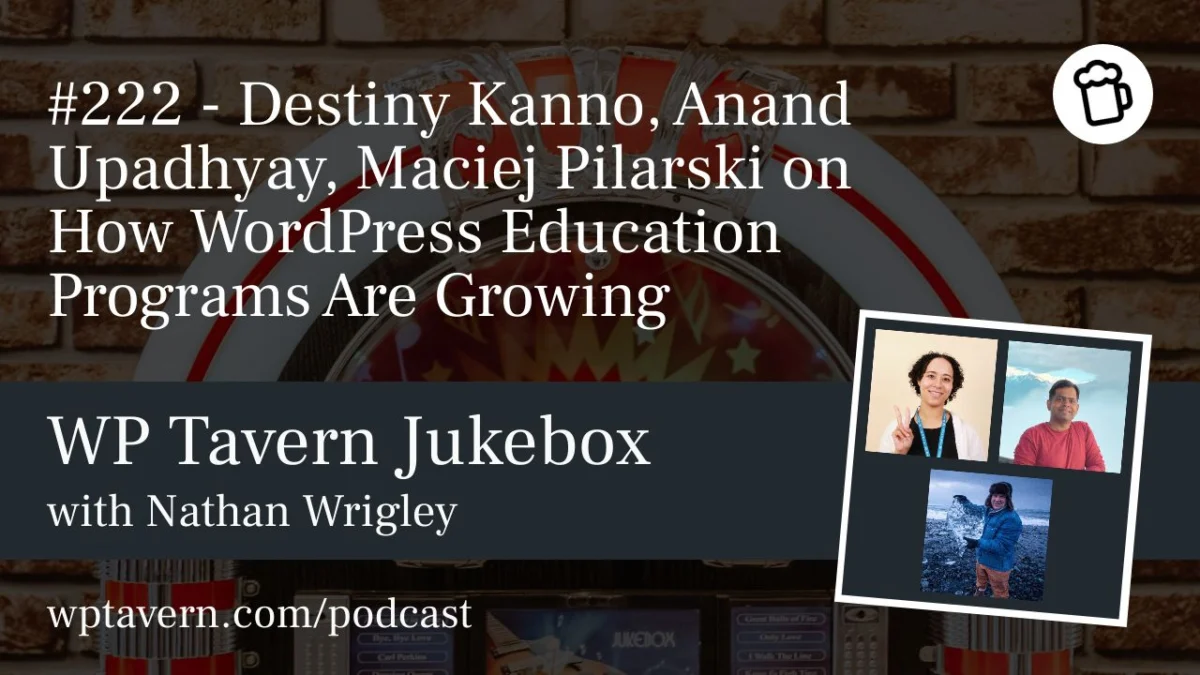
Recently, Nathan Wrigley of the WP Tavern Jukebox Podcast sat down with three key figures in the WordPress Education Initiative—Destiny Kanno, Anand Upadhyay, and Maciej Pilarski—to explore how global outreach programs are transforming universities, local libraries, and student networks. The discussion mapped out a multi-layered ecosystem designed to introduce learners of all ages to the world of open source, equipping them with practical digital skills and guiding the next generation of contributors.
Main Facts: The Pillars of WordPress Education
The current momentum in WordPress education is built upon three distinct yet interconnected pillars. Each initiative serves a unique demographic and educational purpose, ensuring that learners from elementary students to university undergraduates have a clear entry point into the WordPress project.
- The WordPress Credits Program: Directed primarily at higher education, this initiative acts as a formal academic bridge. Students earn university credits by dedicating 50 to 150 hours to open source contributions over a full academic semester. Participants are paired with vetted community mentors and conclude their coursework with a published project summary, receiving an official certificate signed by WordPress co-founder Matt Mullenweg.
- WordPress Campus Connect: Geared toward a wider audience, Campus Connect is an official event series designed to break down barriers to entry. Unlike formal university courses, these events can take place anywhere learning happens—from high schools and vocational institutions to local public libraries. They provide hands-on workshops focused not just on coding, but on design, marketing, and website creation.
- Student Clubs: Acting as the grassroots engine of the movement, Student Clubs foster peer-led, sustainable learning within schools. Inspired by traditional WordPress Meetups, these clubs are run by students, for students, allowing them to maintain momentum between larger institutional events, run workshops for their peers, and build leadership skills.
Chronology: From Regional Experiments to a Global Movement
The institutional expansion of WordPress education did not happen overnight; it is the result of years of testing, relationship-building, and localized grassroots efforts.
- 2014–2016: Early community touchpoints, such as volunteer experiences at WordCamp Europe, planted the seeds for long-term community engagement among future leaders like Maciej Pilarski.
- The Relaunch Era: Destiny Kanno began working on the Learn WordPress platform around its pivotal relaunch, laying the groundwork for structured educational materials that would later fuel global initiatives.
- 2024: Anand Upadhyay helped launch the WordPress Campus Connect program, establishing vital boots-on-the-ground relationships with universities and setting the stage for collaborative global scaling.
- September 2025: An initial exploratory podcast episode hosted by WP Tavern brought together educational leaders to untangle overlapping initiatives and map out the groundwork of the WordPress training space.
- May 2025: WordPress Campus Connect officially launched as an official WordPress event series, rapidly expanding its footprint.
- Late 2025 – Early 2026: The WordPress Credits Program expanded rapidly following early experiments (such as a pioneering humanities pilot at the University of Pisa). By early 2026, the program onboarded its 21st institutional partner—marking its first African partnership in Uganda through a connection forged at WordCamp Asia.
Supporting Data: Quantifying the Impact
While measuring the long-term cultural impact of education can be challenging, the quantitative growth of these programs over the past year highlights unprecedented momentum:
- Campus Connect Expansion: Since becoming an official event series in May 2025, Campus Connect has facilitated 42 completed events across 71 participating institutions, reaching over 5,500 students globally.
- High Institutional Engagement: The Credits Program currently boasts 450 students globally enrolled with 75 graduates who have successfully navigated the rigorous 50-to-150-hour contribution tracks.
- Rapid Ticket Demands: In regional success stories, such as an International Women’s Day event in Ajmer, India, targeted outreach to campus clubs resulted in 50% of total event tickets being snapped up by students within a single day, entirely disrupting pre-planned social media marketing campaigns due to overwhelming demand.
- Global Footprint: Institutional partnerships for the Credits Program have scaled from a single Italian university to 21 international institutions spanning Europe, Asia, and Africa.
Official Responses: Perspectives from Community Leaders
The success of these programs relies heavily on institutional champions and dedicated community organizers who bridge the gap between open-source philosophy and formal education.
- Destiny Kanno, Education Program Manager (Sponsored by Automattic):
Emphasizing the importance of breaking down barriers and providing structural support, Kanno noted how the initiative has evolved from localized tutorials into a wildfire movement. To combat facilitator burnout and scale effectively, Kanno is developing a Meetup Activity Library—complete with facilitation guides and presentation decks—to lower the hurdle for community members wanting to teach WordPress on local campuses. - Maciej Pilarski, WordPress Credit Program Administrator:
Reflecting on the psychological and professional value of the Credit Program, Pilarski highlighted its bridging effect between veteran contributors and newcomers. "This is building the next generation of contributors," Pilarski noted. "What brought us here might not move us forward. These new students will bring us a new, fresh perspective on how they would like the community to function and move into the future." - Anand Upadhyay, Plugin Developer and Community Organizer:
Focusing on the self-sustaining nature of Student Clubs, Upadhyay pointed out how peer-led education relieves pressure on local volunteer organizers while fostering real leadership. "The real impact of these programs will be seen in the next two or three years," Upadhyay stated, explaining how student-led cohorts naturally onboard incoming junior peers without needing external intervention for basic training.
Implications: Securing the Next Decade of Open Source
The aggressive scaling of educational programs carries significant implications for the future health of the WordPress project.
For over two decades, WordPress has relied on an aging demographic of tech professionals, agency owners, and long-time developers. Without a formalized pipeline to introduce young adults, high schoolers, and university students to the ecosystem, the project faces a long-term sustainability crisis. By embedding WordPress into higher-ed curricula and high school classrooms, leaders are securing a vital influx of fresh talent.
Furthermore, these initiatives reframe WordPress in the minds of the next generation. Rather than viewing it merely as legacy blogging software, students are introduced to WordPress as a dynamic platform encompassing design, marketing, artificial intelligence integration, and critical open-source ethics.
Ultimately, the true metric of success is not found in short-term key performance indicators (KPIs) or rigid corporate metrics, but in cultural longevity. When university faculties call community organizers during summer breaks to ask how students can stay engaged online, or when a student walks away from a library workshop with their very first live website and an official foundation certificate, the open-source ethos gains a new steward. Through intentional collaboration, mentorship, and "joining hands across borders," the WordPress education movement is safeguarding the project’s next twenty years.