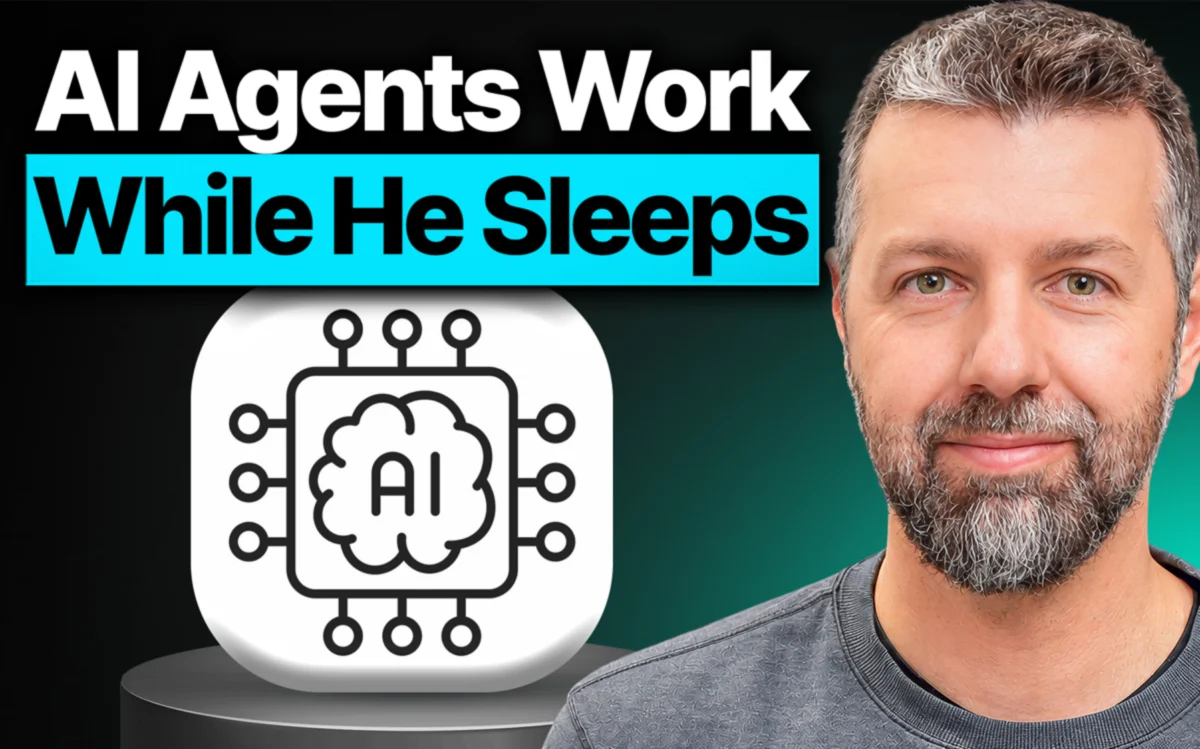
In the fast-paced ecosystem of modern online entrepreneurship, the siren song of "the next big thing" frequently lures well-capitalized founders onto the rocks. Thousands of brilliant ideas launch every month, yet the vast majority quietly fold within their first two years. Why do so many technically sound businesses fail? According to veteran AI builder, inventor, and Appvance CEO Kevin Surace, the answer rarely lies in a lack of hustle or intelligence. Instead, founders routinely stumble by misjudging market timing, solving trivial problems, and ignoring the psychological resistance of their prospective buyers.
In a recent, masterclass-level episode of the Niche Pursuits podcast, Surace sat down with the host to dissect the anatomy of building resilient, high-value businesses. Drawing from a storied career that spans the dawn of commercial AI in the 1990s and boasts a staggering 95 worldwide patents, Surace delivered a blueprint for navigating today’s hyper-competitive digital economy.
For online entrepreneurs, indie hackers, and SaaS founders alike, this conversation serves as both a sobering reality check and an invaluable strategic guide.
Main Facts: The Blueprint of Modern Entrepreneurship
At its core, the conversation distilled the chaotic journey of company-building down to a few fundamental, non-negotiable pillars:
- Pain Over Novelty: A clever idea is worthless if it does not solve an acute, costly problem for a customer who both feels the pain and holds the budget to fix it.
- The Tyranny of Timing: Market timing remains the single greatest predictor of startup success or failure—outranking team talent, capital raised, and initial product quality.
- Go Deep, Not Wide: Niche dominance through intense focus (such as Surace’s billion-dollar QuietRock drywall innovation) consistently outperforms diluted, multi-product shotgun approaches.
- The AI-First Imperative: Integrating generative AI deeply into daily workflows is no longer a luxury; it is the fundamental dividing line between businesses that scale and those that stagnate.
Chronology and Evolution: From 1990s AI to Modern Innovation
To understand the weight of Surace’s insights, one must look at his trajectory through the technological epochs of the last three decades.
The Early Days: Anticipating the AI Wave
Long before generative AI became a mainstream venture capital darling, Surace was building artificial intelligence solutions in the 1990s. He recounted developing an early voice assistant named "Mary" during that era. Mary possessed capabilities that seemed like science fiction at the time: she could read emails, check stock quotes, search the web, answer phone calls, and schedule calendar appointments.
Mary solved a genuine logistical bottleneck—the total lack of digital access while away from a fixed desktop computer. Yet, the market was barely on the cusp of understanding what it meant to interact with software conversationally. It was a classic demonstration of a foundational entrepreneurial truth: customers cannot always articulate the product they need before it exists. Just as society was not explicitly demanding the exact feature combination of the iPhone before Steve Jobs pulled it from his pocket in 2007, early tech pioneers often have to drag the market kicking and screaming into the future.
The Modern AI Gold Rush
Fast forward to the present day, and the pendulum has swung wildly in the opposite direction. Surace estimates that over the past few years, more than 5,000 AI companies have successfully secured venture funding. However, looking ahead, he projects that perhaps only 100 of them will ultimately survive and thrive.
The differentiator? A sustainable moat. Many recent startups merely built lightweight wrappers around foundational models without identifying a proprietary data source, workflow integration, or deep customer lock-in. Without these defensive moats, they quickly found themselves commoditized.
Supporting Data and Real-World Case Studies
Surace backed his philosophical frameworks with hard-earned lessons from his extensive career as a serial entrepreneur and inventor.
The QuietRock Phenomenon: The Economics of Pain
When Surace tackled the construction industry with QuietRock, he did not start by brainstorming cool technology. He started by observing a deeply painful friction point: thin walls in multi-family housing units were allowing excessive noise to bleed between rooms, resulting in enraged homeowners, expensive retrofits, and catastrophic lawsuits for builders.
Instead of developing a dozen different building materials, Surace focused intensely on soundproofing drywall. The economic math of the product became a masterclass in value-based pricing:
- Standard drywall typically retailed for around $10 per sheet.
- QuietRock entered the market priced significantly higher—$30, $40, or even $50 per sheet.
Despite the dramatic price premium, contractors and architects eagerly paid it. Why? Because the cost of not buying it—measured in litigation, remediation, and destroyed reputations—was infinitely higher. The product scaled rapidly into a billion-dollar product line, proving that when a product completely neutralizes an enterprise-threatening problem, price sensitivity evaporates.

The Appvance Paradox: When Good Products Face Cultural Resistance
Innovation does not always receive a warm welcome, even when its benefits are mathematically undeniable. Surace shared a fascinating case study involving his company, Appvance, which developed an AI-powered test script generation tool as early as 2017.
On paper, the value proposition was undeniable: the system could generate comprehensive test scripts yielding ten times the coverage of traditional manual methods while uncovering critical system bugs that human teams had missed for years.
In practice, however, they hit a brick wall. Quality Assurance (QA) teams routinely pushed back. Why? Because the AI exposed deep flaws in systems they were responsible for maintaining, occasionally making them look incompetent in front of executive leadership.
Today, Surace estimates that 60% to 70% of prospective clients readily embrace the technology, but 30% to 40% still resist out of fear that automation will threaten their job security or expose uncomfortable truths. This serves as a vital reminder to founders: technology must account for human psychology and organizational politics, not just technical utility.
Implications for Modern Founders and Creators
The synthesis of Surace’s decades of experience yields actionable takeaways for anyone building an online business today.
1. Shift from Process Pride to Outcome Focus
In an era where generative AI dramatically accelerates production speed, creators must rethink what they sell. Surace challenged the traditional mindset that anchors identity to the process of creation (such as the number of keystrokes typed or musical notes written).
Clients and buyers do not pay for effort; they pay for outcomes. As AI handles baseline execution with increasing proficiency, human value shifts toward taste, judgment, structure, selection, and strategic curation. For content publishers and solo founders, this means the competitive edge belongs to those who can synthesize information, curate high-integrity signals, and orchestrate automated tools to deliver superior end-results.
2. The AI-First Operational Standard
Surace defined being "AI-first" not as a marketing buzzword, but as an operational baseline. For him, it means turning to AI before opening Word, Excel, PowerPoint, or a search engine—utilizing the technology dozens of times an hour to stress-test ideas, draft frameworks, analyze data, and refine strategies.
Founders who relegate AI to a peripheral brainstorming partner are operating at a severe disadvantage against competitors who have woven it into the very fabric of their daily workflows.
3. Cultivate Curiosity and Protect Your Energy
Perhaps the most surprising dimension of Surace’s framework is his emphasis on personal psychology and energy management. In his upcoming book, The Joy Success Cycle, he argues that human psychology dictates business output far more than most care to admit.
- The Cost of Complaining: Surace noted that the average person complains over 100 times a day—often internally—which silently drains attention and narrows creative vision. He advocates for a strict "one-complaint-a-day" mental discipline to preserve cognitive bandwidth.
- Curiosity as a Daily Habit: Business ideas do not drop out of the sky; they are uncovered by individuals who refuse to accept everyday friction as "just the way things are." Founders must actively cultivate curiosity to spot the overlooked anomalies that signal massive market opportunities.
Conclusion
The overarching message of Kevin Surace’s conversation on the Niche Pursuits podcast is a definitive rejection of superficial entrepreneurship. In a digital landscape overflowing with quick-fix tactics and commoditized software, building a enduring enterprise requires rigorous intellectual honesty.
Founders must look past the superficial allure of trending topics and instead anchor their ventures in deep customer pain, defensible moats, and acute psychological awareness of how buyers adopt new behaviors. By coupling relentless curiosity with an AI-first operational velocity—and respecting the iron law of market timing—entrepreneurs can transition from chasing fleeting trends to building resilient, high-value businesses that stand the test of time.