NEW YORK — In a milestone development that promises to permanently reshape the global entertainment, news, and streaming landscapes, Paramount Skydance has reached a sweeping settlement with a coalition of state attorneys general. The agreement effectively removes the primary legal roadblock standing in the way of its massive $110 billion acquisition of Warner Bros. Discovery (WBD).
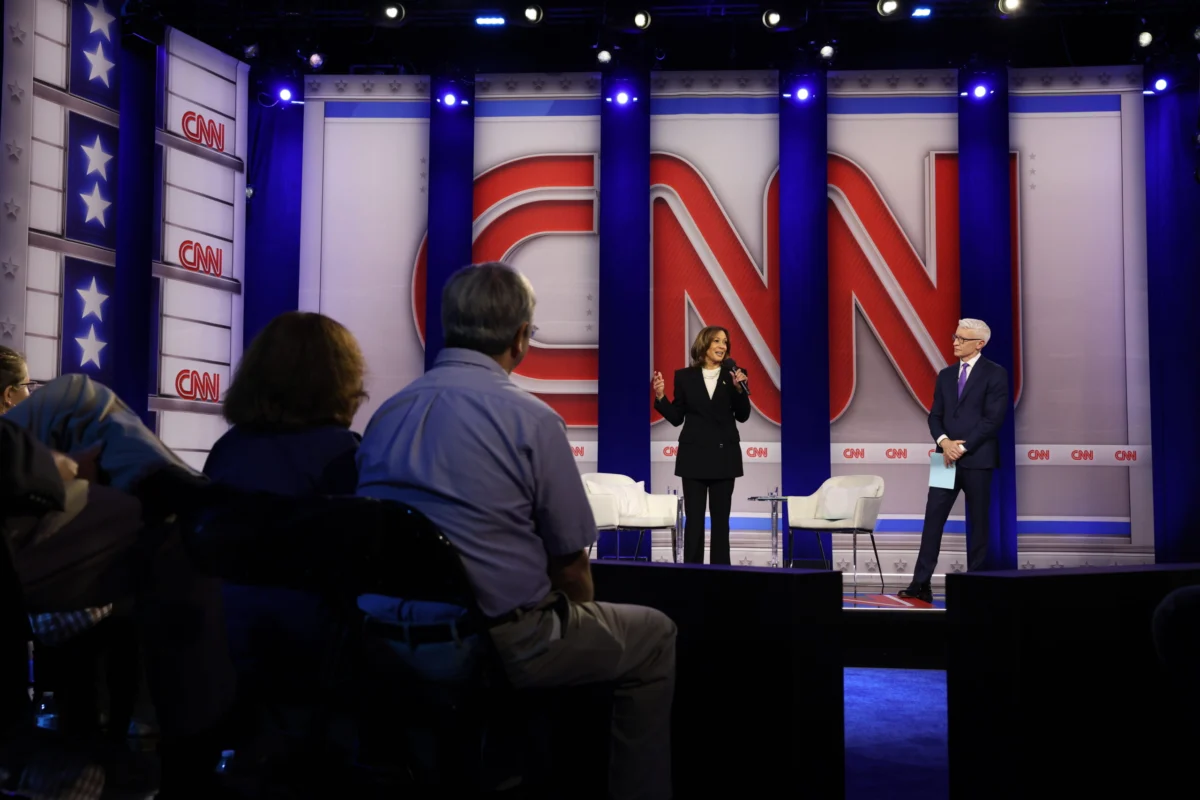
With this accord, two of American journalism’s most storied and influential institutions—CNN and CBS News—move one step closer to operating under the exact same corporate umbrella. The deal not only signals the dawn of a new era for traditional television and news gathering, but it also promises to fundamentally alter the balance of power in the fiercely competitive streaming wars.
According to internal communications and reports circulating across major financial and entertainment desks, Paramount Skydance CEO David Ellison informed company staffers in a memo that he expects the gargantuan transaction to officially close within approximately two weeks.
Main Facts of the Agreement
The settlement, announced on Monday following intense, behind-the-scenes negotiations, resolves an antitrust lawsuit spearheaded by state attorneys general from 12 states, most notably California and New York. The legal challenge had threatened to drag the media conglomerates into a protracted courtroom battle slated for early 2027.
While the complete legal terms are still being fully unpacked by market analysts, key components of the settlement have come to light:
- Preservation of Cable Networks: Contrary to earlier market speculation suggesting a forced divestiture, the settled terms reportedly do not require the immediate sale or spin-off of Paramount Skydance’s or WBD’s basic cable networks.
- Editorial Independence Firewalls: To appease concerns regarding media consolidation and viewpoint diversity, the agreement mandates the establishment of an independent oversight board specifically designed to insulate CNN and CBS News from corporate or political editorial interference.
- Streaming Consolidation: The merged entity will control an enormous digital footprint, combining Paramount+ (which boasts nearly 82 million subscribers) with WBD’s HBO Max (surpassing 140 million global subscribers). Executives have confirmed plans to merge the two platforms into a singular, powerhouse application.
For media watchers, the pairing of CNN and CBS News under a single parent organization represents a breathtaking level of consolidation in broadcast and cable news, raising profound questions about the future of newsroom independence, resource sharing, and editorial duplication.
Chronology of the Mega-Merger
The path to this landmark settlement has been fraught with regulatory speedbumps, high-stakes political maneuvering, and ticking financial clocks.
- The Genesis of the Deal: The outline of the $110 billion merger was hammered out amid a wave of consolidation pressures facing legacy media companies as they struggled to achieve profitability in the streaming era.
- July: State Pushback Begins: California Attorney General Rob Bonta publicly emerged as the leading critic of the merger. Alongside a coalition from 12 states, Bonta argued that the unification of major news divisions and historic movie studios would severely damage consumer choice and the broader media ecosystem.
- The Antitrust and Guild Challenges: As summer turned to fall, the legal landscape grew increasingly hostile. In addition to the multi-state antitrust lawsuit, the Writers Guild of America (WGA) filed formal complaints opposing the mega-merger, pointing to the inevitable contraction of creative jobs. An antitrust trial was officially placed on the court docket for March 2027.
- The "Ticking Fee" Pressure Cooker: Driving the urgency behind Paramount Skydance’s push for an immediate settlement was a financial penalty clause embedded in the merger agreement. If the deal failed to cross the finish line by September 30, Paramount Skydance would be contractually obligated to pay shareholders a 25-cent-per-share "ticking fee"—a staggering penalty translating to roughly $650 million per quarter.
- Late September 2026: The Breakthrough: Facing the looming September 30 deadline and the mounting costs of a 2027 trial, Paramount Skydance successfully negotiated the settlement terms with the state attorneys general, clearing the deck for CEO David Ellison’s projected two-week closing timeline.
Supporting Data and Financial Metrics
To understand the sheer magnitude of the Paramount Skydance-WBD union, one must look closely at the numbers defining the transaction:
- $110 Billion: The headline valuation of the merger, making it one of the largest corporate consolidations in media history.
- $650 Million Per Quarter: The financial weight of the "ticking fee" that forced Paramount Skydance’s hand, incentivizing a rapid resolution before the September 30 cut-off.
- 222 Million+ Subscribers: The combined global reach of the merging streaming services. Paramount+ contributes approximately 82 million subscribers, while HBO Max commands an international audience of over 140 million.
- 12 States: The bipartisan coalition of state attorneys general—anchored by heavyweights California and New York—that initially filed suit to halt the transaction.
Industry analysts suggest that these figures paint a picture of an industry where scale is no longer just an advantage, but a strict requirement for survival against tech giants and digital-native streaming titans.
Official Responses and Industry Perspectives
Reactions to the settlement have exposed deep fractures in how regulators, analysts, and media executives view the current state of American antitrust enforcement and corporate governance.
The Regulatory Critique
California Attorney General Rob Bonta, who spearheaded the opposition, argued vehemently against the merger earlier in the year. In July, Bonta warned that the combined company’s ownership of both CNN and CBS News would create "fewer opportunities for Americans to hear the full breadth of information and opinions on a subject, and then come to their own conclusions."
While the state lawsuit ostensibly focused on the merger of two historic movie studios—citing potential job losses in California, higher ticket prices, and reduced output for theaters and basic cable distributors—critics noted the underlying anxiety regarding newsroom consolidation.

The Analyst Perspective
Not everyone was convinced that the states held the upper hand in the legal showdown. Ross Benes, a senior analyst at Emarketer, offered a blunt assessment of the settlement dynamics.
"California did not have as much leverage as it portrayed," Benes remarked. "The threat of political backlash over job losses outweighed the need to push back against corporate consolidation or protect consumer interests."
Benes went further, suggesting that Paramount Skydance’s ability to bypass legal hurdles underscores a broader systemic shift. "The steamrolling of legal obstacles shows that regulations governing mass media ownership have essentially ceased to exist in the U.S.," he noted.
Inside the Newsrooms
Amid the high-level legal and financial maneuvering, the leaders of the affected journalistic organizations have sought to steady the nerves of their workforce. CNN CEO Mark Thompson has faced the daunting task of keeping newsrooms focused during a period of extreme institutional ambiguity.
During a recent global town hall meeting, Thompson urged CNN staffers not to get consumed by the unknown. Instead, he advised them to execute their journalistic strategies "with confidence and gusto," attempting to project stability as their corporate parent undergoes a historic transformation.
Implications for the Future of Media and Streaming
The finalization of this merger will send shockwaves across multiple sectors of the media landscape, fundamentally altering how content is produced, distributed, and consumed.
Redrawing the Streaming Battle lines
The most immediate commercial impact will be felt in the ongoing "streaming wars." For years, the market has been locked in a multi-way battle dominated by Netflix, Disney+, and Amazon Prime Video. The marriage of Paramount+ and HBO Max fundamentally shifts this dynamic.
Mike Proulx, VP Research Director at Forrester, highlighted the gravity of the shift heading into 2027.
"This settlement materially changes the trajectory of the streaming wars," Proulx stated. "A combined Paramount and HBO Max has the kind of heft to take on the likes of Netflix, pairing two major studios with what will become one of the industry’s largest content libraries under a single roof."
To ease regulatory and creative concerns, incoming leadership has gone to great lengths to reassure creators and consumers alike that HBO will maintain its creative independence as a distinct sub-brand within the new digital ecosystem, preserving the prestige identity that has defined the network for decades.
The Fate of Traditional Journalism
Beyond streaming, the most profound societal implications center on the news division merger. Bringing CNN and CBS News under common ownership places an unprecedented amount of journalistic infrastructure under a single corporate roof. While the mandated independent board is intended to safeguard editorial integrity, media watchdogs remain skeptical about long-term cost-cutting measures, potential administrative redundancies, and the centralization of newsgathering resources.
As David Ellison and his executive team prepare to finalize the acquisition in the coming weeks, the media world will be watching closely to see how these corporate promises translate into daily operations. What is certain is that the media landscape of late 2026 looks vastly different than it did at the start of the year—and the ripple effects of this mega-deal will be felt by viewers, creators, and advertisers for generations to come.