In a pivotal moment for the artificial intelligence industry, Meta’s Superintelligence Lab officially entered the "frontier" category on Monday with the release of two high-performance models: Muse Wonder and Muse Wonder Full. This release signals a strategic pivot for the tech giant, moving away from its recent focus on lightweight, edge-ready applications toward the development of sophisticated, large-scale systems designed to compete with the industry’s most advanced offerings.
For Meta, the launch is more than a technical upgrade; it is the realization of a vision for "personal superintelligence." By prioritizing long-term memory and complex reasoning, the company is attempting to shift the AI paradigm from simple chatbots to persistent, personalized digital agents.
The Architecture of Ambition: What is Muse Wonder?
The Muse Wonder series represents a significant departure from the company’s previous release, Muse Spark. While Spark was engineered for low latency and efficiency—ideal for rapid, mobile-based interactions—the Wonder models are built for depth. They are larger, more parameter-dense, and optimized for high-complexity tasks, including advanced software engineering, intricate data analysis, and nuanced natural language reasoning.
Meta’s internal testing suggests that these models have achieved parity with the current industry leaders, specifically Fable 5.1 and GPT-6 Astra. The release is structured in two tiers:
- Muse Wonder: Accessible via the Meta Model API, this model is positioned as a direct competitor to high-end enterprise models like GPT-6 Sol and Opus 5.5.
- Muse Wonder Full: A more robust version that will be reserved exclusively for Muse Code subscribers, signaling Meta’s intent to gate its most powerful capabilities behind specialized, professional-grade software tiers.
Both iterations will serve as the engine room for the company’s flagship "Muse agent," transforming it from a standard helper into a more capable, proactive assistant.
A Chronology of Meta’s Strategic Pivot
The path to Monday’s announcement has been one of calculated restructuring and infrastructure investment. To understand the significance of the Wonder models, one must look at the recent history of Meta’s AI division.
The Restructuring (August 2025)
The current trajectory of Meta’s AI research was set in motion last August, when Alexandr Wang, founder of Scale AI, stepped into a leadership role to oversee the restructuring of Meta’s AI initiatives. At the time, the company was struggling to balance its open-source philosophy with the need for a proprietary "frontier" model that could hold its own against OpenAI and Anthropic. The appointment of Wang marked a shift toward a more aggressive, state-of-the-art research cadence.
The Lightweight Era (Late 2025 – Early 2026)
Following the reorganization, Meta prioritized the release of Muse Spark and the foundational elements of the Muse agent. During this phase, the company focused on building a user base and refining the interface of its agent, largely avoiding the "arms race" of frontier model releases that defined the broader industry. Critics often questioned whether Meta had the compute capacity or the talent density to return to the top tier of AI research.
The Prometheus Milestone (2026)
The turning point for Meta’s hardware capability came with the launch of the Prometheus data center in central Ohio earlier this year. As one of the highest-capacity data centers in the world, Prometheus provided the raw compute power necessary to train models at the scale of Wonder. The successful deployment of these models serves as the first major public validation of the Prometheus infrastructure.
Supporting Data: The Case for ‘Active Memory’
Perhaps the most disruptive claim Meta is making with the Muse Wonder series is its implementation of "active memory." In an era where most LLMs treat every session as a blank slate, Meta is doubling down on the ability of its models to synthesize information over extended timelines—days, weeks, and months.
To prove the efficacy of this, Meta has leaned heavily on the MemoryBench benchmark. This framework is designed specifically to test a model’s continual learning capabilities and its ability to store and retrieve contextual data without losing coherence.
According to the model card provided by Meta, Muse Wonder outperforms Fable, Opus, and Astra on the MemoryBench. This superiority is crucial for Meta’s goal of creating a "personal assistant" that actually knows its user. If the model can recall a specific preference, a project constraint, or a past decision from weeks prior, the utility of the AI increases exponentially.
Official Responses and Strategic Messaging
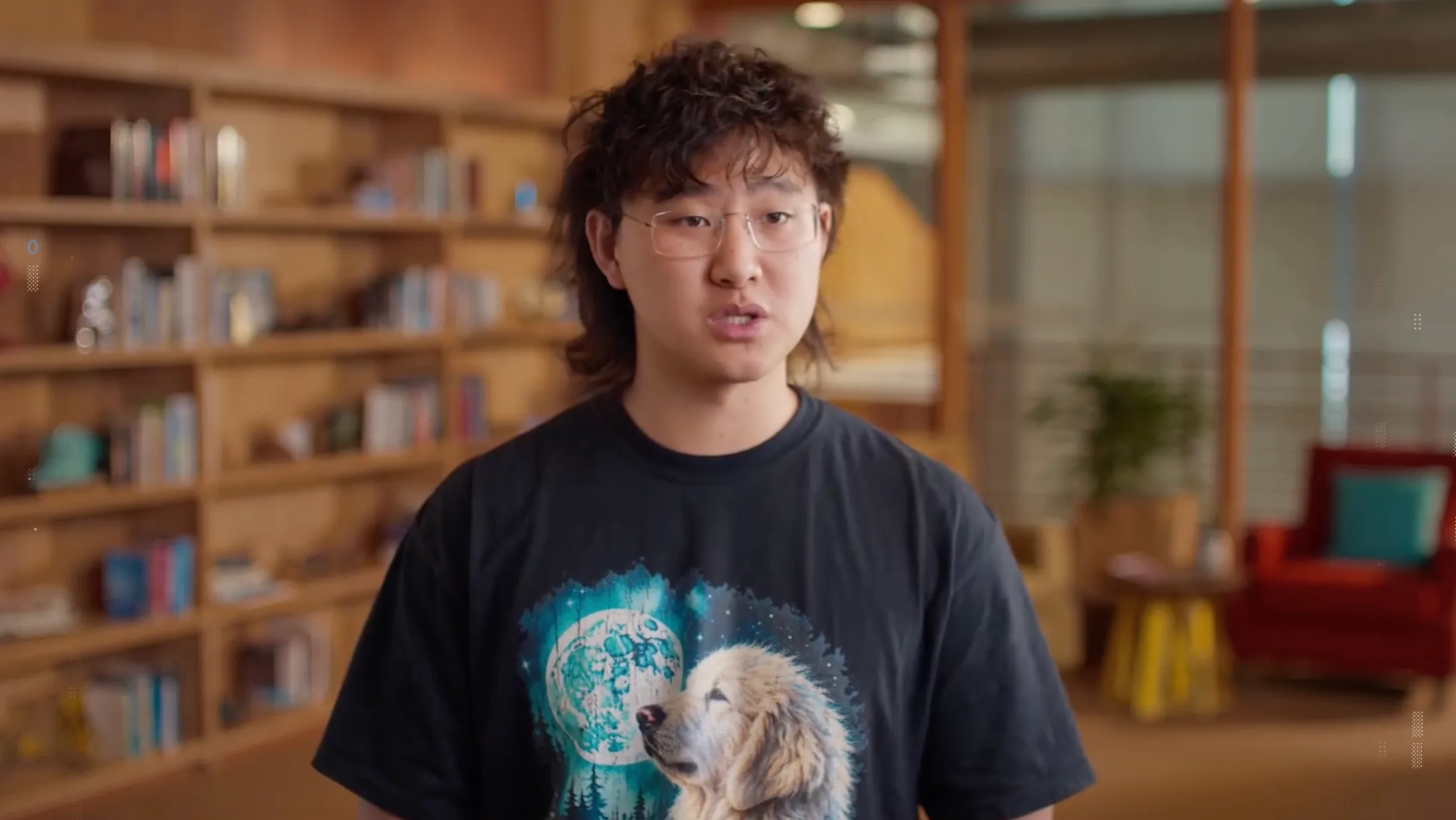
The corporate messaging surrounding the launch emphasizes a "scaling ladder." In a video accompanying the announcement, research scientist Kavya Kopparapu noted, "We put a tremendous amount of effort into making sure your model can remember what’s important to you over days, weeks, months, and beyond."
This is not merely about memory; it is about trust. By framing these models as "personal," Meta is attempting to differentiate its offering from the cold, transactional nature of other frontier models. The company’s blog post describes the models as a "major leap toward personal superintelligence," suggesting that Meta views the individual user’s digital history as the primary competitive moat.
The pricing strategy further underscores this intent. At $4 per million input tokens and $20 per million output tokens, Meta is positioning Wonder as a premium tool. By restricting the "Full" version to the Muse Code subscriber base, Meta is explicitly courting the developer and enterprise markets, hoping to embed their models into the professional workflows where long-term memory is a requirement rather than a luxury.
Implications for the AI Ecosystem
The arrival of Muse Wonder shifts the competitive landscape in three distinct ways:
1. The Death of the "Blank Slate" Model
For years, the industry standard for LLMs has been the stateless conversation. Meta’s emphasis on active memory forces competitors like OpenAI and Anthropic to accelerate their own efforts in "persistent context." If users begin to expect their AI to remember their entire history, the market may quickly move away from providers that require constant re-prompting or external vector database management.
2. The Return of the Frontier Race
With the Prometheus data center fully operational, Meta has demonstrated that it is no longer content with "good enough" or "lightweight" models. This puts significant pressure on companies like Anthropic, which have thrived on being the "smarter" alternative to larger providers. If Meta can achieve comparable performance to GPT-6, the primary differentiator will shift from "intelligence" to "integration"—specifically, how well the AI integrates into the daily life of the user via Meta’s ecosystem.
3. Ethical and Privacy Concerns
The pursuit of "active memory" brings significant privacy baggage. If an AI is tasked with remembering everything about a user’s professional and personal life, the security of that data becomes paramount. While Meta has not yet detailed the specific encryption or data-deletion protocols for Muse Wonder’s memory banks, regulators and privacy advocates are likely to scrutinize how these models "learn" from user history. The question remains: where does the model’s "memory" end and the user’s right to be forgotten begin?
Conclusion: A New Chapter for Meta
Meta has successfully bridged the gap between its research-heavy roots and its product-focused ambitions. By leveraging the immense compute power of the Prometheus data center and focusing on the under-served niche of persistent, long-term memory, the company has staked a claim in the frontier of AI.
As Muse Wonder and Muse Wonder Full begin to circulate through the Meta Model API and the Muse Code ecosystem, the industry will be watching to see if "personal superintelligence" is truly within reach. If the benchmark scores hold up in real-world, messy, unpredictable user interactions, Meta may have just set the standard for the next generation of artificial intelligence.
The race is no longer just about who has the most parameters; it is about who can build an AI that understands the user well enough to become an indispensable partner. For now, Meta has signaled that it is ready to compete on that front with everything it has.