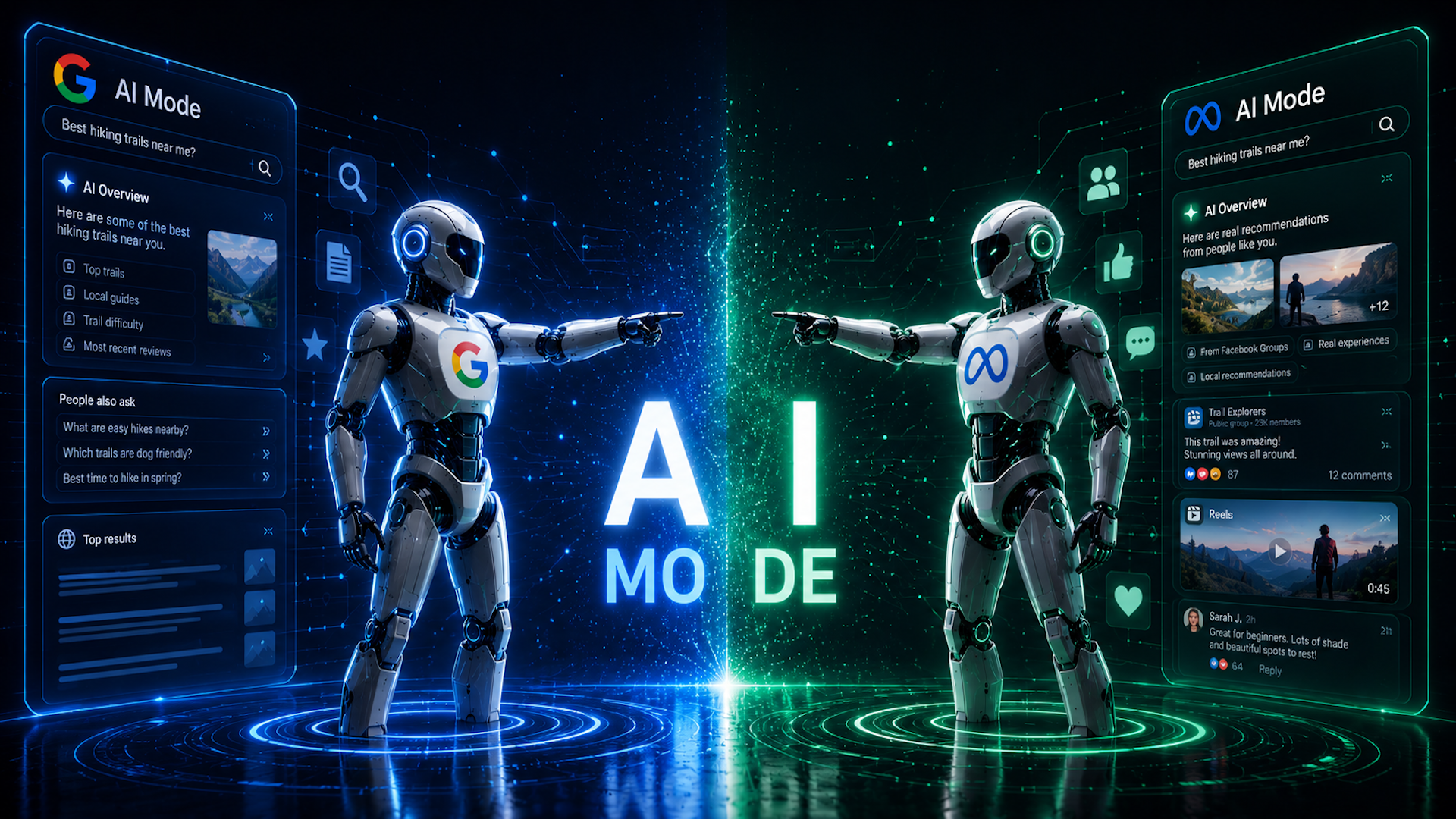
In a significant bid to reshape how users discover information online, Meta has officially launched "AI Mode" within Facebook Search. This new feature transitions Facebook’s traditional search interface from a directory of links, profiles, and pages into an active conversational engine. Powered by Meta AI, AI Mode synthesizes user-generated content from public Facebook Groups, Reels, and other Meta-owned applications to deliver direct, conversational answers to user queries.
Rather than presenting a standard list of search results, AI Mode leverages Meta’s proprietary artificial intelligence models to extract insights, recommendations, and real-life experiences shared publicly across its vast ecosystem. While the tool promises to streamline information gathering, it also introduces pressing questions regarding data privacy, source attribution, and content monetization for creators and brands.
Main Facts: How AI Mode Functions
AI Mode represents a structural pivot in Facebook’s search architecture. Instead of relying on traditional keyword-matching algorithms that direct users to external links or specific posts, the search engine now functions as a synthesis engine.
Key Characteristics of AI Mode:
- Socially Grounded Synthesis: The feature is designed to answer both broad, open-ended discovery queries (e.g., "What are the best hiking spots in the Pacific Northwest?") and hyper-specific recommendations (e.g., "What are parents saying about the safety of the new stroller model X?").
- Proprietary Data Extraction: Answers are compiled from public data streams across the Meta family of apps, with a heavy emphasis on public Facebook Groups, public Reels, and public posts.
- Conversational Delivery: The user interface displays a cohesive, AI-generated summary directly within the search results window, reducing the need for users to click through multiple links or scroll through extensive comment threads.
- Under-the-Hood Technologies: The search experience is driven by Meta AI alongside a newly introduced proprietary component referred to as "Muse Spark."
Despite the technological sophistication of the rollout, Meta’s announcement left several key operational details ambiguous. The company has not clarified the criteria its AI uses to select specific public posts, Groups, or Reels over others. Furthermore, there is currently no transparency regarding whether creators, publishers, or brands will receive notifications or analytics when their content is digested and cited by AI Mode.
Chronology: Meta’s AI Search Evolution
The introduction of AI Mode is the culmination of a multi-year effort by Meta to integrate artificial intelligence into the core of its consumer-facing applications.
[Late 2023] -----------------> [Early 2024] -----------------> [Mid-2024] ------------------> [Present]
Meta AI Rollout                Search Bar Integration          External Search Partnerships   Launch of "AI Mode"
(Llama models debut in         (Meta AI placed in search       (Bing & Google APIs used       (Shift to internal social
standalone chat assistants)    bars of FB, IG, WhatsApp)       for real-time web results)     synthesis via Muse Spark)
1. The Foundation (Late 2023)
Meta introduced Meta AI, a conversational assistant powered by its Llama large language model (LLM) framework. Initially, the assistant functioned primarily as a standalone chatbot or an interactive element within direct messaging threads on Instagram, Messenger, and WhatsApp.
2. Search Bar Integration (Early 2024)
Meta integrated the Meta AI assistant directly into the primary search bars of Facebook, Instagram, and WhatsApp. At this stage, queries entered into the search bar would offer users the option to "Ask Meta AI," though the results still largely relied on standard web indices or direct redirects to specific accounts and hashtags.
3. External Search Partnerships (Mid-2024)
To supplement its models with real-time information, Meta established partnerships with search giants like Google and Microsoft (Bing). This allowed Meta AI to pull live web results for breaking news and general knowledge queries, bridging the gap between social data and the broader internet.
4. The Shift to Internal Social Synthesis: AI Mode (Present)
With the launch of AI Mode, Meta is pivoting inward, capitalizing on its most valuable proprietary asset: its massive repository of human-to-human social conversations. Rather than relying solely on the open web, the search engine now mines its own social graph to provide community-grounded answers, positioning itself as a direct competitor to traditional search engines and specialized AI search startups.
Supporting Data: The Shift in Modern Search Behavior
Meta’s decision to overhaul Facebook Search is backed by shifting demographics and evolving search habits. Traditional search engines are facing unprecedented challenges from social media platforms, particularly among younger cohorts who increasingly treat social networks as primary discovery tools.
The Rise of Social Search
According to internal data previously acknowledged by Google executives, approximately 40% of young users (ages 18 to 24) utilize social platforms like TikTok and Instagram instead of Google Search or Maps when looking for a place to eat or seeking recommendations. By optimizing Facebook Search with AI Mode, Meta is attempting to capture and monetize this high-intent discovery traffic within its own walls.
The Scale of Meta’s Proprietary Data
Meta’s competitive advantage lies in the sheer volume of its user-generated data:
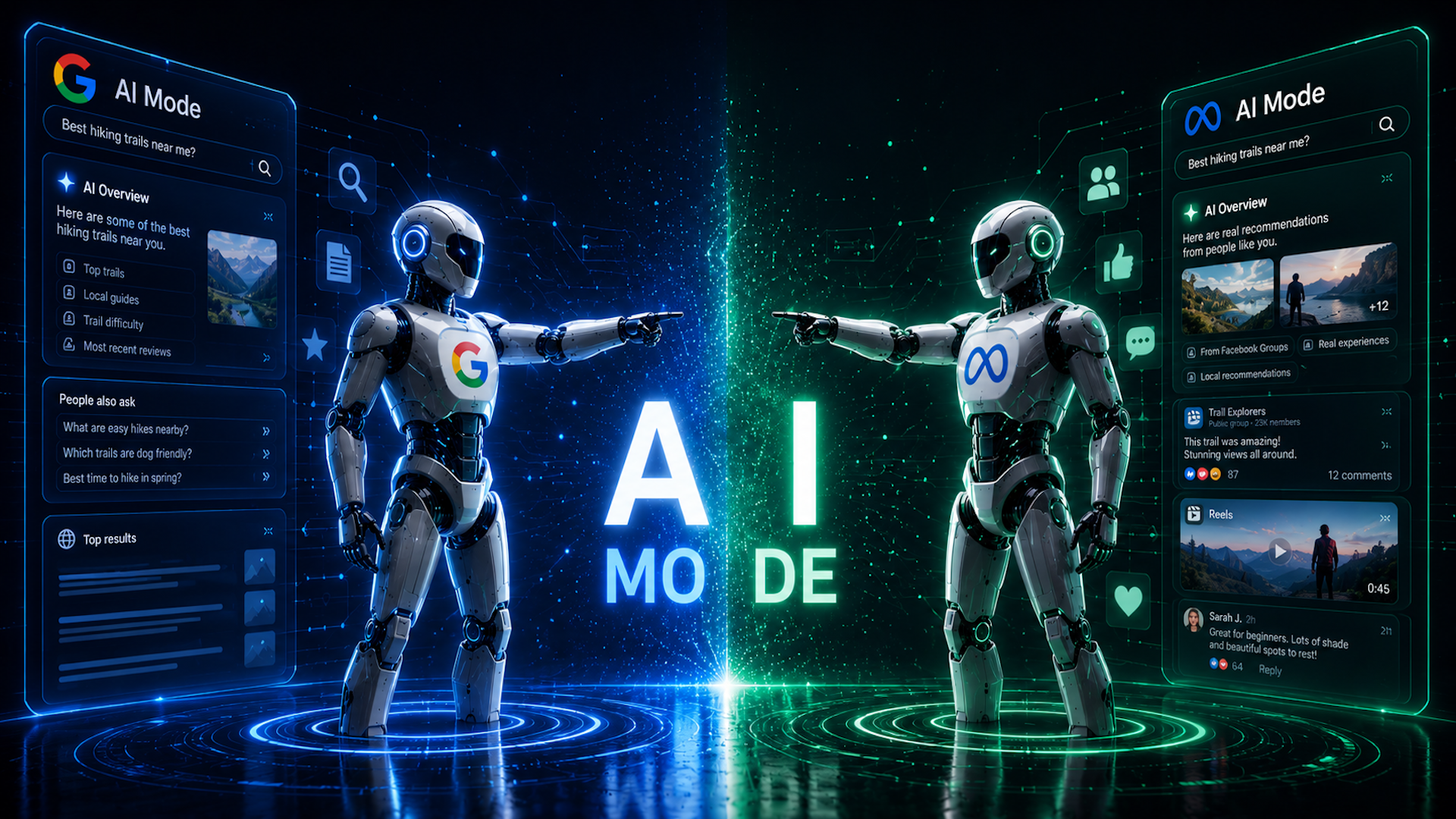
- Facebook Groups: Over 1.8 billion people use Facebook Groups every month. These groups host highly specific, localized, and niche discussions that are often locked behind platform walls or difficult for external search engines to index effectively.
- Reels Consumption: Meta reports that Reels receive over 200 billion views per day across Facebook and Instagram. Visual and transcribed audio data from these Reels represents a goldmine of real-time product reviews, travel guides, and DIY tutorials.
- Active User Base: With over 3 billion daily active users across its family of apps, Meta possesses an unparalleled, constantly updating dataset of human preferences, slang, and consumer sentiment.
By converting this unstructured social text and video data into structured AI answers, Meta bypasses the traditional SEO landscape, keeping users engaged on-platform longer and creating a closed-loop ecosystem.
Official Responses and Technical Ambiguities
In its official press release, titled "New AI Tools to Help You Make Things Happen on Facebook," Meta framed the update as a user-centric advancement designed to make the platform more utility-driven.
"AI Mode is designed to give you real answers from real people," Meta stated in the announcement. "By grounding our responses in what people are publicly saying across our apps, we can deliver authentic recommendations and real-life experiences directly to your screen."
Despite the optimistic positioning, industry analysts have pointed out significant gaps in Meta’s technical disclosures.
The Mystery of ‘Muse Spark’
Meta disclosed that AI Mode is powered by a combination of Meta AI and an engine called "Muse Spark." However, the company has declined to explain what Muse Spark actually is. It remains unclear whether Muse Spark is:
- A specialized retrieval-augmented generation (RAG) pipeline optimized for social media indexing.
- A new ranking algorithm that prioritizes specific types of user engagement (e.g., comments, shares, or reactions).
- A filtering layer designed to screen out misinformation, hate speech, or low-quality content from public groups.
The lack of clarity regarding source selection has drawn criticism from the digital marketing and SEO communities. Without knowing how Muse Spark selects its sources, creators and brands are left in the dark about how to optimize their content to appear in these highly prominent AI-generated summaries.
Implications for the Digital Ecosystem
The transition of Facebook Search to an AI-first model has profound implications for users, content creators, brand marketers, and the broader search engine industry.
                  +-------------------------------------------------+
                  |            Meta AI Mode Launched                |
                  +-----------------------------------+-------------+
                                                      |
             +----------------------------------------+----------------------------------------+
             |                                        |                                        |
             v                                        v                                        v
+------------+------------+              +------------+------------+              +------------+------------+
|         Users           |              |   Creators & Brands     |              |    Search Industry      |
+------------+------------+              +------------+------------+              +------------+------------+
| * Zero-click searches   |              | * Loss of referral web  |              | * Direct threat to      |
| * Faster local discovery|              |   traffic               |              |   Google's dominance    |
| * Risk of echo chambers |              | * Rise of "Social SEO"  |              | * Copycat naming trends |
|   & misinformation      |              | * Zero transparency on  |              |   ("AI Mode")           |
|                         |              |   data scraping         |              |                         |
+-------------------------+              +-------------------------+              +-------------------------+
1. Implications for Users: The Rise of "Zero-Click" Social Discovery
For the average user, AI Mode offers a frictionless way to gather opinions. Instead of joining five different local neighborhood groups to ask for plumber recommendations, a user can simply query Facebook Search and receive a synthesized list of highly recommended local professionals based on past group discussions.
However, this convenience introduces risks:
- The Echo Chamber Effect: If the AI synthesizes answers primarily from public groups, it risks amplifying biased, outdated, or incorrect information that happens to have high engagement within those communities.
- Privacy Concerns: While Meta emphasizes that only public content is used, many users do not fully understand the distinction between public and private settings on their posts, Reels, and group memberships. The sudden surfacing of their personal recommendations in AI-generated search results for strangers could spark privacy complaints.
2. Implications for Creators and Brand Marketers
For digital marketers, the launch of AI Mode signals a paradigm shift in Social Search Engine Optimization (Social SEO).
- Loss of Referral Traffic: Similar to Google’s "AI Overviews," AI Mode risks creating a "zero-click" environment on Facebook. If a user receives a comprehensive product recommendation summary directly in the search bar, they are less likely to click through to a creator’s page or a brand’s external website.
- The Attribution Black Box: Because Meta has not announced plans to show analytics to brands or publishers regarding how often their content is used to train or inform search responses, measuring organic reach on the platform will become increasingly difficult.
- Optimizing for AI Sourcing: Marketers will need to pivot their strategies. Instead of focusing solely on keywords, brands must foster authentic community discussions in public groups and produce highly engaging Reels, as these formats appear to be the primary feedstocks for the Muse Spark engine.
3. Implications for the Search Industry and Competitive Dynamics
The naming of the feature—"AI Mode"—has raised eyebrows across the tech industry. Observers have noted that the name is identical to Google’s own AI-driven search initiatives, suggesting that Meta prioritized rapid deployment and direct competitive positioning over branding creativity.
By building a search engine grounded in real-time human conversation, Meta is positioning itself to challenge both Google and emerging AI search platforms like Perplexity. While Google dominates informational and transactional queries, Meta is carving out a defensive moat around experiential and opinion-based queries—an area where static web pages often fail to compete with live, community-driven social networks.