Main Facts
Microsoft’s September 2026 security updates for Exchange Server, officially released on September 8, 2026, address a total of nine distinct vulnerabilities. While Microsoft’s internal rating system categorizes all nine security flaws as "Important" rather than "Critical," the technical reality of these patches tells a far more alarming story for enterprise administrators. Two of the vulnerabilities carry Common Vulnerability Scoring System (CVSS) scores exceeding 9.0, and security researchers have singled out a zero-click remote code execution vector as one of the most perilous bugs to hit enterprise messaging architecture in years.
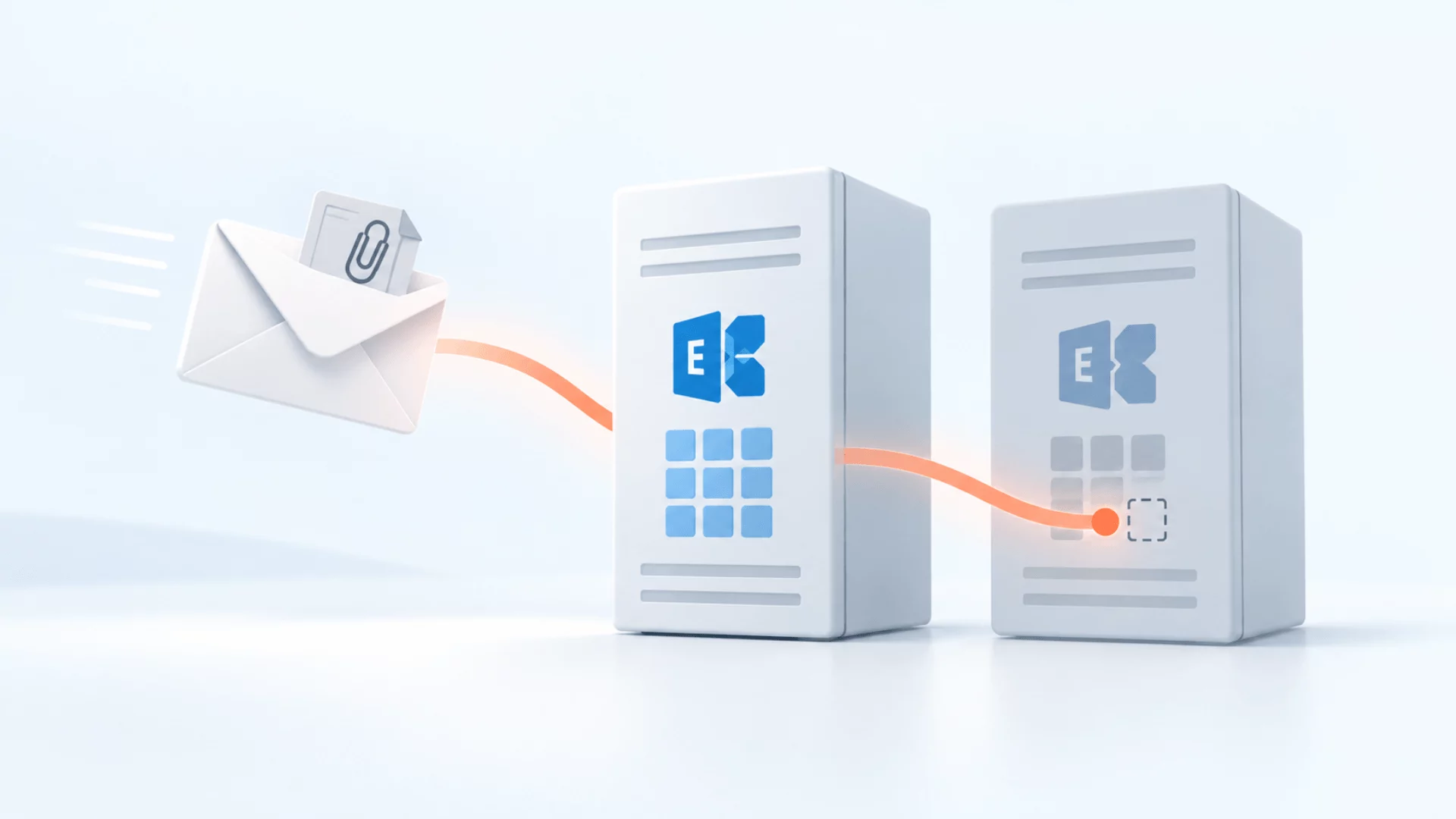
The most dangerous vulnerability in the batch is tracked as CVE-2026-55007. This flaw allows an unauthenticated, remote attacker to execute arbitrary code on a targeted Exchange server simply by transmitting an email containing a specially crafted Microsoft Visio attachment. The code executes automatically when the server’s content-indexing engine parses and processes the inbound message. Crucially, the attack requires no user interaction: no user needs to click a link, preview the message, or possess prior credentials.
While Microsoft notes that successful exploitation requires the target server to be experiencing sustained low-memory conditions—a state typically considered uncommon during standard operational workloads—cybersecurity analysts remain unfazed by the caveat. Trend Micro’s Zero Day Initiative (ZDI) prominently ranked CVE-2026-55007 as the single most critical patch in the entire September 2026 release cycle, placing it ahead of concurrent Windows zero-day vulnerabilities that Microsoft confirmed were already being actively exploited in the wild. ZDI’s rationale is stark: malicious actors only need to orchestrate or wait for the low-memory condition to materialize once, giving them an open door to compromise the core of corporate communication.
Beyond remote code execution, the September bulletin introduces fixes for severe spoofing, elevation of privilege, and impersonation flaws:
- CVE-2026-69356: Rated at a severe 9.3 CVSS score and classified under spoofing, this vulnerability is fundamentally rooted in cross-site scripting (XSS). Mirroring the mechanics of CVE-2026-42897 from May 2026—which Microsoft explicitly confirmed was exploited in the wild—this flaw executes malicious scripts injected by an attacker within an active Outlook on the Web (OWA) session, potentially exposing sensitive mailbox contents and authentication tokens.
- CVE-2026-69641: An elevation of privilege vulnerability within Exchange, carrying a 9.1 CVSS score.
- CVE-2026-69380: An 8.1-rated bug that empowers a low-privileged, authenticated user to effortlessly impersonate any user within the broader enterprise organization.
- Additional Patches: The remaining fixes cover an authenticated remote code execution vulnerability (8.8 CVSS), a denial of service (DoS) vector (7.5 CVSS), a tampering vulnerability (6.5 CVSS), a secondary spoofing flaw (6.5 CVSS), and an information disclosure vulnerability (5.9 CVSS).
Chronology
The unfolding of the September 2026 Exchange Server security event followed a tightly managed corporate disclosure timeline, juxtaposed against a chaotic background of legacy system obsolescence and patch distribution hurdles.
- May 2026: Microsoft issues warnings regarding cross-site scripting flaws such as CVE-2026-42897, establishing a pattern of OWA-based session compromises. Concurrently, support officially expires for Exchange Server 2016 and 2019, leaving organizations without active Extended Security Updates (ESU) exposed to future zero-day discoveries.
- June 2026: Following a cumulative update, administrators report an unintended glitch where wrapper messages systematically appear in shared mailboxes—an issue that Microsoft would later commit to resolving in the autumn release cycle.
- September 8, 2026: Microsoft officially publishes its monthly security bulletin, releasing fixes for nine Exchange Server vulnerabilities. Trend Micro’s Zero Day Initiative publishes its immediate analysis, elevating CVE-2026-55007 as the premier threat of the month despite Microsoft’s "Important" classification.
- Post-Release, September 2026: System administrators applying update KB5121608 quickly encounter deployment hurdles. Published
.icscalendar files begin throwing HTTP 500 errors to connecting calendar applications, while free/busy lookups fail for delegated mailboxes in hybrid deployments relying exclusively on the Graph API. Concurrently, IT researchers—including analysts at Franky’s Web—discover that legacy Exchange 2016 deployments under the ESU program are receiving an incomplete patch set, notably missing the fix for CVE-2026-55007.
Supporting Data
Analyzing the quantitative metrics of the September 2026 patch cycle reveals shifting vectors in how attackers target enterprise collaboration suites. Historically, Exchange vulnerabilities focused heavily on ProxyLogon or ProxyShell-style web shell deployments via Internet Information Services (IIS). The September 2026 batch highlights a diversification toward content-parsing engines and web application session hijacking.
| Vulnerability ID | Type | CVSS Score | Severity Rating | Attack Vector / Notes |
|---|---|---|---|---|
| CVE-2026-55007 | Remote Code Execution | 8.1 | Important | Unauthenticated; triggered via crafted Visio email attachment during low-memory conditions. |
| CVE-2026-69356 | Spoofing / XSS | 9.3 | Important | Executes scripts in OWA sessions; exposes mailbox data. |
| CVE-2026-69641 | Elevation of Privilege | 9.1 | Important | Internal Exchange privilege escalation. |
| CVE-2026-69380 | Impersonation | 8.1 | Important | Low-privilege authenticated user impersonates any organization user. |
| Unlisted RCE | Remote Code Execution | 8.8 | Important | Requires authenticated access. |
| Denial of Service | DoS | 7.5 | Important | Disrupts server availability. |
| Tampering | Data Integrity | 6.5 | Important | Modifies system data or state. |
| CVE-2026-69361 | Spoofing | 6.5 | Important | Secondary spoofing vector. |
| Information Disclosure | Info Leak | 5.9 | Important | Leaks sensitive internal data. |
The distribution of scores underscores that while Microsoft officially labels all nine vulnerabilities as "Important," the real-world risk matrix—governed by exploit complexity, user interaction requirements, and potential impact—places multiple bugs firmly in the "Critical" tier of enterprise threat management.
Official Responses
Microsoft’s documentation surrounding the September 2026 update emphasizes procedural mitigation and strict hardware/software lifecycle policies. In its technical bulletins, Microsoft defends its rating methodology, noting that CVE-2026-55007’s dependency on "sustained low-memory conditions" prevents it from achieving a Critical rating under standard CVSS scoring guidelines, which evaluate performance under nominal operating environments. Nevertheless, the software giant strongly advises all eligible organizations to apply update KB5121608 immediately and run the Exchange Health Checker script post-installation to verify system stability.
Third-party security vendors, however, have adopted a more urgent stance. The Zero Day Initiative publicly challenged the comfort implied by Microsoft’s "Important" labels, stressing that unauthenticated, zero-click attack paths bypassing user interaction entirely represent a catastrophic risk for any organization keeping mail servers directly connected to the public internet.
Furthermore, the response from the enterprise IT community regarding support policies has been vocal. Microsoft reiterated its hardline stance on lifecycle management: updates are natively shipped exclusively for the Exchange Server Subscription Edition (SE). Organizations lingering on Exchange 2016 and Exchange 2019 are entirely out of standard support.
To receive updates for these legacy platforms, organizations must be actively enrolled in the Period 2 Extended Security Update (ESU) program covering the May-to-October 2026 window. Companies operating unpatched Exchange 2016 or 2019 environments without Period 2 ESU enrollment have effectively been cut off from security patches since May 2026, leaving them dangerously exposed.
Implications
The cascading operational and security implications of the September 2026 Exchange Server security updates stretch across several critical domains for enterprise IT departments:
1. The Legacy Platform Crisis and ESU Gaps
The most profound takeaway from this patch cycle is the perilous reality facing legacy deployments. Organizations running Exchange Server 2016 who assumed their subscription to the ESU program provided comprehensive protection received an unwelcome surprise. Independent technical audits, such as those published by Franky’s Web, revealed that update CU23 for Exchange 2016 patches eight of the nine vulnerabilities but conspicuously omits CVE-2026-55007.
This means that even paying ESU customers running Exchange 2016 remain fundamentally vulnerable to the unauthenticated, zero-click Visio email parsing exploit. For risk managers and CISOs, this represents an untenable security posture, forcing organizations to accelerate long-delayed migrations to the Exchange Server Subscription Edition (SE) or face permanent exposure.
2. Operational Overhead and Deployment Friction
Applying update KB5121608 introduces immediate administrative headaches. The regressions introduced by the patch—specifically, published .ics calendars returning HTTP 500 errors and broken free/busy lookups for delegated mailboxes in hybrid deployments utilizing the Graph API—mean that deploying the security update can inadvertently cripple internal and external scheduling workflows.
IT teams are forced into a difficult balancing act: deploy the patch immediately to close dangerous RCE and XSS vectors, while simultaneously troubleshooting broken calendar integrations and hybrid federation pipelines. Fortunately, the update successfully resolves previous headaches, such as hybrid free/busy time-zone shifts and rogue wrapper messages in shared mailboxes, but the new bugs demand immediate hotfixing or workaround deployments.
3. The Threat of Content-Parsing Vectors
CVE-2026-55007 underscores an ongoing evolution in how enterprise infrastructure is attacked. Rather than relying solely on traditional web application vulnerabilities or social engineering tricks that force a user to click a malicious link, modern threat actors are increasingly targeting deep backend parsers—such as content-indexing engines processing proprietary file formats like Visio within email attachments. Because these engines operate with elevated privileges to index and search corporate data repositories, compromising them grants immediate, deep-seated access to the server core.
Strategic Recommendations for IT Administrators
In light of the September 2026 security release, enterprise security teams must take immediate, decisive action:
- Prioritize CVE-2026-55007: For any organization running on-premises Exchange with an internet-facing mail path, patching this vulnerability is paramount. Perimeter defense mechanisms and mail gateways should be configured to scrutinize inbound Visio attachments rigorously.
- Audit Exchange Version Sprawl: IT leaders must inventory their messaging infrastructure immediately. Organizations running Exchange 2016 must recognize that ESU coverage is incomplete regarding CVE-2026-55007, making a rapid migration path to Exchange Server Subscription Edition an urgent business imperative.
- Execute Post-Update Validation: Administrators must deploy update KB5121608 in staging environments first to vet potential
.icsand Graph API free/busy disruptions, and strictly execute the Exchange Health Checker script following production rollout to ensure system integrity.